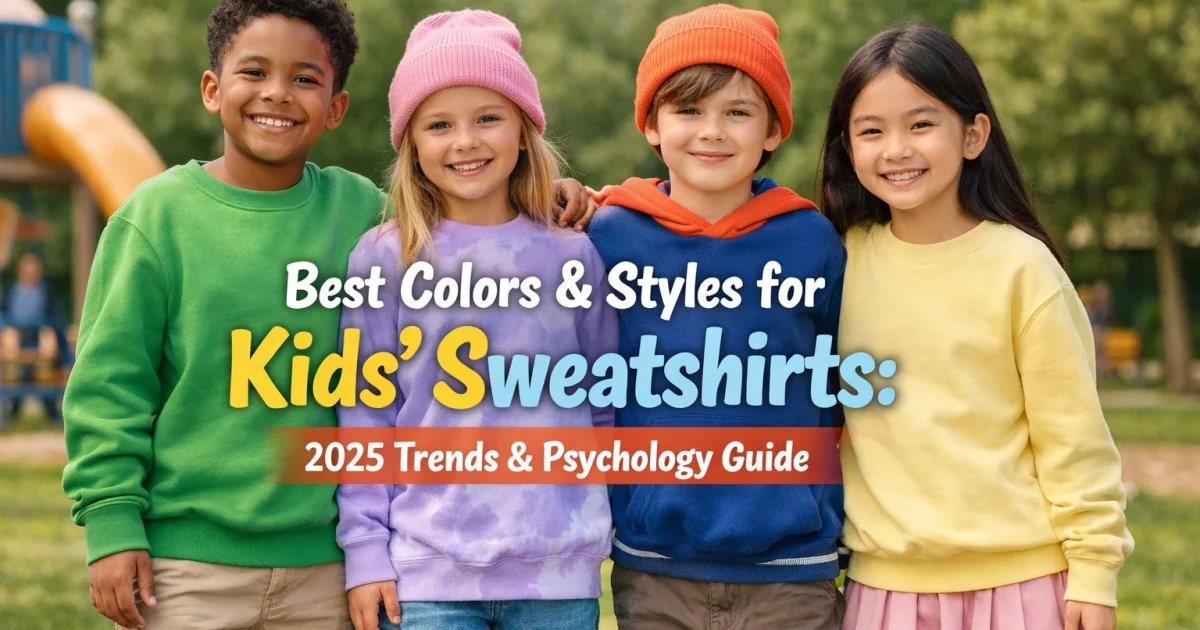
Most parents approach sweatshirt selection based on appearance without recognizing that color and style directly influence how their child feels and behaves. I've watched families discover that the right color boosts confidence and the right style determines whether a piece gets worn or ignored. These factors are genuinely powerful.
I've watched kids light up in a color that makes them feel confident. I've also watched kids refuse to wear something purely based on style, even if it's perfectly practical. And I've learned through years of experience that understanding color psychology and style preferences and matching them to your child's personality and age is actually the secret to building a wardrobe your kids will genuinely wear.
So let me walk you through everything I know about choosing colors and styles that will actually work for your child's sweatshirts, from understanding what colors do psychologically to knowing which styles are trending and which are timeless, to practical strategies for building a sweatshirt collection that gets worn.
Color Psychology in Children's Clothing
Color is genuinely psychological. It's not just an aesthetic choice. The colors we wear influence our mood, our energy levels, and even how others perceive us. This is even more true for children, whose emotions are still developing and whose responses to color are often more direct and honest than adults.
Primary Colors and Their Effects: Children naturally love primary colors red, blue, and yellow. These are often the first colors kids learn to recognize. Red is energizing and passionate. It stimulates excitement and action. But too much red can be overwhelming; it can make kids hyperactive or restless. Blue is calming and serene. It promotes tranquility and trust. It's associated with focus and stability. Yellow is cheerful and optimistic. It brings warmth and happiness. But like red, excessive yellow can overstimulate.
The key with primary colors is balance. A sweatshirt that's bright red paired with neutral bottoms works. A child wearing all primary colors everywhere might actually have a harder time settling down and focusing.
Cool Colors and Their Calming Effects: Blue, green, and purple are cool colors, and they have genuinely calming effects. Blue promotes calmness, trust, and focus. Green is associated with growth, balance, and harmony it creates a connection with nature. Soft purples are calming and imaginative. If you have a child who tends toward hyperactivity or who struggles with focus, incorporating cool colors into their wardrobe, especially their everyday pieces, can genuinely help. A soft blue or mint green sweatshirt paired with rest time or focus activities can support those behaviors.
Warm Colors and Their Energizing Effects: Red, orange, and yellow are warm colors, and they stimulate energy and excitement. Orange specifically is associated with enthusiasm and creativity. These colors are great for playwear, for sports activities, for encouraging active engagement. But they're less ideal for calm time or bedtime. If your child needs to wind down, a bright orange sweatshirt right before sleep probably won't help.
Pastels and Emotional Softness: Pastel colors soft pink, lavender, mint green, powder blue are increasingly popular, and they have real psychological benefits. They're gentler on the senses than bright colors. They promote calm and relaxation. They're often associated with sensitivity and imagination. For children who are already anxious or overwhelmed, or for wind-down time, pastels are genuinely soothing.
Neutral Colors and Versatility: Black, white, gray, beige, and cream are neutral. They're practical and versatile because they work with almost any other color. But psychologically, they're also sophisticated and grounding. A black sweatshirt makes a statement of confidence. Gray is calming and balanced. White is fresh and clean. These colors work as foundations for a wardrobe.
The Current Color Trends and What Kids Are Actually Wearing in 2025
Right now, there are some really interesting color trends happening in children's fashion, and they're worth understanding because they influence what's available to buy and what other kids are wearing (which, for school-age kids, definitely matters).
Bold and Bright Colors: Neon and electric colors are having a major moment. Electric blue, neon green, hot pink, vibrant orange these colors are bold, attention-grabbing, and very trendy. Kids who like standing out and feeling bold gravitate toward these. The challenge is that these colors are trend-driven, so a neon green sweatshirt your child loves this year might feel dated next year. But if your child genuinely loves bold colors, embracing that is wonderful.
Soft Pastels: On the opposite end, soft pastels are also huge. Lavender, mint, soft pink, powder blue these gentle colors are having a real moment, especially with younger kids and with the athleisure trend. Pastels are less trendy and more timeless, so a pastel sweatshirt has more longevity than a neon one.
Earth Tones: There's been a shift toward natural, earthy colors. Terracotta, olive green, warm brown, rust, sage these are sophisticated and grounding. They feel nature-connected and calm. Parents appreciate them because they're versatile and less trendy. Kids appreciate them because they look cool and mature.
Gender-Neutral Colors: There's been a real movement away from strict color gendering. Pink isn't just for girls anymore, and blue isn't just for boys. Neutral colors that work for everyone cream, sage green, soft yellow, beige are becoming standard. This is genuinely wonderful because it gives kids freedom to wear colors they love without gender implications.
Timeless Neutrals: Black, navy, white, gray, and charcoal remain eternally relevant. These colors are practical, versatile, and never go out of style. A black or navy sweatshirt is an investment piece.
| Color Category | Examples | Psychological Effect | Best For | Trend Status 2025 | Longevity |
|---|
| Bold/Bright | Neon green, electric blue, hot pink | Energizing, attention-grabbing, exciting | Confident, bold kids; active play | Very trendy | 1-2 seasons |
| Soft Pastels | Lavender, mint, powder blue, soft pink | Calming, soothing, gentle | Sensitive kids; wind-down time | Trending strongly | 2-3 seasons |
| Earth Tones | Terracotta, olive, rust, sage, brown | Grounding, natural, sophisticated | Nature-loving kids; versatile style | Growing trend | 3+ seasons |
| Primary Colors | Red, blue, yellow | Stimulating (mixed, not all together) | Young kids; playful designs | Always relevant | 2-3+ seasons |
| Cool Colors | Blue, green, purple | Calming, focusing, soothing | High-energy kids; focus time | Timeless | 3+ seasons |
| Neutrals | Black, white, gray, beige, navy | Versatile, grounding, sophisticated | All kids; versatile wardrobe | Always timeless | Permanent |
Sweatshirt Styles: More Than Just Aesthetics
Style is about more than how something looks. It's about function, practicality, how your child feels wearing it, and what message it sends. Different styles work for different kids and different occasions.
Classic Crewneck Sweatshirt: This is the most versatile style. No hood, crew neckline, pullover. It's timeless, works for all ages, pairs with anything, and is genuinely practical. A quality crewneck sweatshirt in a neutral color is probably the single best investment piece you can buy. It works for casual wear, for layering, for sports, for school. Kids don't have to deal with a hood. It's simple and clean.
Pullover Hoodie: Still the most popular style for kids. The hood is fun, provides warmth, and kids love it. Hoodies usually have pockets, which is practical. They work layered or alone. The downside is that hoods can sometimes be uncomfortable if the design isn't right, and some kids don't love having a hood near their face. But generally, hoodies are winners.
Zip-Up Hoodie: This is genuinely practical for active kids. They can remove it easily if they get warm. It's perfect for sports or outdoor activities. The zipper also makes it easier for kids to put on and take off without pulling over their head. Drawback is that zippers can jam or break, and the cost is usually higher.
Oversized Style: Oversized is absolutely the trend right now, and honestly, I think it's a good trend for kids' clothing. An oversized sweatshirt is comfortable, it looks cool and intentional, and it lasts longer because there's growing room built in. A child can wear an oversized sweatshirt for two to three seasons instead of one. The oversized silhouette also works for all body types and all activity levels. Whether your child is athletic or creative, quiet or active, an oversized sweatshirt works.
Fitted Style: The traditional fitted sweatshirt is less trendy now, but it's still valid. It's more formal, shows body shape, and is better for specific styling. It works well for special occasions or for kids who prefer a closer fit. But for everyday wear, it's less practical than oversized.
Cropped Style: Cropped sweatshirts hit at the waist or above, and they're popular with tweens and teens. They pair well with high-waisted bottoms or skirts. The downside is that they don't provide coverage for active kids, and they're less versatile. If your child loves the look, fine, but you probably don't want your entire sweatshirt collection to be cropped.
Choosing Colors Based on Your Child's Age and Personality
Different ages have different color preferences, and understanding this can help you choose colors your child will actually get excited about wearing.
Toddlers (Ages 2-4): Bright primary colors work beautifully for this age. Toddlers love bold, clear colors. Simple solid colors are best patterns and graphics can be okay, but the color matters more. Red, bright blue, bright yellow these are toddler favorites. Pastels are usually less appealing to this age; they want clear, bold color.
Preschoolers (Ages 4-6): This is where color preferences start becoming more varied. Some kids still love bright primary colors. But others start gravitating toward character-based colors (if they're obsessed with a character, they want that character's signature color). Dinosaur lovers might want green or orange. Ocean lovers might want blue. The color should connect to their interests.
Elementary School (Ages 6-10): This is where personal preference becomes really pronounced. Some kids love bright colors, others are moving toward pastels, some are discovering earth tones. They're also starting to notice what other kids wear and what's considered cool. This is the age where you should ask your child what color they want rather than deciding for them.
Tweens (Ages 10-13): Tweens are fashion-aware and trend-conscious. Bold colors or trendy colors appeal. Some are discovering Y2K revival and wanting neon. Others are gravitating toward pastels or earth tones as they develop their aesthetic. This is also when gender-neutral color preferences really shine they don't want to be limited by traditional color gendering.
Teens (Ages 13+): Teenagers are developing personal style identities. Some love bold neons, some prefer minimalist neutrals, some are into pastels, some love earth tones. Their color choices reflect their emerging aesthetic and personality. The best approach is to let them choose, within reason.
Building a Practical Sweatshirt Color Wardrobe
If you're thinking strategically about building a sweatshirt collection that will get worn and that works together, here's my approach.
Start with 2-3 Neutral Base Colors: Get quality sweatshirts in navy, black, or gray. These are your foundation pieces. They work with almost any bottom. They're versatile for any activity. They're timeless and won't feel dated. A child should have at least one really good neutral hoodie or crewneck.
Add 2-3 Pieces in Your Child's Favorite Colors: If your child loves blue, get them a blue sweatshirt. If they're obsessed with green, get green. These are colors they'll actually want to reach for because the color makes them happy. This is where personal preference matters most.
Add 1-2 Trendy or Seasonal Pieces: If there's a trending color right now that your child likes, get one piece. Just one or two, not your whole collection. Trendy colors have a shorter lifespan, so don't overinvest. But if your child is into neon right now, one neon sweatshirt lets them feel trendy.
Add 1-2 Pieces Based on Character or Interest: If your child is obsessed with a particular show, character, or interest, a sweatshirt in that color or with that graphic works. These pieces are meaningful to them because they reflect what they love.
This approach gives you a wardrobe that's practical (neutrals), personalized (favorite colors), trendy (1-2 pieces), and meaningful (interest-based). It's also realistic for most budgets and most households.
Color and Style Combinations That Actually Work
If you're struggling to style sweatshirts with bottoms, here are some combinations that genuinely work and look put-together.
Oversized Cream/White Sweatshirt + Joggers: This is the definition of casual cool. Comfortable, looks intentional, works for school or casual outings. This is probably the most wearable sweatshirt combination.
Black Oversized Hoodie + Jeans or Black Bottoms: Classic, versatile, works for almost any occasion. Black goes with everything. This is the reliable daily uniform.
Neon or Bold Sweatshirt + Neutral Bottoms: Let the sweatshirt be the statement piece. Pair it with black, gray, or white bottoms so the color is the focus.
Earth Tone Sweatshirt + Denim: Earth tones and denim are naturally compatible. Olive or terracotta with blue jeans looks effortlessly stylish.
Pastel Sweatshirt + Coordinating Neutral Bottoms: A soft pink sweatshirt with gray or white bottoms. Mint sweatshirt with white or cream bottoms. These combinations feel cohesive and gentle.
Graphic Oversized Sweatshirt + Solid Neutral Bottoms: When the sweatshirt has a graphic or is bold, keep the bottoms simple and neutral so the sweatshirt stands out.
Practical Considerations When Choosing Colors and Styles
Beyond psychology and trend, there are practical things to consider when choosing sweatshirt colors and styles.
Fabric Care and Color Longevity: Darker colors hide stains better than light colors. If your child is particularly messy, a black or navy sweatshirt is more practical than white or pastels. Light colors show every mark, which means more frequent washing, which can fade colors faster.
Growth and Longevity: Oversized styles last longer as kids grow. A fitted sweatshirt might fit perfectly for one season and then be too small. An oversized sweatshirt can fit for a year or more. If budget is a concern, oversized is more economical.
Activity and Style Appropriateness: An athletic child might feel most comfortable in performance hoodies. A creative, artsy child might prefer oversized, slouchy styles. Match the style to your child's lifestyle and personality.
Seasonal Appropriateness: A thick, heavyweight sweatshirt doesn't make sense for spring. A lightweight sweatshirt isn't enough for winter. Choose weight and fabric type for your climate.
The Most Important Factor: What Your Child Actually Wants to Wear
After all of this analysis, let me be very clear about the most important factor: your child's preference matters more than any color psychology or trend analysis. If your child hates the color you chose, they won't wear it. If they love a color that doesn't match your decor or your aesthetic, their preference wins.
The best sweatshirt, in the best color, with the best style, is worthless if your child doesn't want to wear it. So ask them. Let them be involved in choosing. If they see a color or style they love, take that seriously. Their enthusiasm is the real predictor of whether that sweatshirt will actually get worn.
Color, Style, and Confidence
Choosing colors and styles for kids' sweatshirts is genuinely about more than aesthetics. The right color can influence mood and confidence. The right style can make getting dressed fun instead of a battle. A sweatshirt that your child genuinely loves, in a color they're excited about, in a style that makes them feel good that becomes the piece they grab repeatedly.
So think strategically about your foundation pieces (neutral, quality basics), then add personality and preference. Be aware of how colors affect mood, but don't be dogmatic about it. Pay attention to trends, but don't let trends override your child's actual preferences. And most importantly, involve your child in the choices. Their sweatshirt wardrobe should reflect who they are, not just what works in your closet.