Best Heavyweight vs Lightweight Hoodies for Men
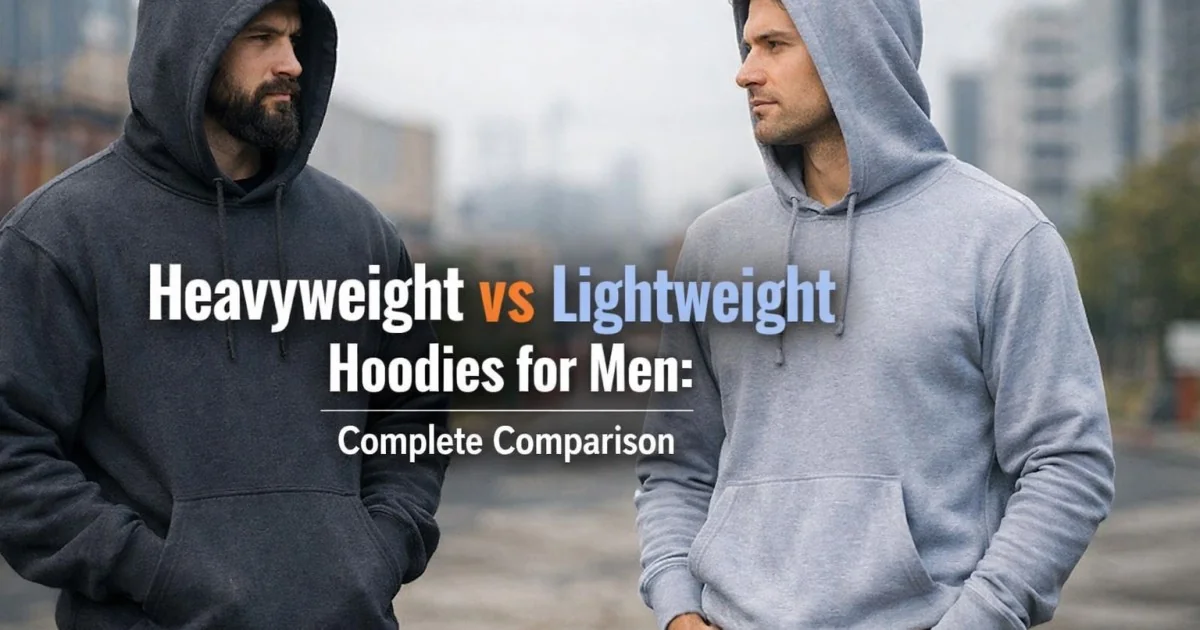
One of the most common questions I get from guys building their hoodie collection is this: "Should I get a heavyweight or lightweight?" And honestly, it's the right question to ask, because the answer changes everything about how the hoodie will work in your life.I've spent two decades watching men make hoodie choices, and I can tell you with certainty that most people buy based on feeling alone they grab what feels comfortable in the moment without thinking about how it'll actually work in their wardrobe, how it'll layer, how it'll look throughout the year, or what seasons they'll actually wear it.
The truth is, heavyweight and lightweight hoodies serve completely different purposes. They look different. They feel different. They layer differently. They work with different outfits. They're appropriate for different seasons. And most importantly, your lifestyle where you live, what you do, what your weather looks like, how you actually spend your time should determine which one is right for you.
This is your complete breakdown: the differences between heavyweight and lightweight hoodies, the pros and cons of each, how they layer, which works better for different body types and seasons, the best brands for each category, care considerations, and a framework for building a balanced hoodie rotation that covers you year-round. By the end, you'll know exactly which type to reach for in any situation.
Hoodie Weight: The Science
Hoodie weight is measured in GSM (grams per square meter) essentially how much fabric is in a specific area of material. The higher the number, the heavier and thicker the hoodie.
Lightweight Hoodies
GSM range: 140-180 GSM.
- Thin enough to see texture and detail in the fabric.
- Light enough to fold compactly.
- Usually made from jersey knit or lighter fleece blends.
- Feels almost t-shirt-like in weight but with hoodie structure.
Mid-Weight Hoodies
GSM range: 180-220 GSM.
- The sweet spot for many men.
- Substantial but not heavy.
- Feels like a "real" hoodie without the bulk.
- Most versatile for year-round wear.
Heavyweight Hoodies
GSM range: 220+ GSM.
- Thick, structured, almost sweatshirt-like.
- Heavy enough to provide real warmth.
- Usually made from dense fleece.
- Feels substantial when you hold it.
Lightweight Hoodies: When and Why to Choose Them
The Core Appeal of Lightweight
Lightweight hoodies are about versatility, layering potential, and year-round wearability.
When Lightweight Makes Sense
Warm Climates
If you live somewhere warm or mostly mild, lightweight hoodies are your answer.
- Not enough bulk to overheat.
- Breathable enough for warm spring/fall weather.
- Still gives you the comfort of a hoodie without the weight burden.
Layering Situations
Lightweight hoodies excel as middle layers or under-layers.
- Under a jacket: Doesn't add excessive bulk.
- Over a shirt: Creates dimension without looking bulky.
- With other pieces: Plays well with structured outer layers.
Transitional Seasons
Spring and fall are lightweight hoodie territory.
- Too warm for heavyweight.
- Just right for light layering.
- Perfect with a light jacket when needed.
Active or Athletic Use
If you're wearing hoodies for gym warm-ups or active pursuits.
- Less weight to move in.
- Breathable enough for activity.
- Perfect for post-workout casual wear.
The Feel and Look of Lightweight
- Appearance: More polished, less "athletic gear" vibe.
- Drape: Falls closer to the body, less volume.
- Movement: Moves with you, doesn't feel stiff.
- Versatility: Works in more situations because it doesn't dominate looks.
Pros of Lightweight Hoodies
| Pro | Why It Matters | Best For |
|---|---|---|
| Lightweight and packable | Easy to travel with, store, carry | Travel, commuters, multi-season wearers |
| Versatile layering | Works as standalone or layered piece | Varied climates, changing seasons |
| Breathable | Won't overheat in mild weather | Warm climates, transitional seasons |
| More polished appearance | Reads as intentional, not just athletic | Smart casual, casual office situations |
| Year-round wearability | Appropriate in most seasons with adjustment | People who want one hoodie for everything |
| Often more affordable | Less fabric = lower cost typically | Budget-conscious shoppers |
Cons of Lightweight Hoodies
- Less insulation: Not warm enough as a standalone piece in winter.
- Can cling: Lighter fabrics sometimes show more body shape than desired.
- Less structured: Doesn't have the "presence" of heavyweight hoodies.
- More frequent washing: Lighter fabrics feel dirtier faster, so you wash more often.
Heavyweight Hoodies: When and Why to Choose Them
The Core Appeal of Heavyweight
Heavyweight hoodies are about warmth, comfort, and looking intentional in cooler weather.
When Heavyweight Makes Sense
Cold Climates
If you live somewhere that gets genuinely cold, heavyweight hoodies are your answer.
- Provides real insulation and warmth.
- Works as a standalone piece, not just a layer.
- Keeps you comfortable without needing a heavier jacket.
Winter Wear
In cold seasons, heavyweight hoodies are the MVP.
- Can layer under jackets for serious cold.
- Comfortable as a standalone piece in mild winter.
- That cozy, wrapped-up feeling people love about hoodies.
Loungewear and Comfort Priority
If comfort and coziness are your priority.
- That thick, soft feel is genuinely comforting.
- Works perfectly for relaxation, home time.
- Feels like you're wrapped in something substantial.
Intentional Oversized Styling
If you want oversized hoodies that look intentional, not sloppy.
- The weight prevents oversized from looking too drowny.
- Creates structured volume instead of shapeless bulk.
- Heavyweight + oversized = modern streetwear aesthetic.
The Feel and Look of Heavyweight
- Appearance: Structured, substantial, intentional.
- Drape: Falls away from the body with presence.
- Movement: Feels solid, doesn't cling or move with every motion.
- Presence: Makes a statement the hoodie is clearly the focal point.
Pros of Heavyweight Hoodies
| Pro | Why It Matters | Best For |
|---|---|---|
| Real warmth and insulation | Works as standalone, doesn't need layers | Cold climates, winter wear |
| Substantial, structured feel | Doesn't look cheap or flimsy | Quality-focused shoppers, investment pieces |
| Cozy and comforting | That wrapped-up feeling people love | Loungewear, relaxation, home time |
| Looks intentional when oversized | Weight prevents sloppy appearance | Streetwear, oversized styling |
| More durable long-term | Dense fabric holds up better to wear | Long-term investment pieces |
| Doesn't need frequent washing | Thicker fabrics don't show wear as quickly | Low-maintenance wearers |
Cons of Heavyweight Hoodies
- Not packable: Takes up significant space in luggage or storage.
- Overheat in mild weather: Can make you sweat in spring/fall or warm offices.
- Limited layering versatility: Works as standalone, less useful as a middle layer.
- Higher price: More fabric = higher cost typically.
- Shorter wearability window: Mainly for fall/winter, less year-round use.
Direct Comparison: Lightweight vs Heavyweight
| Factor | Lightweight (140-180 GSM) | Heavyweight (220+ GSM) |
|---|---|---|
| Warmth | Mild to moderate | Moderate to excellent |
| Packability | Very compact | Bulky, takes space |
| Layering ability | Excellent works under/over pieces | Limited mostly standalone |
| Breathability | Higher good for activity | Lower for warmth priority |
| Look and feel | Polished, sophisticated, refined | Structured, substantial, cozy |
| Best seasons | Spring, summer, fall, indoors | Fall, winter |
| Year-round use | Yes with adjustment | No seasonal |
| Price | Generally affordable | Generally more expensive |
| Durability | Good less heavy wear | Excellent dense fabric |
| Maintenance | More frequent washing needed | Less frequent washing needed |
Body Type Considerations

Smaller or Leaner Builds
- Lightweight: Better choice doesn't overwhelm smaller frames.
- Heavyweight: Can look oversized even in correct size.
- Best approach: Lightweight for everyday, heavyweight only if you love that cozy feeling and don't mind slightly roomier fit.
Average Build
- Both work: Your body can accommodate either weight.
- Choice based on: Climate, season, and personal preference.
- Recommendation: One of each for versatility.
Larger or Broader Builds
- Heavyweight: Better choice provides structure and presence.
- Lightweight: Can look too thin and clingy on larger frames.
- Best approach: Heavyweight for main rotation, lightweight only if you want layering pieces.
Climate Considerations
Warm Climates (Year-Round Mild or Hot)
Focus on lightweight.
- Heavyweight is impractical you'll overheat.
- Lightweight provides comfort without excess heat.
- Perfect for mild winter nights and cool offices with strong AC.
Moderate Climates (Seasonal Variation)
Mix of both works best.
- Lightweight for spring/fall and layering.
- Heavyweight for true winter wear.
- You get year-round coverage.
Cold Climates (Real Winter)
Focus on heavyweight.
- Lightweight isn't warm enough as standalone.
- Heavyweight is actually practical, not luxury.
- You wear it most of the year.
Building the Perfect Hoodie Rotation
If You Live in a Warm Climate
Your rotation should be:
- 2-3 lightweight hoodies in neutral colors (black, navy, gray, white).
- Maybe 1 lightweight in a secondary color (olive, charcoal).
- Skip heavyweight entirely impractical.
If You Live in a Moderate Climate
Your rotation should be:
- 2 lightweight hoodies (spring/fall, layering) navy, gray.
- 1 lightweight zip-up (versatile layering).
- 2 heavyweight hoodies (winter) black, charcoal or navy.
- Optional: 1 lightweight in a secondary color if you like variety.
If You Live in a Cold Climate
Your rotation should be:
- 3-4 heavyweight hoodies in your go-to colors black, navy, charcoal, gray.
- Maybe 1 lightweight for indoor/office use or spring transitions.
- Consider 1 premium fabric heavyweight (cashmere blend) for elevated looks.
Best Brands by Category
Best Lightweight Hoodies
- Everlane: Transparent pricing, quality lightweight blends, perfect weight.
- Uniqlo: Reliable, affordable, consistent lightweight options.
- J.Crew: Quality lightweight hoodies, good proportions.
- Quince: Direct-to-consumer, premium lightweight at reasonable price.
- Reiss: European-quality lightweight hoodies, refined feel.
Best Heavyweight Hoodies
- Fear of God Essentials: Premium heavyweight, modern design, expensive but worth it.
- Champion: Classic heavyweight, durable, often affordable.
- Gildan (premium line): Budget-friendly heavyweight quality.
- Patagonia: Performance heavyweight, durable, ethical.
- Agave Denim: Premium US-made heavyweight options.
Best Mid-Weight (The Compromise)
- Banana Republic Factory: Reliable mid-weight, good sales.
- Gap: Consistent mid-weight, versatile.
- COS: Minimalist design, quality mid-weight.
Care and Longevity
Lightweight Hoodie Care
- Wash more frequently (gets dirty faster).
- Cold water, gentle cycle.
- Air dry when possible.
- Can lose shape over time if not cared for.
- Typical lifespan: 2-3 years with regular wear.
Heavyweight Hoodie Care
- Can go longer between washes (dense fabric hides dirt).
- Cold water, gentle cycle.
- Air dry flat (don't hang) prevents shoulder stretching.
- Holds shape remarkably well.
- Typical lifespan: 3-5+ years with regular wear.
The Real-World Decision Framework
Here's how to decide:
Choose Lightweight If:
- You travel frequently and value packability.
- You live in a warm or moderate climate.
- You like layering and mixing pieces.
- You prefer a more polished, sophisticated look.
- You want year-round versatility from one hoodie.
- Your style leans smart casual over athletic.
Choose Heavyweight If:
- You live in a cold climate and wear hoodies regularly.
- Comfort and coziness are top priorities.
- You want hoodies to work as standalone pieces.
- You prefer a structured, substantial feel.
- You like oversized hoodies that look intentional, not sloppy.
- Durability and long-term investment appeal to you.
The Ideal Scenario: Having Both
If your lifestyle and budget allow, the real answer is having both types.
- Lightweight for spring/fall, layering, travel, and transitional weather.
- Heavyweight for winter, lounging, and that cozy, reliable feeling.
- Together, they cover every possible situation.
- You're never reaching for something that's not quite right.
Most men I know who have a well-functioning hoodie rotation have exactly this a couple of lightweight for versatility and a couple of heavyweight for winter comfort. It's the sweet spot where you're covered for everything.
