How to Choose Sweatshirts That Fit Men Properly
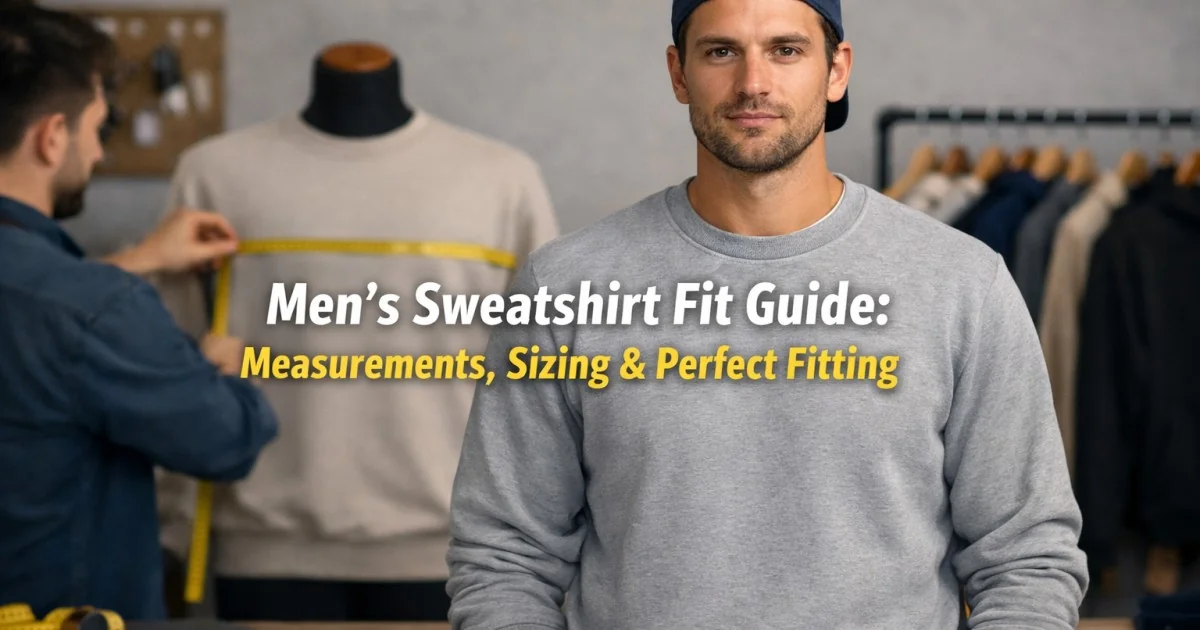
Alright guys, I'm going to be direct with you: most men are wearing sweatshirts that don't fit properly. I know this because I've styled countless men and watched them settle for ill-fitting sweatshirts without realizing there's a better option. They think "it fits if I can wear it and move my arms," but that's not actually what proper fit means. Proper fit is about proportions, about pieces that work with your specific frame, about sweatshirts that make you look intentional instead of accidentally thrown together.
After nearly twenty years in fashion, I've learned that getting sweatshirt fit right is genuinely transformative. It's not complicated, it's not about being too stylish it's just about understanding how sweatshirts should actually interact with your body. When you know this, shopping becomes easy, you wear what you own more often, and honestly, you just look better. It's that simple.
This is your complete guide to choosing sweatshirts that fit men properly. We're talking measurements, how to evaluate fit in-store, how different body types need different approaches, and exactly what makes proper fit versus what doesn't. By the end, you'll understand sweatshirt fit so well that you'll automatically know whether a sweatshirt works for you before you even try it on. Let's get you properly fitted.
Understanding Proper Fit: The Foundation
Proper sweatshirt fit means several things working together:
- Shoulder seams sit right at your shoulder points
- Chest has room for comfortable movement (2-4 inches more than your chest width)
- Sleeves end at your wrist bone
- Overall length is proportional to your height
- The sweatshirt follows your general body shape without clinging or overwhelmingly loose
- You can move freely without the sweatshirt pulling or restricting
- The overall silhouette looks intentional and balanced
When all these elements come together, you have proper fit. When any one is off, the whole thing feels off.
The Critical Measurements: What You Actually Need to Know
1. Your Shoulder WidthThis is the most important measurement. Stand straight, relax your arms at your sides. Measure from the back of one shoulder point to the back of the other shoulder point. This is your shoulder width.
Why it matters: The sweatshirt's shoulder seams must sit right here. If they sit elsewhere, nothing else about the fit works.
Average ranges: 16-18 inches for average men, 18-20 inches for broader guys, 14-16 inches for narrower frames.
2. Your Sleeve LengthMeasure from the back of your neck center, down your shoulder, down your arm (with arm relaxed), to your wrist bone. This is your ideal sleeve length.
Why it matters: Sleeves set the tone for the entire fit. Too short looks cropped; too long looks sloppy. Right length shows your hands completely.
Average ranges: 32-36 inches for most men, 36-40 inches for taller guys, 30-34 inches for shorter men.
3. Your Chest WidthMeasure around the fullest part of your chest with a soft tape measure. This is your actual chest width.
Why it matters: A properly fitting sweatshirt has 2-4 inches of extra room beyond your chest measurement. This determines whether a sweatshirt will be too tight or properly comfortable.
Average ranges: 36-44 inches for most men, 44+ inches for larger frames, 32-36 inches for slimmer guys.
4. Your Torso Length (Neck to Hip)Measure from your neck base center front down to your hip bone. This determines proper sweatshirt length.
Why it matters: A sweatshirt should hit somewhere between your hip and just below it. Too short looks cropped; too long looks oversized or sloppy.
Average ranges: 26-30 inches for most men, 30-32+ for taller guys, 24-26 inches for shorter men.
5. Your HeightSimple measurement just your height. Some brands offer different proportions for tall vs. regular sizing.
Why it matters: Overall proportions. A sweatshirt designed for taller guys has longer sleeves and longer torso than regular sizing.
| Measurement | How to Take It | Your Measurement | What It Tells You |
|---|---|---|---|
| Shoulder Width | Back shoulder point to shoulder point | ___" | Size foundation |
| Sleeve Length | Back neck center down to wrist | ___" | Arm coverage needs |
| Chest | Around fullest part | ___" | Width/room needed |
| Torso Length | Neck base to hip | ___" | Ideal length |
| Height | Head to feet | ___" | Overall proportions |
The Fit Check: What to Evaluate When Trying On
First: Check Shoulder SeamsThis is the absolute first thing to check. Pull the sweatshirt on and look at your shoulders. The seams should sit right at your natural shoulder points. Not drooping past, not pulling before reaching right there.
If shoulder seams are wrong, everything else is compromised. Don't proceed if shoulders don't work. Keep trying.
Second: Check Sleeve LengthStand with arms relaxed at your sides. Sleeves should end right at your wrist bone, showing your hands completely. Not covering hands, not ending mid-forearm. Right at wrist.
If sleeves are wrong, keep looking. Sleeve length is critical.
Third: Check Chest RoomYou should be able to pinch approximately 1-2 inches of fabric on each side of your chest when standing relaxed. Not tight, not swimming in fabric. Comfortable room.
Test by moving your arms do you feel restricted? If yes, it's too tight. If you can flap around, it's too loose.
Fourth: Check LengthThe sweatshirt should hit at or just below your hip bone. Not cropped high on your torso. Not dragging down to mid-thigh unless intentionally oversized. Hip-length is standard proportional.
Fifth: Move AroundActually move in the sweatshirt. Raise your arms up. Bend at the waist. Does it feel right? Does anything pull or restrict? Does it feel like part of your body or like you're wearing something awkward?
Your body will tell you if fit is right.
Understanding Sizing: Size Doesn't Tell the Whole Story
Standard Sizing (S, M, L, XL): These are supposed to represent proportions, but they're not standardized across brands. A medium from one brand might be like a large from another.
What Size Actually Means: Size is just a guideline. What matters is actual measurements. Two mediums from different brands can have completely different chest widths and sleeve lengths.
Brands That Run Large: Champion Reverse Weave, some vintage brands, certain European brands. These intentionally run oversized.
Brands That Run True: Patagonia, Uniqlo, J.Crew, Gap. These are consistent with standard sizing.
Brands That Run Small: Some European brands, luxury brands, performance brands. These often run tight.
Strategy: Don't rely on size. Check actual measurements on the tag or product page. Compare to your measurements.
Fit Styles: Understanding Your Options
Fitted Sweatshirts: The Closer CutFitted follows your body closely with minimal excess fabric. Works if you have a naturally athletic frame. Can feel restrictive on broader guys. Show off muscle definition or athletic build. Best for gym or intentionally fashionable looks.
Standard Fit: The Balanced OptionStandard fit has some room but follows general body proportions. Works for most men. Comfortable and balanced. Most versatile option. Best for everyday wear and most occasions.
Relaxed Fit: The Comfortable OptionRelaxed fit has obvious room through chest and shoulders without being oversized. Feels genuinely comfortable. Works particularly well for broader-shouldered guys. Best for casual wear and guys who prioritize comfort.
Oversized: The Statement OptionOversized intentionally large. Creates casual, effortless vibe. Requires confident styling and typically needs fitted bottoms to balance. Not appropriate for every situation. Best for deliberately stylish looks or younger guys.
Athletic/Tapered: The Sports-Inspired OptionAthletic cuts are wider at shoulders, taper at sides, fitted at hems. Look athletic and performance-oriented. Best for guys with broader shoulders and athletic builds. Works for gym-to-casual situations.
Strategy for most men: Standard fit is your safest choice. It works in most situations and for most body types.
By Height: Getting Proportions Right
Under 5'6" (Shorter): Standard sizing might be too long. Look for "short" or "petite" versions when available. Alternatively, XS might work better than S. Verify sleeve length and torso length specifically.
5'6"-5'9" (Average): Standard sizing generally works well. S or M usually fits. Most sizing is designed for this range.
5'9"-6' (Tall): Standard sizing might be slightly short on sleeves or torso. Consider "tall" versions or sizing up in length only. L is often appropriate. Check sleeve and length measurements specifically.
Over 6' (Very Tall): Look for "tall" or "big and tall" versions. Regular sizing almost certainly falls short. Some brands don't make sizes long enough know which ones work for you. Expect to pay premium for proper length.
By Broader Shoulders: Specific Considerations
If You Have Broader Shoulders: Standard or relaxed fit necessary. Fitted is likely restrictive. Verify shoulder width on the tag you need actual room. Athletic-fit options from sports brands are often your best bet because they're designed with broader shoulders in mind.
What to Look For: Shoulder width measurement at least matching or exceeding your actual shoulder width. Room through chest area. Structured fabric that holds shape. Often need to size up compared to average guys your height.
What to Avoid: Fitted sweatshirts, brands known for narrow shoulders, too-small sizes hoping they'll stretch.
Quality Markers: What Indicates Good Fit and Construction
- Straight, even seams with no puckering
- Double-stitched seams in stress areas (shoulders, sides)
- Shoulder seams sit exactly at shoulder points
- Sleeves end exactly at wrist bone
- No weird bunching or pulling anywhere
- Ribbing at cuffs and hem is firm and structured
- Hood (if present) fits head proportionally
- Fabric has substance (not thin or flimsy)
- Color is even throughout (no dye variations)
Reading Size Charts: How to Actually Use Them
Step 1: Find Your MeasurementsLocate your measurements (shoulder width, sleeve length, chest, length) on the chart.
Step 2: Find the Matching SizeIdentify which size matches your measurements most closely. Don't just pick based on size label base it on actual numbers.
Step 3: Prioritize Critical MeasurementsShoulder width and sleeve length are most important. If both match, the sweatshirt should work even if chest or length is slightly off. But get shoulders wrong and nothing works.
Step 4: Check Customer ReviewsRead reviews mentioning fit. Real customers tell you if something runs large, small, or true to size. This is valuable information.
Step 5: Know the Return PolicyIf you're unsure, buy from places with easy returns. Try it on at home. Return if it doesn't work.
Top Brands: Sizing Reputation
| Brand | Sizing Tendency | Consistency | Best For |
|---|---|---|---|
| Patagonia | True to size | Very consistent | Reliable choice |
| Uniqlo | True to size | Very consistent | Budget option |
| Champion | Runs large | Consistent | If you want oversized |
| J.Crew | True to size | Very consistent | Classic fit |
| Gap | True to size | Consistent | Accessible |
| Nike | Varies | Inconsistent | Check reviews |
| Adidas | Runs small | Generally consistent | Size up |
Common Fit Mistakes to Avoid
- Buying oversized thinking it's more comfortable: Oversized doesn't equal comfortable. Proper fit is actually more comfortable.
- Ignoring shoulder fit: Wrong shoulders make everything wrong. Don't compromise.
- Not checking sleeve length: Too-short or too-long sleeves ruin the whole fit.
- Assuming your size is universal: Size means nothing across brands. Check measurements.
- Accepting too-tight chest: Tight feels uncomfortable and looks awkward. Move up a size.
- Forgetting about proportions: A sweatshirt that fits measurements but looks unproportional isn't actually fitting well.
- Not trying things on: Fit is personal. Always try on if possible.
Your Personal Fit Profile: Create This Now
Fill this in and keep it in your phone:
- My shoulder width: ____ inches
- My sleeve length: ____ inches
- My chest: ____ inches (ideal sweatshirt chest: ____ inches)
- My torso length: ____ inches
- My height: ____ feet ____ inches
- My best fit style: ____
- Brands that fit me well: ____
- Brands to avoid: ____
Reference this every time you shop. Consistency comes from knowing your actual fit.
Shopping Strategy: How to Actually Find Properly Fitting Sweatshirts
In-Store Shopping: Take measurements with you or memorize them. Try things on. Check shoulders first. Move around. Trust how it feels on your body.
Online Shopping: Check measurements on product page. Compare to your measurements. Read reviews about fit. Know return policy. Order and try at home. Return if it doesn't work.
Both Options: Start with brands you know fit you well. Once you know Champion fits oversized or Patagonia fits true, you can shop their website confidently.
The Real Talk About Proper Fit
Proper fit isn't complicated. It's not about being overly stylish. It's just about pieces that work with your body. When fit is right, you wear the sweatshirt more. You feel better in it. You look more intentional. It's genuinely that simple.
Stop settling for "close enough" fit. Take your measurements. Know what you're looking for. When something fits properly, you'll feel the difference immediately. That's when you buy it.
Your perfect-fitting sweatshirt is out there. You now have the tools to find it. Go get it.
