How to Choose the Perfect Everyday T-Shirt for Men
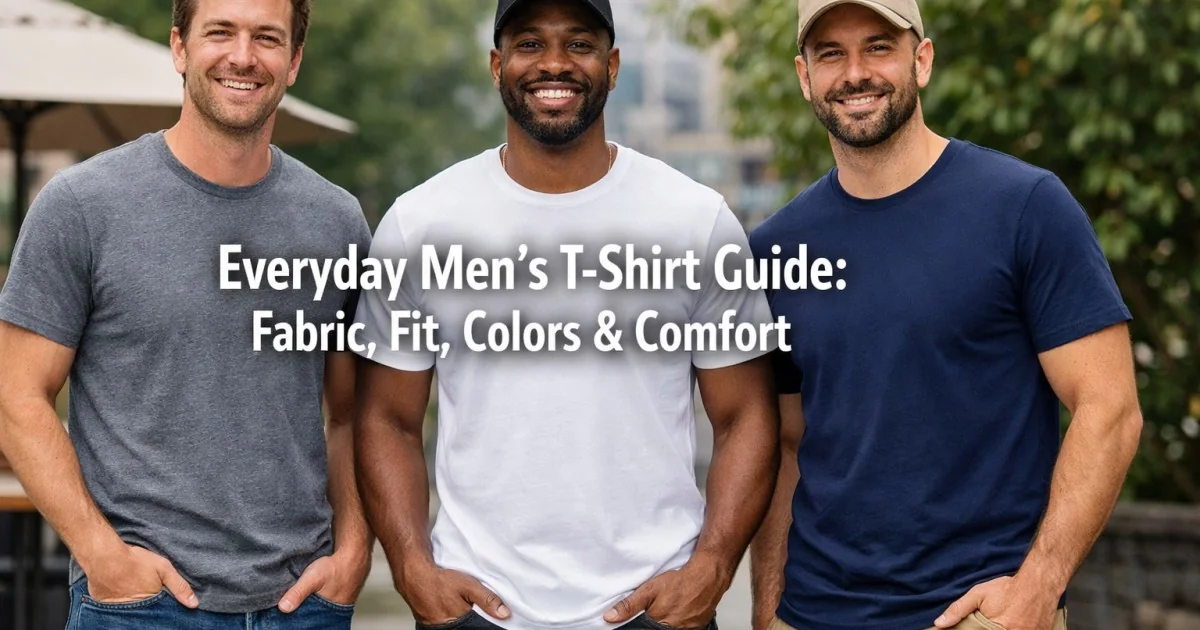
If you ask most men which piece they wear the most, it’s almost always the same answer: a simple T-shirt. Not the statement jacket, not the expensive shoes the humble tee that gets worn on repeat under hoodies, with jeans, to the office on casual days, on dates, to sleep, and everywhere in between. And yet, so many guys still settle for T-shirts that twist, cling in the wrong places, shrink in the wash, or just never quite feel or look right.
After nearly twenty years of watching men live in their clothes, here’s what has become really clear: when you dial in your everyday T-shirt, everything else in your wardrobe becomes easier. Your sweatshirts sit better. Your jeans look sharper. Your outfits feel more intentional even when you barely tried. The perfect everyday tee isn’t flashy it just quietly makes you look better and feel more comfortable every single time you put it on.
This is your complete guide to choosing that tee. We’ll walk through fabric, fit, necklines, length, colors, and small quality details that separate a throwaway multipack from a true everyday essential you’ll want to buy in multiples.
Step 1: Choose the Right Fabric
Fabric is the foundation of a good T-shirt. If the fabric is wrong, nothing else can save it.
100% Cotton
How it feels: Natural, breathable, familiar. A good cotton tee feels soft but not flimsy, substantial but not stiff.
- Pros: Breathable, easy to wear in most climates, usually comfortable even on sensitive skin.
- Cons: Can shrink in the wash, cheaper cotton can feel rough or thin, may lose shape if it’s very lightweight.
- Best for: Everyday, casual wear, layering under sweatshirts, wearing alone with jeans or chinos.
Combed, Ringspun, or Supima Cotton
These are all upgraded versions of regular cotton. Combed and ringspun cotton are processed to remove shorter fibers, which makes the fabric smoother and stronger. Supima cotton is a long‑staple cotton known for extra softness and durability.
- Pros: Softer handfeel, less pilling, better drape, often more resistant to twisting and warping.
- Cons: Higher price point; still cotton, so care matters.
- Best for: Men who want one “nice” T-shirt they can dress up as well as down.
Cotton–Polyester Blends
Blends like 60/40 or 50/50 (cotton/poly) show up a lot in everyday tees.
- Pros: Less likely to shrink, can be more durable, often dry faster and wrinkle less.
- Cons: Less breathable than pure cotton, cheap blends can feel plasticky or clingy.
- Best for: Guys who are hard on their clothes and want a low‑maintenance tee they can wash and wear repeatedly.
Performance/Technical Fabrics
These use polyester, elastane, or other synthetics to create moisture‑wicking, quick‑dry T‑shirts.
- Pros: Great for workouts, active days, and hot weather; resist sweat and dry quickly.
- Cons: Often look and feel more “sporty” than casual; not always ideal as your main everyday tee unless your style leans athletic.
- Best for: Gym, running, layering under performance hoodies, travel days where quick‑dry matters.
Fabric Weight
You’ll sometimes see weight listed in GSM (grams per square meter). Even if you don’t see the number, you can feel the difference.
- Lightweight: Airy, soft, slightly drapey. Great for summer but can show every line or cling on the torso if too thin.
- Mid‑weight: The sweet spot for everyday substantial enough to feel “real,” light enough to breathe and layer.
- Heavyweight: Thicker, more structured, almost sweatshirt‑adjacent. Great if you like a more “solid” feel or live in cooler climates.
| Fabric Type | Softness | Breathability | Durability | Best Use |
|---|---|---|---|---|
| 100% Cotton | Medium–High | High | Medium | Everyday casual |
| Upgraded Cotton (Supima/Combed) | High | High | High | Dressed‑up everyday |
| Cotton–Poly Blend | Medium | Medium | High | Low‑maintenance daily wear |
| Performance Blend | Medium | High (for sweat) | High | Sport & travel |
Step 2: Nail the Fit
The right fabric feels good; the right fit makes you look good. You don’t need a model body for a T‑shirt to flatter you you just need the right proportions.
Shoulders
The shoulder seams should sit right at the edge of your shoulders. If the seams hang halfway down your arm, the tee is too big; if they creep up toward your neck, it’s too small.
Chest
- The tee should follow your chest without pulling.
- You should be able to move your arms without feeling restricted.
- If you see horizontal pulling lines across your chest, size up or switch cuts.
Body/Width
Think “skim,” not “cling” and not “tent.”
- If it clings tightly to your stomach or back, it’s too tight or too thin.
- If it falls completely straight and you could grab handfuls of extra fabric at the sides, it’s too big.
Sleeve Length
- Ideally hits about halfway between your shoulder and elbow, or slightly above mid‑bicep.
- On very tall men, just above the elbow can still look balanced; on shorter men, too long sleeves can shorten the arms visually.
T-Shirt Length
- The hem should hit roughly mid‑fly or just below your belt long enough that it doesn’t expose your stomach when you raise your arms, but not so long that it covers most of your thighs.
- If you have to constantly tug it down or it pools at the bottom when untucked, it’s probably too long.
| Area | Good Fit | Too Tight | Too Loose |
|---|---|---|---|
| Shoulders | Seam at shoulder edge | Seam above shoulder | Seam down arm |
| Chest | Smooth, no pull lines | Lines at chest when moving | Hangs like a box |
| Sleeves | Mid‑bicep | Very tight on upper arm | Near elbow, wide opening |
| Length | Mid‑fly area | Exposes skin when raising arms | Covers most of thigh |
Step 3: Pick the Right Neckline
Crew Neck
The classic. A crew neck tee works on almost everyone and is the safest everyday choice.
- Great if you have a longer neck or narrower shoulders and want some structure at the top.
- Works perfectly under sweatshirts, hoodies, and quarter‑zips.
V-Neck
Fantastic if you have a shorter neck, broader chest, or you just like a bit more openness around the face.
- Choose a modest V deep V‑necks can look dated or overly styled.
- Great on broader men because it breaks up the width visually.
Henley (Technically a T-Shirt Cousin)
A henley is essentially a T‑shirt with a short button placket at the front. It’s a great alternative if you want something that feels like a tee but looks slightly more intentional.
- Works incredibly well for casual dates and evenings.
- Flattering on most body types because the vertical line of buttons elongates the torso.
Step 4: Choose Your Everyday Colors
You don’t need the whole rainbow. A tight, thoughtful color lineup will give you far more outfit options than a random pile of tees.
Start with Neutrals
- White: Crisp, classic, works under everything; shows stains and requires a bit more care.
- Black: Slimming, sleek, great at night or under darker layers.
- Gray (especially heather gray): Extremely versatile and forgiving a great “first tee” color.
- Navy: Slightly smarter than black or gray, perfect with jeans and chinos.
Then Add Muted Accent Colors
- Olive, burgundy, rust, deep green, and washed blues all work well with denim and neutral pants.
- Keep them muted rather than neon they’re easier to repeat and style.
A great simple lineup: white, gray, navy, black, and one or two muted colors you love.
Step 5: Pay Attention to Small Quality Details
This is where you separate “cheap pack of tees” from “I’m going to wear this one until it dies.”
Collar Ribbing
- Should feel firm and substantial, not flimsy.
- If the collar looks wavy or already relaxed on the hanger, it’ll likely stretch out quickly.
Seams and Stitching
- Look for straight, even seams with no loose threads.
- Double‑stitched hems are a good sign of durability.
Twisting and Warping
- If you lay the T‑shirt flat and the side seams curve dramatically instead of lying straight, that’s a red flag.
Tag vs. Tagless
- Tagless printed labels are more comfortable for many men, especially for everyday wear.
Step 6: Match Your Tee to Your Lifestyle
If You Work at a Casual or Smart-Casual Office
- Invest in a few nicer mid‑weight cotton or Supima tees in gray, navy, and white.
- Wear them under overshirts, chore jackets, light knitwear, or unstructured blazers.
If You’re Often in Hoodies and Sweatshirts
- Stick with crew necks so the necklines layer cleanly.
- Choose mid‑weight fabrics so the tee doesn’t twist or bunch under thicker layers.
If You Travel or Commute a Lot
- Try a couple of cotton–poly or performance blend tees that handle sweat and wrinkles better.
- Stick to colors that hide marks gray, navy, charcoal.
If You Care Mainly About All-Day Comfort
- Choose softer, mid‑weight cotton in a relaxed but not oversized cut.
- Look for brands known specifically for comfort basics rather than just the cheapest multipack.
Step 7: Build a Small Everyday T-Shirt Capsule
If you want a simple, no‑stress rotation, try something like this:
- 2 × heather gray crew neck tees.
- 1 × white crew neck tee.
- 1 × black crew neck tee.
- 1 × navy crew neck tee.
- 1–2 × V‑neck or henley in a neutral or muted tone for days when you want to look a bit more intentional.
With just these, you can cover gym layering, date nights with a jacket, casual Friday at the office, weekend errands, and lazy days at home.
Common Mistakes Men Make with T-Shirts
- Going too big “for comfort”: You end up looking heavier and less put‑together than you are.
- Buying ultra‑thin tees for everyday wear: They cling, show everything, and wear out fast.
- Ignoring sleeve length: Oversized sleeves can make arms look smaller and throw off proportions.
- Only buying graphic tees: Great for personality, but solids are what make getting dressed easier day after day.
- Not replacing dead tees: If the collar is wavy, the color is faded beyond charm, and the hem is twisted it’s time to retire it.
Care Tips to Keep Your Perfect Tee Perfect
- Wash in cold water to reduce shrinking and fading.
- Turn inside out to protect the color and print (if any).
- Tumble dry on low or air dry for your “nicer” tees.
- Fold instead of hanging if the fabric is very lightweight and prone to stretching.
The Real Secret of the Perfect Everyday T-Shirt
The perfect everyday T-shirt isn’t about impressing anyone. It’s about having a piece you never have to think twice about something you can grab in the dark, half awake, and still look like you know what you’re doing. It’s the base that makes the rest of your wardrobe easier, from hoodies and sweatshirts to jackets and coats.
Once you’ve felt the difference of a tee that actually fits your shoulders, skims your torso, feels good against your skin, and holds up after lots of washes, you won’t want to go back. And honestly, you shouldn’t.
