The Best Sweatshirt Sleeves: Cuffed vs Uncuffed
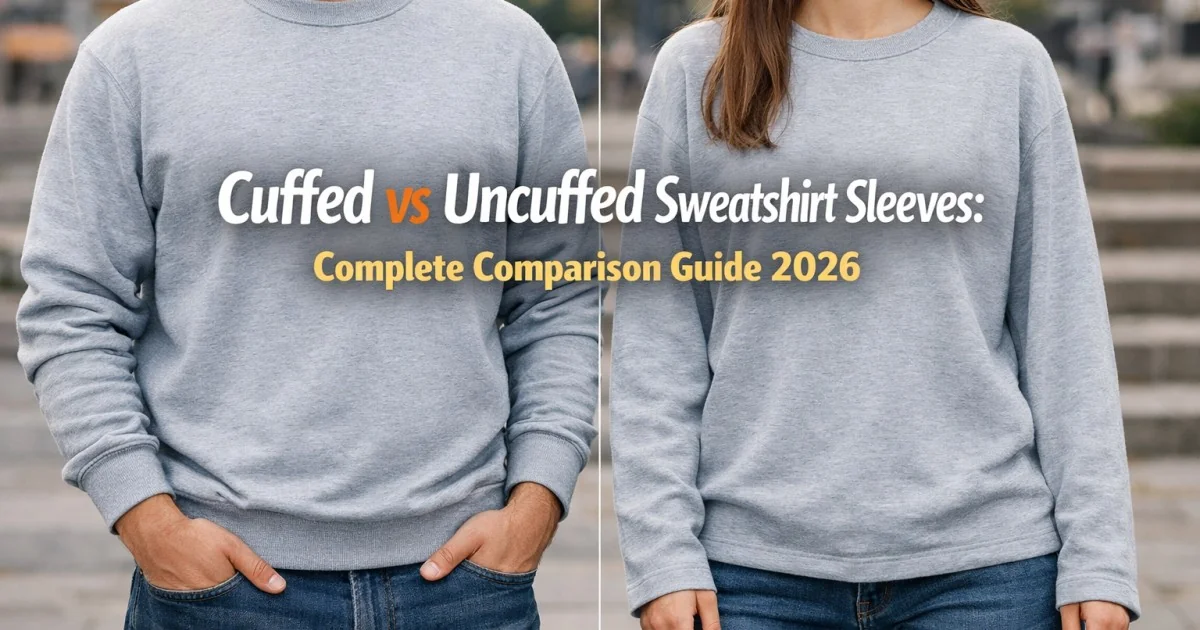
Something interesting that many people overlook when choosing sweatshirts: the sleeves matter more than most people realize. Specifically, whether your sweatshirt has cuffed sleeves (with ribbed or elastic cuffs) or uncuffed sleeves affects not just how your sweatshirt looks, but how it functions, how comfortable it feels, and how long it actually lasts. I've watched people invest in quality sweatshirts then underestimate this seemingly small detail, only to discover that sleeve design dramatically impacts their actual wearing experience.
The truth is that cuffed and uncuffed sweatshirt sleeves represent fundamentally different design philosophies, and each has genuine advantages depending on your lifestyle, climate, activities, and personal preferences. Neither is universally "better" but for your specific situation, one is probably significantly better than the other.
So let me walk you through exactly how cuffed and uncuffed sweatshirt sleeves differ, the practical advantages and disadvantages of each, and how to choose which style actually works best for how you live and dress.
Cuffed Sleeves: The Traditional Design
Cuffed sleeves also called ribbed cuffs because they're typically made from ribbed fabric are the traditional sweatshirt design. The ribbing is a stretchy, textured fabric that creates a snug fit around the wrist.
How Cuffed Sleeves Work: The cuff is constructed from elastic ribbed material that stretches comfortably over your hand when putting on the sweatshirt, then contracts back to fit snugly around your wrist. This snug fit is intentional it's designed to trap warmth, prevent cold air from entering at the wrist, and create a finished, tailored look.
The Warmth Advantage: Cuffed sleeves trap body heat and prevent cold air from flowing up your sleeves. If you're wearing your sweatshirt in genuinely cold conditions, the cuff provides real warmth benefit. The snug fit around your wrist means no drafts, no cold air entering, no uncomfortable chill at your wrists. This is genuinely valuable in winter or cool climates.
The Visual Advantage: Cuffed sleeves create a finished, tailored appearance. The structured ribbing at the wrist looks intentional and polished. There's no question about where the sleeve ends the cuff creates a clear line. This makes cuffed sleeves particularly suitable for more formal or professional settings where a structured appearance matters.
The Durability Consideration: Quality ribbed cuffs are extremely durable. The ribbed fabric is thicker and more durable than standard sweatshirt fabric. When well-made, ribbed cuffs hold their shape through many washes and years of wearing. A quality cuffed sweatshirt has cuffs that remain elastic and don't lose their shape or become loose and floppy.
The Drawback: Limited Wrist/Hand Flexibility: The snug cuff fit can feel restrictive to some people, particularly those with sensory sensitivities. If the cuff is too tight, it can feel constricting. Additionally, if you want to roll up your sleeves for any reason, cuffed sleeves are less forgiving. Rolled cuffed sleeves bunch awkwardly and can look sloppy.
Understanding Uncuffed Sleeves: The Modern Evolution
Uncuffed sleeves also called open-ended or raw-edge sleeves simply end with a finished edge, typically created by a flatlock seam or a simple hemmed edge, without any elastic ribbed cuff.
How Uncuffed Sleeves Work: The sleeve extends to your wrist and finishes with a smooth edge. There's no elastic to provide snugness the sleeve relies on the fabric's natural drape and the finished edge to create the endpoint. The opening is looser and more flexible than a cuffed design.
The Flexibility Advantage: Uncuffed sleeves offer tremendous flexibility. You can push your sleeves up to your elbows without awkward bunching. You can fold them once for a casual look. You can wear the sleeves at any length you prefer without the cuff restricting you. This flexibility is valuable for people who like to adjust their clothing throughout the day or who prefer versatility in how they wear pieces.
The Comfort Advantage for Some: For people with sensory sensitivities or wrist sensitivity, the absence of a snug cuff can feel significantly more comfortable. Nothing is pressing against your wrist. There's no elastic, no pressure, just the natural fabric ending at your wrist. This is genuinely more comfortable for certain people.
The Modern Aesthetic Advantage: In 2026, uncuffed sleeves represent a more contemporary aesthetic. Modern, minimalist design often features clean lines and minimal details uncuffed sleeves fit this philosophy perfectly. An uncuffed sweatshirt reads as modern and intentional rather than traditionally constructed.
The Drawback: Less Warmth: Without a snug cuff, there's more air gap at your wrist. Cold air can flow up your sleeves more readily. If you're in genuinely cold conditions or if draft prevention is important to you, uncuffed sleeves offer less warmth benefit. Additionally, if your sleeves are a bit long, without a cuff to keep them in place, the fabric can creep up during activity.
The Durability Question: The longevity of uncuffed sleeves depends entirely on the quality of the finished edge. A well-executed flatlock seam or clean hem will remain durable. A cheaply finished edge might unravel or look worn more quickly. For uncuffed sleeves to be durable, they need quality construction.
Cuffed vs. Uncuffed: Side-by-Side Comparison
| Factor | Cuffed Sleeves | Uncuffed Sleeves |
|---|---|---|
| Warmth | Better traps heat, prevents drafts | Less warmth more air gap |
| Comfort (General) | Good, if fit correctly | Good, offers more freedom |
| Comfort (Sensory Sensitivity) | Potentially problematic cuff pressure | Better no cuff pressure |
| Wrist Flexibility | Limited cuff is snug | Excellent sleeves easily adjustable |
| Sleeve Rolling | Awkward bunches with cuff | Easy and clean-looking |
| Visual Appearance | Tailored, finished, structured | Modern, clean, contemporary |
| Professional Context | More formal-appearing | Modern professional |
| Casual Context | Traditional, classic | Contemporary, modern |
| Durability (Quality) | Excellent ribbing is durable | Depends on edge quality |
| Durability (Poor Quality) | Cuff can lose elasticity | Edge can unravel |
| Layering Compatibility | Works under jackets | Works under jackets |
| Cost | Slightly more expensive | Can be either, depends on construction |
Cuffed Sleeves: When They're the Right Choice
Cold Weather and Winter: If you live in a genuinely cold climate or wear your sweatshirt during winter, cuffed sleeves provide real functional benefit. The snug fit prevents heat loss at the wrist, a crucial point for warmth in cold conditions. This is legitimate functional value.
Professional and Formal Settings: For professional or business casual contexts, cuffed sleeves create a more structured, intentional appearance. The finished ribbing looks polished and deliberate, which aligns with professional aesthetics.
Traditional or Classic Aesthetic: If you prefer classic, traditional styling, cuffed sleeves are the expected design. They feel established and traditional, which many people genuinely prefer.
Outdoor and Active Use: If you're wearing your sweatshirt for outdoor activities or sports, the snug cuff can be valuable. It prevents the sleeve from riding up during movement, keeps your wrist secure, and supports consistent wear without adjustment.
Preference for No Adjustments: If you like clothing that fits the same way consistently without needing adjustments, cuffed sleeves provide that consistency. The cuff defines the endpoint, and there's no question about where your sleeve ends or whether it needs rolling.
Uncuffed Sleeves: When They're the Right Choice

Mild Climates: If you live in a warm or mild climate where maximum warmth isn't a concern, uncuffed sleeves offer superior flexibility and comfort. No need for the extra heat-trapping of a cuff.
Sensory Sensitivity: For anyone with sensory processing differences, wrist sensitivity, or general preference for no pressure at the wrists, uncuffed sleeves are genuinely more comfortable. The absence of a snug cuff is a real comfort advantage.
Modern and Contemporary Aesthetic: If you prefer modern, minimalist, or contemporary styling, uncuffed sleeves align with that aesthetic. Clean lines and minimal details are characteristic of modern design.
Flexible Styling Preferences: If you like to adjust how you wear pieces rolling sleeves up, pushing them to your elbows, or adjusting throughout the day uncuffed sleeves offer that flexibility. No cuff gets in the way of your preferred styling.
Casual, Everyday Wear: For everyday casual wear where you're not in genuinely cold conditions and warmth isn't a priority, uncuffed sleeves offer simplicity and versatility. They work in any context without needing adjustment.
Younger or Contemporary-Minded Aesthetic: Uncuffed sleeves have become more common in contemporary fashion, particularly in younger, fashion-forward designs. If you prefer current aesthetic directions, uncuffed is the contemporary choice.
Quality Matters Enormously: The Cuff Quality Question
If you choose cuffed sleeves, cuff quality is absolutely paramount. A poor-quality cuff will lose elasticity after washing, become loose and floppy, and look sloppy. A quality cuff will remain elastic and look good for years.
What Makes a Quality Cuff: Look for ribbing made from durable material with adequate elastane (elastic) content. The stitching should be consistent and even. The cuff should maintain its shape when stretched it shouldn't feel loose or flimsy. When you stretch the cuff and release it, it should snap back to its original form immediately, not gradually.
Signs of Poor-Quality Cuffs: Loose, baggy cuffs that have lost elasticity after a few washes. Irregular or inconsistent stitching. Cuffs that feel thin or flimsy even when new. These are signs of poor construction that won't hold up over time.
Quality Matters for Uncuffed Too: The Edge Quality Question
Similarly, if you choose uncuffed sleeves, the quality of the finished edge is critical. A poorly finished edge will look cheap and may unravel with washing and wearing.
What Makes a Quality Uncuffed Edge: Look for a flatlock seam or clean, well-finished hem. The stitching should be even and professional-looking. The edge should feel smooth and finished, not raw or rough. The seam should be secure and stable.
Signs of Poor-Quality Uncuffed Edges: Rough, unfinished-looking edges that appear raw or unraveled. Inconsistent or weak stitching. Edges that curl or fray. These indicate poor construction quality that won't hold up well.
Hybrid Option: The Extended Cuff
An interesting middle-ground option emerging in 2026 is the extended or oversized cuff a cuff that's larger and more substantial but still provides some of the functionality of a traditional cuff. Some sweatshirts feature cuffs that are intentionally designed to be looser or more relaxed than traditional ribbed cuffs, offering some warmth benefit while maintaining more wrist flexibility.
This hybrid approach appeals to people who want some of the warmth benefits of cuffed sleeves but prefer the flexibility of a looser design. It's worth exploring if you're interested in a middle ground between traditional cuffed and fully uncuffed.
The Practical Decision Framework
Choose cuffed sleeves if: You live in a cold climate, warmth is important, you prefer traditional aesthetics, or you want a structured, polished appearance.
Choose uncuffed sleeves if: You live in a mild climate, sensory comfort matters, you prefer modern aesthetics, or you like styling flexibility.
Prioritize quality in whichever you choose: Quality cuffs or quality finished edges are essential for longevity.
The Bottom Line: Your Lifestyle Determines the Best Choice
There's no universally "best" sleeve design the best design for you depends entirely on your climate, your lifestyle, your sensory preferences, and your aesthetic preferences. A cuffed sweatshirt is genuinely superior in cold climates and professional settings. An uncuffed sweatshirt is genuinely superior for flexibility, modern aesthetics, and sensory comfort. Choose based on what actually matters to your daily life, and ensure quality construction in whichever you select.
