The Ultimate Guide to Kids' Hoodie Sizing
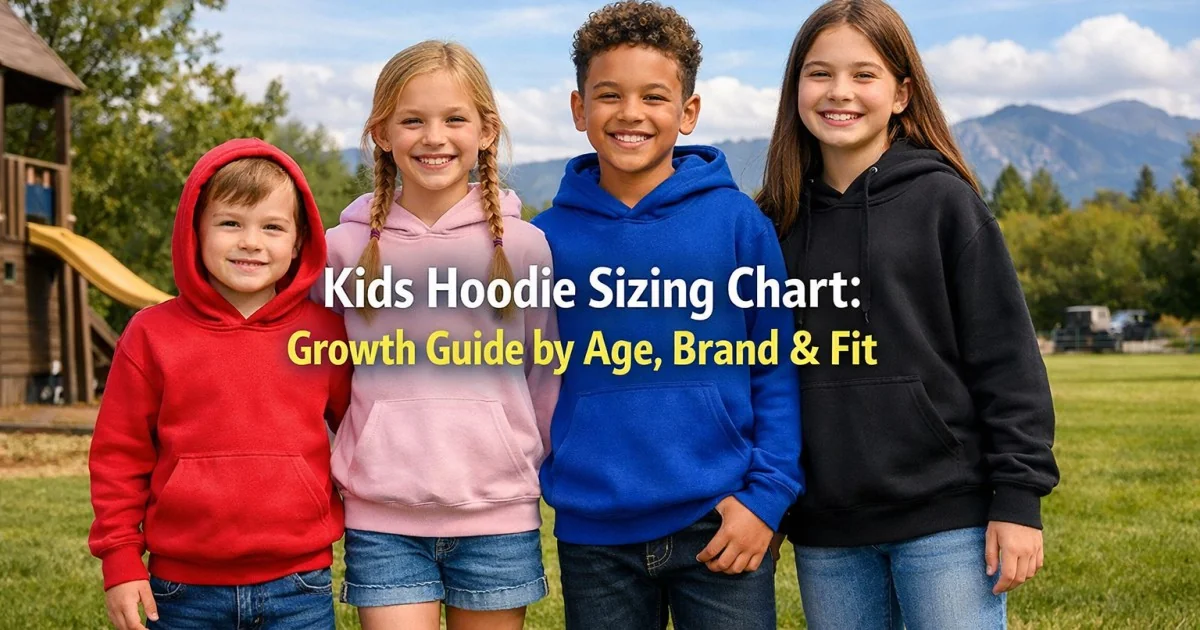
Here's the thing and I'm being completely honest with you there is no universal standard for children's clothing sizes. That 5T from one brand might be completely different from a 5T from another. The "age" printed on the label is really just a suggestion, not a guarantee. Kids grow at wildly different rates, and their body shapes vary so much that relying on age alone is honestly setting yourself up for disappointment.
So let me walk you through everything I've learned over the years about finding the perfect hoodie fit for your child. This guide covers actual measurement strategies, understanding different sizing systems, fabric considerations that affect fit, and real-world tips that will save you time and money.
Understanding Kids' Clothing Sizing Systems
Before we even talk about measurements, you need to understand that the children's clothing industry doesn't work the way most people think it does. Unlike adult clothing where size is relatively standardized, kids' clothing brands create their own sizing guidelines based on their target demographic. This means a "6" at one brand might fit completely differently than a "6" at another brand.
There are actually three main sizing approaches in children's clothing:
Age-Based Sizing is what most American brands use. You'll see labels like 2T, 3T, 4T (toddler sizes), and then 4, 5, 6 (regular kids sizes). This system assumes that all kids of a certain age are roughly the same size, which we all know isn't true. A four-year-old can vary dramatically in height and weight depending on genetics and individual development.
Height-Based Sizing is more common in European brands. These use measurements like 98 cm, 104 cm, 110 cm, and so on, corresponding to height ranges. While this is more specific than age, it still doesn't account for variations in chest width, shoulder width, or sleeve length that different body types require.
Measurement-Based Sizing is actually the most accurate system, where brands specify chest width, body length, sleeve length, and sometimes shoulder width. This is what you should be looking for whenever possible because it removes the guesswork.
| Sizing System Type | Common Use | How Reliable? | Best For |
|---|---|---|---|
| Age-Based (2T, 3T, 4, 5, 6) | US brands primarily | Moderate kids vary greatly | Starting point only, not final decision |
| Height-Based (98 cm, 104 cm) | European brands | More reliable for length | Tall or short kids, better precision |
| Measurement-Based (chest width, length) | Higher-end brands, activewear | Very reliable | Most accurate should always use this |
The Essential Measurements You Need to Take
This is where most people go wrong. They either don't measure at all, or they measure incorrectly. Let me give you the exact measurements you need to take, and I mean exactly, because precision matters here.
Chest Width (Half Chest Measurement): Have your child stand with arms relaxed at their sides. Lay a hoodie flat that fits them well, and measure from armpit to armpit straight across. This gives you the half-chest measurement. Most size charts use half-chest because that's how manufacturers measure garments. If you're measuring your child directly, measure around the fullest part of their chest with the tape measure running horizontally, then divide by two. This is your baseline for torso width.
Body Length: This is measured from the highest point on your child's shoulder down to where the hoodie should end. Have them stand straight with relaxed shoulders. Measure from the base of their neck where a shirt collar would sit, down the front to where you want the hem to hit. Most children prefer hoodies to hit right at their hip, maybe an inch or two below their natural waist. This is a personal preference, but it affects how you'll size.
Sleeve Length: Here's where people make mistakes. Have your child bend their elbow at a 90-degree angle with their hand on their hip. Measure from the center of their shoulder, over the elbow, down to their wrist bone. This is the measurement you need. If you measure with their arm relaxed, you'll get it wrong. The elbow-bent position is how the garment industry measures sleeves because that's the functional position.
Shoulder Width: This is less commonly listed but helpful for some brands. Measure from the outer edge of one shoulder to the outer edge of the other shoulder across the back, keeping the tape measure parallel to the ground. For kids, this typically ranges from 10 inches at age 2 to 18 inches by age 12.
Here's a practical tip I use all the time: if your child already owns a hoodie that fits them well, lay it flat on a table and measure it directly. This is honestly the most accurate method because you're measuring actual garment dimensions. Compare those measurements to the size chart of what you're thinking about buying. This removes so much guesswork.
Age-Based Sizing Chart: What to Actually Expect
While I've emphasized that age shouldn't be your only reference, it's still helpful to know typical measurements for different age ranges. Keep in mind these are averages, and your child might be smaller or larger.
| Age Range | Typical Height | Chest (Half) | Body Length | Sleeve Length | Common Size Label |
|---|---|---|---|---|---|
| 1-2 years | 28-34 inches (71-86 cm) | 13-15 inches (33-38 cm) | 15.5-17 inches (39-43 cm) | 15-17 inches (38-43 cm) | 12M-2T |
| 2-3 years | 34-38 inches (86-97 cm) | 14-15.5 inches (35-39 cm) | 16-18 inches (41-46 cm) | 16-18 inches (41-46 cm) | 2T-3T |
| 3-4 years | 38-42 inches (97-107 cm) | 15-16 inches (38-41 cm) | 17-19 inches (43-48 cm) | 17-19 inches (43-48 cm) | 3T-4T |
| 4-6 years | 40-46 inches (102-117 cm) | 16-17.5 inches (41-44 cm) | 18-20 inches (46-51 cm) | 18-21 inches (46-53 cm) | 4-6 |
| 6-8 years | 46-50 inches (117-127 cm) | 17-19 inches (43-48 cm) | 20-22 inches (51-56 cm) | 20-23 inches (51-58 cm) | 6-8 |
| 8-10 years | 50-55 inches (127-140 cm) | 18-21 inches (46-53 cm) | 21-23 inches (53-58 cm) | 22-24 inches (56-61 cm) | 8-10 |
| 10-12 years | 55-60 inches (140-152 cm) | 20-23 inches (51-58 cm) | 23-25 inches (58-64 cm) | 23-26 inches (58-66 cm) | 10-12 |
| 12-14 years | 60-66 inches (152-168 cm) | 22-25 inches (56-64 cm) | 25-28 inches (64-71 cm) | 25-28 inches (64-71 cm) | 12-14 / XS-S |
Accounting for Growth Without Overdoing It
This is where the real strategy comes in, and it's probably the question I get asked most often. Parents want their kids to wear something longer than just one season, but they also don't want the hoodie to be so oversized that the kid looks ridiculous or, worse, that it creates safety issues.
The general guidance is to leave about 1 to 2 centimeters of extra room in the chest for regular everyday wear. For the length, you can go a bit more generous maybe 2 to 3 centimeters, or up to half an inch. For sleeves, this is trickier because overly long sleeves get rolled, bunched, or caught on things. I recommend leaving just a quarter inch of extra room in sleeve length if you want growth room, or going with the exact measurement if you want it perfect now.
Here's what I actually do in practice: if a child is right in the middle of their size range, I buy that size. If they're on the larger end of a size range, I might consider the next size up. If they're on the smaller end, I stick with their current size. This usually gives about four to six months of growth room, which is reasonable for most kids.
The reason I'm careful about this is that oversized hoodies actually present a safety concern. Sleeves that are too long can catch on playground equipment or get caught in doors. A torso that's too wide creates a tripping hazard. There's a sweet spot between "room to grow" and "properly fitted," and that sweet spot is important.
Think about the average preschool child who grows about 6 to 8 centimeters per year. That's roughly 2 to 3 centimeters per season. So if you buy a size now with 2 to 3 centimeters of extra room, you're looking at about one season of good fit before they're truly at the limit of that size. School-age kids from about 7 to 11 years old typically grow a bit more slowly, maybe 4 to 6 centimeters per year, so you can get a bit more mileage out of a size with extra room.
Understanding Fabric Weight and How It Affects Fit
Here's something most people don't think about: the fabric weight of a hoodie actually influences how it fits, and it matters for sizing decisions.
Lightweight hoodies (200-250 gsm, which stands for grams per square meter) are thin and breathable. These are great for spring and early fall, and they drape more closely to the body. When you're sizing lightweight hoodies, you can be more precise with your measurements because the fabric doesn't add much bulk. A size that's meant to fit your child's measurements will actually fit pretty well.
Midweight hoodies (250-350 gsm) are the most popular choice because they work year-round. These are thicker and have more structure. They're usually made from cotton-polyester blends, often in ratios like 65/35 (more cotton) or 50/50 (equal blend). These perform beautifully and drape well. Midweight is my go-to recommendation for most kids because it's durable, holds its shape well, and provides good comfort without being restrictive.
Heavyweight hoodies (350-450 gsm) are the winter warriors. These are substantially thicker and made for cold climates. When you're buying a heavyweight hoodie, you might actually want to be a tiny bit more careful about the fit because the fabric adds significant bulk. If the measurements are tight to begin with, the extra material bulk might make it uncomfortable.
Here's a practical consideration: cotton-polyester blends tend to shrink slightly, especially if they're dried in a hot dryer. I always recommend air-drying kids' hoodies, which is gentler on the fabric and helps it last longer. If you do use a dryer, use low heat. Some parents buy a size up specifically to account for shrinkage, but I think it's better to buy the right size and care for it properly.
Brand Variations: Why the Same Size Doesn't Fit Everywhere
I've spent two decades in fashion, and this still surprises people: there is absolutely no standardization in children's sizing across brands. A size 6 at one brand might fit a 7-year-old perfectly, while a size 6 at another brand is way too small or oversized.
Why does this happen? Each brand makes sizing decisions based on their target customer. A brand that caters to larger kids will size their garments bigger. A brand that designs for slimmer children will make narrower cuts. Some brands intentionally size generously because their customers like extra room. Others size more snugly because they believe in a fitted aesthetic.
This is why checking the size chart is absolutely non-negotiable, not optional. You cannot assume that because a child wears a size 7 in one brand's hoodie that they'll wear a size 7 in another brand's hoodie. I know this sounds obvious when I say it, but you'd be surprised how many people skip this step.
Here's my recommendation: after you find one or two brands that fit your child well, note their sizing patterns. Keep that information handy. Over time, you'll know that Brand A always sizes slightly small, so you go a size up, while Brand B is generous, so you go true to size or even size down. This saves so much frustration.
Common Sizing Mistakes (and How to Avoid Them)
Let me address the mistakes I see most often, because learning from others' missteps can save you time and money.
Mistake #1: Relying Entirely on Age Labels. This is probably the biggest one. Parents buy what the label says will fit their child's age, and then it doesn't fit at all. The label is just a starting point, not a guarantee. Your child's actual measurements are what matter.
Mistake #2: Not Measuring Your Child. This seems obvious, but so many people guess. They'll say "my kid is about average," or they'll try to eyeball it. None of that works. Actual measurements take five minutes and eliminate guessing. It's worth it.
Mistake #3: Ignoring the Brand's Specific Size Chart. Every brand provides a size chart. Every single one. And parents skip right past it. That chart is there for a reason because the brand knows their own sizing. Use it.
Mistake #4: Buying Too Much Size for Growth. I understand the logic here kids grow fast, so get them a size bigger now and they'll wear it longer. But here's the problem: an oversized hoodie doesn't just look silly. It creates safety issues. Long sleeves can get caught on things. Loose torsos create tripping hazards. There's a balance between "room to grow" and "safe to wear," and it leans toward fitting better rather than bigger.
Mistake #5: Forgetting to Measure the Actual Garment. This is my secret weapon. If you're buying online and unsure, check if the brand provides garment measurements (not just child size recommendations). If they do, that's incredibly helpful. If you're buying a brand your child has worn before, measure that old hoodie flat on a table. Compare the measurements. This removes so much doubt.
Mistake #6: Not Considering How Shrinkage Affects Length. Here's something people don't always think about: if you buy a hoodie and it shrinks slightly, it affects length more than width because length is where the shrinkage is most visible. If you're buying something that's already at the longer end of your child's preference, and it shrinks, suddenly the proportions might be off. Keep this in mind, especially with natural fibers like 100% cotton.
Safety Considerations in Hoodie Sizing and Features
Beyond fit, there are genuine safety aspects to consider when choosing a kids' hoodie, and I want to make sure you're aware of these.
Drawstrings: The U.S. Consumer Product Safety Commission (CPSC) has specific regulations about drawstrings in children's upper outerwear for sizes 2T through 12. Hood and neck drawstrings are actually prohibited because they present a strangulation hazard. Kids can catch these on playground equipment or have them accidentally pulled. If a hoodie has these drawstrings, remove them or look for a different option. Waist drawstrings are allowed but limited to 3 inches outside the garment when the jacket is expanded. The best option is a hoodie with no drawstrings at all look for snaps, buttons, or elastic alternatives instead.
Oversizing and Movement: As I mentioned earlier, an oversized hoodie creates legitimate safety concerns. Sleeves that cover the hands entirely or go past the fingertips create tripping hazards on stairs and can get caught in doors or equipment. A torso that's way too big can bunch up and restrict movement when a child needs to be active. Make sure the hoodie fits close enough for safe, unrestricted movement.
Zippers and Closures: If the hoodie has a zipper, check the quality. Cheap zippers snag easily and can pinch skin, especially delicate neck skin. Better-quality zippers move smoothly and won't catch fabric. Some premium hoodies have a fabric guard over the zipper for extra protection. If a zipper is consistently problematic on an otherwise good hoodie, it might be worth having it replaced by a seamstress or getting a zipper pull protector.
Small Decorative Elements: Check that any buttons, patches, sequins, or decorative elements are firmly attached. These can become loose with washing and present a choking hazard, especially for younger kids. If something feels loose, remove it or reinforce it with heavy thread before the child wears the hoodie.
Fabric Quality and Breathability: This affects both comfort and safety. Fabrics that are too stiff or synthetic can trap heat, causing kids to overheat. Quality hoodies should allow airflow while providing warmth. Cotton-polyester blends generally perform well here, as they balance breathability with durability.
Regional and International Sizing Differences
If you're shopping internationally, be aware that sizing standards differ by region.
The United States primarily uses age-based sizing (2T, 3T, 4, 5, 6, etc.). It's fairly inconsistent across brands, but at least you're familiar with the system if you're shopping domestically.
Europe typically uses height-based sizing (98, 104, 110, 116, 122, 128, 134, 140, 146, 152, 158, 164). This is more precise for length but doesn't account as well for width variations. If you're buying from a European brand, find your child's height and match it to their chart.
Some countries use different systems entirely. When buying internationally, always refer to that brand's specific size chart and, if possible, check customer reviews from people in your region to see how the brand's sizing compares to what you're used to.
The Practical Shopping Strategy
Here's how I actually shop for kids' hoodies, bringing everything together:
Step One: Measure my child or check my notes from the last hoodie that fit well. I write down chest width, body length, and sleeve length. I keep these in a spreadsheet because my kids' measurements change, and I like having the history.
Step Two: When I find a hoodie I like, I immediately check the brand's size chart. I look for the size that corresponds to my child's measurements. Not their age their measurements.
Step Three: I look at how much extra room that size provides. Is the sleeve length a quarter inch longer (good for growth), or is it half an inch longer (probably too much)? Do the chest measurements give about 1 centimeter of extra room? I'm looking for a sweet spot.
Step Four: If I can see the garment measurements (not just size recommendations), I use those. I compare the garment length, chest width, and sleeve length directly to what I need. This is the most accurate method.
Step Five: Once I buy something that works, I keep that information. "Size 8 from Brand X fits my child perfectly" becomes a reference point for future purchases from that brand.
Step Six: I always check the care label and follow the instructions. For kids' hoodies, I'm almost always air-drying because I want the garment to last through multiple kids and possibly through hand-me-downs.
Troubleshooting Fit Issues
Sometimes you buy something and it's not quite right. Let me address the most common issues and whether they're fixable.
Sleeves Too Long: This is incredibly common. If the sleeves are just slightly long, rolling them is fine for casual wear. If they're excessively long, you can have them hemmed by a seamstress. It's not expensive and might save a hoodie you otherwise love. You can also fold up the inside cuff and secure it with a couple of hand stitches if you want a quick temporary fix.
Sleeves Too Short: This is much harder to fix. You can't easily add length to sleeves. If the sleeves are borderline, wearing it for one more season might still be okay if the child doesn't mind the length. But if they're genuinely too short, this isn't really fixable without professional alteration, which gets expensive. Better to get the right size initially.
Torso Too Wide or Too Tight: A torso that's too tight is uncomfortable and restricts movement time to exchange or return it. If it's too wide, you can wear it as-is if the child likes the relaxed fit. If it's drastically oversized, it's a safety concern and shouldn't be worn for active play. Some people take in the side seams, but that requires alterations.
Length Too Long or Too Short: Length issues are about preference. Some kids like a longer hoodie that sits lower on the hip; others prefer it more fitted. As long as it's not a safety issue (too long to trip on, too short to cover the torso), it's workable. If it's genuinely wrong, you might exchange it.
Shrinkage After Washing: This is preventable with proper care. Air-dry when possible. If the hoodie does shrink, you have limited options you can't easily unshrink a garment. This is why understanding fabric content and following care instructions matters.
Quality Indicators to Look For
Beyond fit, look for these quality markers in a kids' hoodie. These affect durability and longevity, which matters if you want the hoodie to last through multiple wearings or even through other kids.
Stitching: Look at the seams. Are they straight and even? Do they appear to be double-stitched, especially in stress areas like the underarms and shoulder seams? Good quality hoodies have reinforced stitching in high-wear areas. This affects how long the hoodie lasts with active kids.
Cuffs and Ribbing: The cuffs at the wrist and hem should be made of quality ribbing that holds its shape after multiple washes. Cheap ribbing loses elasticity quickly and starts looking bunched and sad. Quality ribbing bounces back.
Fabric Weight and Hand Feel: Pick up the hoodie and feel it. Does it feel substantial, or does it feel thin and flimsy? Midweight hoodies should have some heft. The fabric should feel soft but sturdy. If it feels like it might pill or tear easily, it's probably lower quality.
Dye Quality: Check if the colors look even and vibrant. If dye appears blotchy or inconsistent, that's a quality control issue. Quality hoodies have consistent, even coloring.
Seam Allowances: This is something manufacturers care about, and you can often see it in the cut. Are the seams hidden inside the garment? Can you see raw edges of fabric at seams? Good quality means seams are finished nicely, even if they're visible.
Final Tips from Two Decades of Fashion Writing
Let me share some final wisdom from my years in this industry:
Buy hoodies in the exact size your child needs now, with just a bit of growth room built in. Not next year's size. Not "they can grow into it." Now, with reasonable growth room. Your child will be happier wearing something that fits well, moves well, and feels comfortable.
Don't get attached to brands. Just because your child wore Brand A last year doesn't mean you need to stick with them forever. If a different brand starts fitting better, switch. Kids' bodies change, and brands sometimes adjust their sizing. Stay flexible.
Keep notes on what works. Write down the brand, size, and whether it fit well or poorly. Over time, you'll develop a knowledge base that takes the guesswork out of shopping. This is worth the effort.
Check the care label and follow it. So many hoodies are ruined by improper washing. Hoodies are not complicated, but they do have basic care needs. Respecting those needs extends the life of the garment significantly.
If you're buying online and can't try it on first, know the return policy. Sometimes you'll guess wrong, and you need to be able to send it back. A good return policy is worth a few extra cents of shipping.
Quality matters, but you don't need the most expensive option. A midrange hoodie from a reputable brand, properly cared for, will last through childhood and potentially through siblings. The sweet spot is quality midweight hoodies at a reasonable price point.
Trust your measurements over everything else. Your child's actual chest width, body length, and sleeve length matter more than age, more than brand reputation, more than what the label says. Measure, compare to the chart, and go from there.
Finding the perfect hoodie for your kid is genuinely more complicated than it should be, and I've spent this whole article trying to take the mystery out of the process. The reality is that with a few measurements and access to the brand's size chart, you can figure this out consistently.
Stop relying on age. Start measuring. Check the size charts. Build a knowledge base of what works for your kid and which brands fit them well. Make smart decisions about growth room enough to last a reasonable time, but not so much that it creates safety issues or makes them uncomfortable.
A well-fitting hoodie is something your child will actually want to wear, and that matters. It's that piece they grab on a chilly morning because it feels good, moves right, and makes them comfortable. That's what you're looking for, and now you know exactly how to find it.
