Best Colors for Kids' T-Shirts That Hide Stains
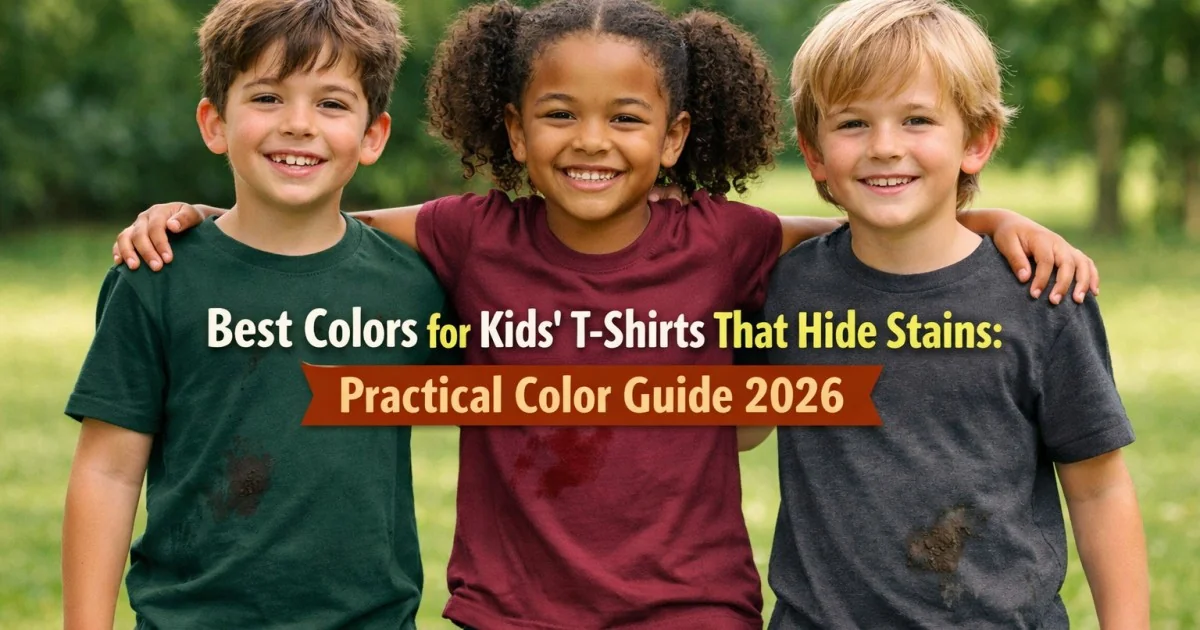
Let me be honest: after nearly two decades of writing about children's clothing, one of the most practical pieces of advice I can give is this the color of your child's t-shirt directly impacts how much laundry stress you'll experience. I've watched parents buy beautiful white and pastel t-shirts for their active kids, only to find those t-shirts permanently stained after a few weeks of regular wear. I've also watched parents strategically choose dark colors and patterns and end up with a wardrobe that looks fresh and clean week after week.
The truth is that choosing t-shirt colors that hide stains isn't about being pessimistic or accepting defeat. It's about being smart and practical. It's about understanding color theory, knowing which hues naturally conceal stains, and making strategic choices that reduce laundry stress and extend the life of your child's clothing.
So let me walk you through exactly which colors hide stains best, why they work, which colors to avoid at all costs if you have a messy kid, and how to balance practicality with style when choosing colors for your children's t-shirts.
The Science: Why Dark Colors Hide Stains and Light Colors Don't
Understanding the basic color theory helps explain why this works. Dark colors absorb light, which means variations and discolorations become less noticeable. When light reflects off a surface, imperfections become visible. This is why a chocolate stain on navy blue is nearly invisible while the same stain on white is glaringly obvious.
Think about it practically: a child's dark navy t-shirt with a small grass stain blends in because the stain color is already similar to the base color. The variation in shade is subtle. Meanwhile, that same grass stain on a white or pale pink t-shirt stands out dramatically because the contrast between the stain and the base color is significant. The stain literally jumps out at you.
This isn't just about aesthetics. This is about the reality of living with active children. Kids eat messily. They play outside. They get sweaty. They spill things. A strategic color choice means you're not frantically trying to remove stains that would otherwise be heartbreaking losses of clothing.
The Dark Color Champions: What Actually Works
Black: The Ultimate Stain Hider: Black is the gold standard for stain concealment. Virtually nothing shows on black. Chocolate, grass, mud, ketchup, spaghetti sauce all become nearly invisible on a black t-shirt. The downside is that black can feel heavy or formal to some people, and some kids resist wearing black because they don't think it's fun. But if you can get past that, black is genuinely your best friend for a messy kid's wardrobe.
Navy Blue: The Practical Powerhouse: Navy is the more versatile alternative to black. It hides stains almost as well as black while feeling slightly less formal or heavy. Navy is considered more "fun" by many kids and fits better into a casual wardrobe aesthetic. It's probably the single best balance of stain-hiding capability and wearability for kids.
Charcoal Gray: The Underrated Option: Charcoal (dark gray) is excellent at hiding stains while being less severe-looking than black. It's versatile, can be dressed up or down, and genuinely conceals most stains. The downside is that it's slightly lighter than black or navy, so extremely visible stains might still show, but for everyday messes, it works beautifully.
Dark Green: The Practical Earth Tone: Dark green, especially forest green or hunter green, is fantastic at hiding stains. Grass stains practically disappear. Mud blends in. Food stains are less visible. Dark green also feels more playful and fun than black or navy while still being highly practical.
Burgundy and Wine Colors: The Sophisticated Hiders: Dark red and burgundy hide stains surprisingly well, especially red-toned stains like ketchup or tomato sauce. They also feel less institutional than black or navy while maintaining excellent stain-hiding properties. These colors are underrated for practical kids' clothing.
Dark Brown: The Earthy Practical Choice: Dark brown hides most stains effectively, especially dirt and mud. It feels warm and friendly while being genuinely practical. Brown pairs with almost any other color, making it versatile for mixing and matching.
The Compromise Colors: When You Need Some Style
Heather Gray: The Best Light-ish Option: If dark colors feel too limiting, heather gray is your best compromise. Heather gray isn't a pure gray it's a mixture of dark and light fibers that create visual texture. This texture naturally helps conceal stains better than solid gray. Heather gray still hides stains reasonably well while feeling less heavy than charcoal or black. It's probably the lightest color I'd actually recommend for an active kid.
Olive Green: The Trendy Practical Choice: Olive is a muted, earthy green that's currently trending. It hides stains better than most medium colors while feeling more interesting than basic dark colors. If you want something that feels modern and practical, olive is worth considering.
Slate Blue: The Fashion-Forward Practical Option: Slate blue is darker than typical blue but lighter than navy. It feels more interesting and fashion-forward than navy while still hiding stains effectively. If your tween is resistant to navy because it feels boring, slate blue might be the compromise.
The Colors to Absolutely Avoid for Messy Kids
White: The Stain Magnet: White shows everything. Every tiny mark, every barely visible splash, every speck of dirt. A white t-shirt on an active kid will be stained within a day. White is impractical for daily wear, period. Save white for special occasions or kids who are exceptionally careful.
Cream and Pale Pastels: The Second-Worst Option: Light pink, pale yellow, light blue, pale green all of these show stains readily. They're only marginally better than white. If you love pastels, save them for dress-up occasions or kids who wear clothes carefully.
Light Gray: Not as Good as Heather: Solid light gray shows stains more readily than heather gray. If you're going to wear gray, go for heather. Skip the light gray.
Beige and Khaki: Impractical for Active Kids: While beige and khaki are neutral and practical-seeming, they actually show stains quite readily. Dirt and food stains are visible on these lighter neutrals. Skip them for everyday wear on active kids.
Patterns and Prints: Your Secret Weapon for Color Variety

If solid dark colors feel limiting, patterns and prints are your answer. Patterns and prints are naturally better at hiding stains because the visual complexity breaks up the appearance of any discoloration.
Camouflage Patterns: The Ultimate Stain Hider: Ironically, camouflage which is designed to hide things is also excellent at hiding stains. The multiple colors and visual complexity mean stains blend right in. If your kid will wear it, camo is genuinely one of the best choices for stain concealment.
Busy Geometric or Abstract Prints: Visual Complexity Helps: Any pattern with multiple colors, geometric shapes, or visual complexity naturally hides stains. The more visual interest in the pattern, the less noticeable a stain becomes. A multicolor geometric print is far more forgiving than a solid color.
Tie-Dye: Naturally Forgiving: Tie-dye, with its random color variations, is excellent at hiding stains. The varied colors mean any new stain blends with the existing variation. Tie-dye is both trendy and practical.
Comic or Graphic Designs on Dark Backgrounds: A graphic design on a dark background combines the stain-hiding benefits of dark color with the visual interest of a design. This is probably the best balance of practical and stylish.
Subtle Prints on Dark Colors: Small patterns or subtle prints on dark backgrounds combine stain-hiding with interest. This is a sophisticated approach to practical clothing.
Which Stains Hide Best on Which Colors
Different stains hide better on different colors. Understanding this helps you make strategic choices.
| Stain Type | Best Hiding Colors | Worst Hiding Colors | Why |
|---|---|---|---|
| Grass/Garden | Dark green, navy, black, olive | Light colors, especially light blue | Green blends with green; shows on light |
| Mud/Dirt | Brown, black, dark green, navy | All light colors | Brown blends with similar tones |
| Chocolate/Coffee | Black, dark brown, navy, charcoal | White, cream, pastels | Brown tones blend |
| Red Sauce/Ketchup | Burgundy, dark red, black, navy | White, light colors | Red blends with similar colors |
| Oil/Grease | Dark colors universally | Light colors | Grease darkens fabric; visible on light |
| Fruit Juice | Reds for red juice; dark colors for purple | Light colors | Color matching helps concealment |
| Sweat Marks | Dark gray, navy, black | Light gray, white | Sweat darkens; shows on light |
| Ink/Pen | Black, navy | All light colors | Ink dark, blends with dark colors |
Age-Appropriate Color Strategy
Toddlers (Most Messy): Skip light colors entirely. Invest heavily in dark colors and patterns. Navy, black, dark green, and patterned options are essential. These kids are eating messily, spilling constantly, and getting dirty. Practicality is paramount.
Preschoolers (Still Very Messy): Dark colors and patterns remain the best choice. You can introduce heather gray if you want some variety, but keep the majority of the wardrobe in darker, more forgiving colors.
Elementary School Kids (Increasingly Careful): You can introduce more variety now. Dark colors still make sense for active play, but you can add some medium tones and patterns. Heather gray is acceptable. Still minimize white and pastels.
Tweens (More Self-Conscious): Style starts mattering more, so color variety becomes important. You can compromise by using dark colors for everyday play and patterns for more visible outfits. Let them have input on color choices.
Teens (Style First): At this point, they have strong style preferences. You can't force dark colors on them if they don't want to wear them. Compromise with patterns, accept that some light colors will show stains, or teach them good stain treatment habits.
The Practical Reality: Balancing Practicality and Style
Here's the honest truth: you don't have to choose between practicality and style. You can do both. The strategy is to build a wardrobe that uses dark colors and patterns as your foundation, then adds style pieces more strategically.
The Everyday Core: Build your core wardrobe with practical dark colors and patterns. These are the t-shirts your child reaches for regularly for school, active play, outdoor time. Navy, black, dark green, heather gray, patterns these are your workhorses.
The Style Pieces: Add style pieces in lighter colors, trendier options, or special designs. But keep these for occasions where they can be changed if they get stained, or where the activity is less likely to result in stains. These are your special-occasion or less-active pieces.
The Compromise Approach: Use patterns and designs on darker bases. A graphic t-shirt with an interesting design on a dark background gives you style without sacrificing practicality. This is often the best balance.
The Trending Color That Actually Works: Mocha Mousse
In 2026, Pantone's Color of the Year is Mocha Mousse a rich, warm brown neutral. What's interesting is that this trendy color is also genuinely practical for kids' clothing. It hides stains effectively, feels warm and inviting rather than harsh like black, and looks current and stylish. It's a rare case where the trending color is also the practical choice. If you want something that's both fashionable and functional, mocha mousse is worth considering.
My Recommendation: The Smart Color Strategy
If you take nothing else from this article, take this: build your child's everyday t-shirt wardrobe primarily around dark colors and patterns. Navy, black, dark green, heather gray, and multicolored or patterned options should make up at least 70-80% of your everyday t-shirts. This foundation keeps laundry manageable, reduces stress, and means clothes actually stay looking good.
Add lighter colors, pastels, and whites only for special occasions or for children old enough to be genuinely careful. Or add them strategically for dress-up occasions where staining isn't a concern. This balanced approach lets you have style while maintaining practicality.
Most importantly, don't feel guilty about choosing dark colors for their practicality. You're not limiting your child's style you're being smart about managing an active kid's wardrobe. Dark colors are chic, they're practical, and they're a legitimate fashion choice. They just happen to also hide stains.
