Best Necklines and Sleeves for Kids' Comfort
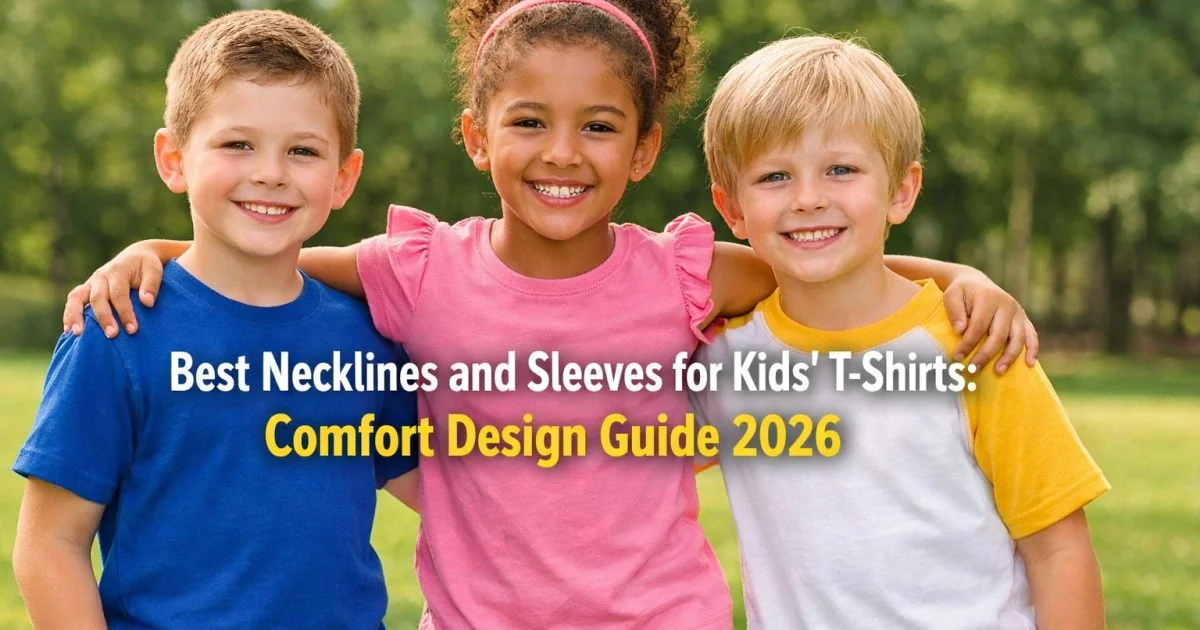
Most parents dramatically underestimate how much neckline and sleeve style affects their child's actual comfort and willingness to wear clothing. I've watched parents buy beautiful, quality t-shirts in perfect colors, only to have their child refuse to wear them because the neckline felt wrong or the sleeves restricted movement. I've also watched smart parents choose specific necklines and sleeves that their children actually gravitate toward repeatedly.
The truth is that neckline and sleeve design aren't just about appearance. They directly impact how comfortable a t-shirt feels to wear all day, how much movement is possible, how much ventilation the garment provides, and whether the t-shirt actually gets worn or sits unworn in the drawer. For kids with sensory sensitivities, these details can be genuinely transformative.
So let me walk you through exactly which necklines and sleeves work best for different comfort needs, from understanding how necklines affect sensory experience to discovering why some sleeve designs offer dramatically better freedom of movement than others.
Necklines: More Than Just Style
The neckline of a t-shirt affects comfort in multiple ways: how the fabric sits against the neck, how much ventilation it provides, whether the neck feels restricting or open, and whether any tags or binding irritate sensitive skin.
Crew Neck: The Classic That Works for Most: Crew neck is the traditional round neckline that sits close to the base of the neck. For many kids, crew neck is perfectly fine secure, not gaping, classic looking. The fit is snug enough that the shirt doesn't shift around, which many kids find reassuring. The downside is that the fabric sits right at the neck, which can feel restrictive to some children, particularly those with sensory sensitivities. Additionally, if there's a tag at the crew neck, the child will notice it constantly. For most kids, crew neck is fine, but for kids who are sensitive to clothing at their neck, it's not ideal.
V-Neck: The Solution for Neck-Sensitive Kids: V-neck creates a more open neckline that descends in a V shape toward the chest. This open design means significantly less fabric contact at the neck area. Kids who find crew neck too restrictive or who have sensory sensitivities often genuinely prefer V-neck because it reduces that fabric-at-neck sensation. The ventilation is better, the opening is roomier, and the overall feeling is less constricting. The downside is that V-necks provide less warmth around the neck and can feel less formal or appropriate depending on the context. For everyday wear and comfort, though, V-neck is genuinely preferable for many kids.
Scoop Neck: Maximum Openness: Scoop neck is even wider than V-neck a generously rounded, open neckline. This is genuinely the most comfortable neckline option for kids who are sensitive to clothing at their neck or who prioritize breathability. The open neckline provides maximum ventilation, minimum fabric contact at the neck, and that relaxed, comfortable feeling. Scoop neck is less common in basic kids' t-shirts, which is unfortunate because it's genuinely excellent for comfort. For kids with sensory sensitivities around the neck area, scoop neck is often preferable to both crew and V-neck.
What About Tags at the Neckline: This matters more than you might think. A tag positioned at the back neckline of a crew neck sits right where it'll bother the child all day. Many kids tolerate this, but some find it genuinely uncomfortable or irritating. For kids with sensory sensitivities, tagless labels are absolutely worth seeking out. If a t-shirt must have a tag, a tag positioned on the side seam rather than the back neck is significantly less bothersome.
Sleeve Types: Freedom of Movement Matters
Beyond the neckline, sleeve design dramatically affects both comfort and the child's ability to move freely during play and activity.
Short Sleeves: The Standard: Short sleeves are the most common kids' t-shirt style, ending just a couple of inches down the arm from the shoulder. Short sleeves provide maximum arm freedom, excellent breathability, and are ideal for warm weather and active play. There's minimal fabric to restrict movement, and kids can move and reach freely. For most everyday wear and warm weather, short sleeves are genuinely perfect. The downside is no sun protection and no warmth for cooler days.
Long Sleeves: Warmth and Protection: Long sleeves provide full arm coverage for warmth, sun protection, and layering capability. For cold weather, long sleeves are practical. The potential downside is that they can feel heavy, they're too warm for hot weather, and if the fit is tight, they can slightly restrict arm movement. For children with sensory sensitivities, long sleeves with binding at the wrist can sometimes be uncomfortable. But for cool weather wear, long sleeves are the right choice.
Three-Quarter Sleeves: The Versatile Option: Three-quarter sleeves extend from the shoulder to the mid-forearm, hitting between the elbow and wrist. This length is genuinely versatile it provides arm coverage and some sun protection while still allowing excellent freedom of movement. The style is less common, but it's genuinely a great option for transitional seasons or for kids who like some arm coverage. The downside is availability three-quarter sleeves aren't as standard as short or long, so you have to seek them out.
The Game-Changer: Raglan vs. Set-In Sleeves
If you want one piece of information that genuinely affects children's comfort, it's this: raglan sleeves are dramatically better for active kids and freedom of movement than traditional set-in sleeves.
Set-In Sleeves: Traditional Design with a Limitation: Traditional t-shirts have sleeves sewn perpendicular to the body, with the seam sitting right at the shoulder point. This is the standard construction most t-shirts use. The problem is that this seam placement creates a restriction point. When your child raises their arms to throw, reach, or climb, the shoulder seam creates tension. The further they raise their arms, the more that seam restricts movement. For many kids this is fine, but for very active kids or kids doing sports, this restriction can be noticeable.
Raglan Sleeves: The Freedom-of-Movement Champion: Raglan sleeves are constructed completely differently. Instead of a seam at the shoulder, raglan sleeves extend diagonally from the neckline all the way down to the underarms. This means there's no shoulder seam to create a restriction point. When your child raises their arm, there's no tension, no pulling, no restriction. The arm moves completely freely. Additionally, raglan sleeves create a wider underarm space, which means better ventilation in the underarms and less sweat accumulation. For active kids, for sports, for climbing and playing, raglan sleeves are genuinely better.
The only potential downside to raglan sleeves is that they're less formal-looking and might not match the aesthetic of a traditional t-shirt. But for actual comfort and movement, they're superior.
The Sensory-Sensitive Child: What Actually Works

For children with sensory sensitivities, certain neckline and sleeve combinations make a genuine difference in whether getting dressed is a battle or goes smoothly.
The Ideal Sensory-Comfortable Design: A wide scoop neckline or V-neck combined with raglan short sleeves creates genuinely comfortable sensory experience. Here's why: the open neckline means minimal fabric contact at the neck, eliminating that constricting sensation. Raglan sleeves mean no shoulder seams to irritate. Short sleeves mean no long fabric against the arms. The combination is maximally comfortable and minimally irritating.
Other Sensory Considerations: Beyond neckline and sleeves, binding quality matters for sensory-sensitive kids. Soft, stretchy binding is comfortable; rigid, stiff binding is irritating. Flatlock seams (completely flat against skin) are more comfortable than raised seams. Tagless labels are vastly superior to tags for sensory-sensitive kids. When you're shopping for a sensory-sensitive child, look for these details in combination with good neckline and sleeve design.
Neckline and Sleeve Combinations for Different Needs
| Child's Need | Best Neckline | Best Sleeve Type | Best Construction | Why It Works |
|---|---|---|---|---|
| Very Active/Sports | Crew or V-neck | Raglan short | Soft binding, flatlock seams | No shoulder seam restriction, full movement |
| Sensory Sensitivity | Scoop or V-neck | Raglan short | Tagless, soft binding, flatlock | Open neckline, no shoulder seams, minimal irritation |
| Hot Weather | V-neck or Scoop | Short sleeves | Soft, breathable binding | Maximum ventilation and breathability |
| Cold Weather | Crew neck | Long sleeves | Durable binding, quality construction | Warmth around neck, full arm coverage |
| Everyday School/Play | Crew neck | Short sleeves | Standard quality binding | Appropriate looking, functional, comfortable |
| Transitional Weather | Crew or V-neck | 3/4 sleeves | Soft binding at wrist | Flexibility across seasons, some coverage |
| Maximum Comfort | Scoop or V-neck | Raglan short | Soft, flatlock, tagless | Open, unrestricted, minimal irritation |
Binding Quality: The Detail That Makes Difference
Beyond neckline and sleeve type, the quality of the binding (the finished edge) affects how comfortable the t-shirt actually feels.
Soft, Stretchy Binding: The Comfortable Option: Binding that's soft and stretchy accommodates movement and feels comfortable against skin. Quality binding maintains its shape through many washes and doesn't stiffen or lose elasticity. This is what you want. The binding should feel soft to touch and shouldn't be noticeably stiff or rigid.
Rigid or Over-Reinforced Binding: The Problem: Binding that's too stiff or over-reinforced for durability can actually be uncomfortable. A neckline binding that's rigid will feel constricting. Armhole binding that's too tight will restrict movement. This is especially problematic for sensory-sensitive kids. When you inspect a t-shirt, feel the binding. Does it feel soft and stretchy, or stiff and rigid? Soft wins for comfort.
Rolled Hems vs. Binding: Some premium t-shirts use rolled hems instead of binding, particularly on necklines. Rolled hems are often softer and more flexible than binding. If a t-shirt has rolled hems on the neckline instead of binding, it's often more comfortable, particularly for kids with sensory sensitivities.
Practical Shopping Strategy
When you're shopping for t-shirts that will actually be comfortable for your child, here's what to check:
Touch the Binding: Feel the neckline binding and armhole binding. Is it soft and stretchy or stiff and rigid? For comfort, soft wins.
Check the Sleeves: Look at how the sleeves are attached. Are they set-in traditionally (seam on shoulder), or are they raglan (diagonal seam)? For movement, raglan is better.
Inspect the Tag: Is there a tag? Where is it positioned? Is it soft or stiff? Tagless is ideal, side-seam tags are acceptable, back-neck tags are problematic.
Feel the Seams: Run your finger along the side seams. Are they flat (flatlock) or raised/bumpy? Flat seams are more comfortable.
Consider the Neckline: Does your child prefer open, relaxed necklines or do they not mind a fitted crew neck? If they have sensory sensitivities, scoop or V-neck is likely more comfortable.
Age-Based Preferences
Toddlers and Preschoolers: Generally tolerate crew necks well. Short sleeves are standard. Avoid anything with stiff binding. Tagless is preferable but many kids tolerate tags.
Elementary School Kids: Start having stronger preferences. Some may prefer V-neck or scoop neck if crew feels restrictive. Short sleeves still standard. Increasingly notice if binding is uncomfortable.
Tweens and Teens: Have distinct preferences. Many prefer more open necklines. Some may prefer raglan sleeves if they're athletic. Sensory sensitivities may become more noticeable. Style preferences matter alongside comfort.
The Bottom Line: Comfort is Worth Attention
Choosing the right neckline and sleeve combination for your child's comfort needs means they're more likely to actually wear the t-shirt, play comfortably, and not complain about how clothing feels. For sensory-sensitive kids, good neckline and sleeve design can genuinely transform getting dressed from stressful to smooth. For very active kids, raglan sleeves actually improve their ability to move freely. These details matter more than you might think.
