How Men Can Choose the Right Hoodie Fit
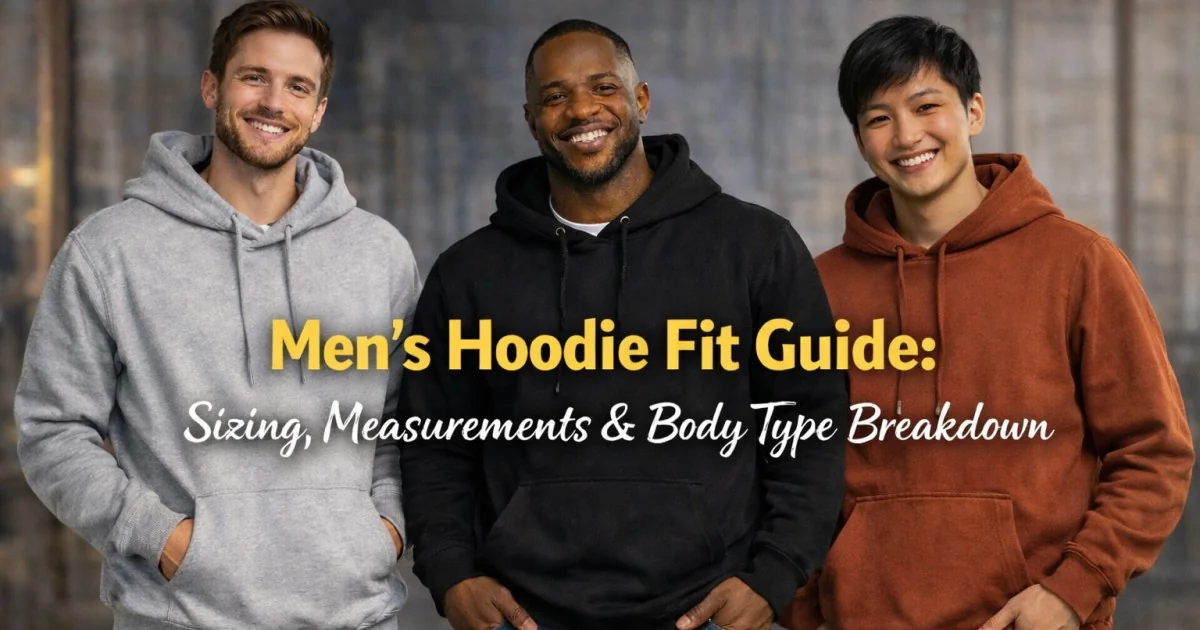
Hey guys, I'm going to be honest with you right from the start I've spent almost twenty years studying how clothes fit different bodies, and I've learned that men's hoodie shopping is surprisingly complicated. Most men think "it fits if my arms fit through the holes," but there's so much more to getting a hoodie that actually works for your body, your lifestyle, and your style goals. I've styled countless men, watched what actually makes them feel confident, and discovered that the right hoodie fit is genuinely transformative.
Here's what I've noticed: most men are wearing hoodies that are either too big (because they think bigger equals more comfortable) or slightly wrong (because they haven't thought about proportions). And I get it men's fashion marketing tells you that oversized is automatically better, that "one size fits all" is a real thing, and that fit doesn't really matter as long as it's casual. But that's complete nonsense. A hoodie that actually fits you properly makes you look better, feel better, and genuinely changes how you carry yourself.
This guide is everything I've learned about men's hoodie fit from understanding your body type to recognizing quality construction to knowing exactly what to look for when shopping. By the end, you'll know your ideal hoodie fit so well that you can walk into any store and grab something that works, or shop online with confidence. Let's find your perfect hoodie.
Understanding Hoodie Fit: The Difference Between Comfortable and Flattering
First, let's clarify something important: comfortable and flattering aren't mutually exclusive. A hoodie that fits well is actually more comfortable than one that doesn't, because it moves with your body instead of against it. When fabric is bunching or pulling in weird places, it's uncomfortable. When it's proportional to your frame, you feel great.
Proper fit also matters because it changes how people perceive you. A hoodie that's way too big reads "I'm hiding" or "sloppy." A hoodie that's too small reads "I outgrew this" or "uncomfortable." A hoodie that fits right? That reads confident, put-together, and intentional. Same guy, same hoodie quality, totally different impression based on fit.
Body Type Breakdown: Finding Your Ideal Fit
Slim/Athletic Build: Fitted or Standard FitIf you're naturally lean or have a narrow frame, fitted or standard hoodies work beautifully. You don't need extra room it'll just make you look smaller. A fitted hoodie follows your frame and creates a clean silhouette. You can actually pull off hoodies that broader guys can't because you don't have shoulder width concerns.
Key specs: shoulders should hit your actual shoulder point (not drooping), sleeves should end at your wrist bone, torso should have minimal excess fabric (maybe half an inch on each side when standing relaxed).
Muscular/Broad-Shouldered: Standard or Relaxed FitFitted hoodies will feel restrictive on you your shoulders and chest need room. Standard fit gives you the space to move and flex without the hoodie riding up or feeling tight. Relaxed fit works if you prefer extra room, but be careful not to go so oversized that you look sloppy.
Key specs: shoulders should sit right at or slightly inside your natural shoulder point (too tight = uncomfortable, too loose = sloppy), chest should have obvious room (an inch or more on each side), sleeves should be generous but not drowning you.
Heavier/Rounder Build: Standard or Relaxed FitYou need hoodies that don't cling but also don't drown you. Structured fabrics (not floppy) matter here they hold their shape and look intentional. Standard fit with quality fabric usually works better than oversized, because oversized often reads as trying too hard to hide.
Key specs: shoulders at or slightly inside your natural point, enough torso room that nothing's stretching (but not swimming in fabric), length hitting at hip or just below, sleeves ending at wrist bone without excess gathering.
Tall Guys: Standard or Extended SizesRegular hoodies are probably too short on you they hit your waist when you need them hitting your hip or below. Look for "tall" or "extended" sizes specifically, or size up in length only (this requires trying things on). Standard fit usually works, but with correct proportions for your height.
Key specs: proportionally longer sleeves (reaching your wrist when arms relaxed), longer torso (hitting at or below hip), shoulders right-sized for your frame (not drooping but not tight).
Shorter Guys: Petite or Fitted OptionsA regular hoodie might overwhelm your frame or hit below your natural length. Petite sizes exist and work beautifully, or you can sometimes find standard hoodies from brands with smaller base sizing. The goal is proportional sleeves ending at your wrist, torso hitting hip-length, no excess fabric overwhelming your frame.
Key specs: shoulders at your actual shoulder point (no drooping), sleeves to your wrist bone, torso length proportional to your height (probably hip-length or just above), fitted or standard (not oversized).
The Shoulder Seam Test: Your Most Important Fitting Rule
Here's the single most important fitting guideline I can give you: the shoulder seam of the hoodie should sit right at your natural shoulder point. Not drooping past it. Not tight above it. Right there.
To find your natural shoulder point: relax your arms at your sides. Feel the bone structure where your arm connects to your shoulder. That's your shoulder point. A properly fitting hoodie's shoulder seam sits right there.
Why does this matter? Because when shoulder seams are wrong, everything else gets weird. Too-droopy shoulders make you look smaller, less confident, and the rest of the fit falls apart. Too-tight shoulders restrict movement and look uncomfortable. Right-sized shoulders make everything else work perfectly.
Sleeve Length: Getting This Right Changes Everything
Your hoodie sleeves should end at your wrist bone where your wrist meets your hand. Not your palm (too short), not your hand (too long). Right at the wrist bone.
When sleeves are too short, your wrists look exposed and the hoodie looks like it doesn't fit. When sleeves are too long, they bunch up, cover your hands, and look sloppy. Perfect sleeve length shows your hands completely and looks intentional.
Pro tip: measure from the back of your neck down your arm to your wrist bone. That's your ideal sleeve length. Many hoodies list this measurement.
Torso Fit: The Comfort-Confidence Balance
Too Tight: Pulling across chest, bunching at sides, feeling restrictive. This makes you look uncomfortable and limits your movement.
Too Loose: Massive excess fabric, looks droopy, silhouette disappears, reads as sloppy or like you're hiding.
Just Right: You can pinch about half an inch to an inch of fabric on each side when standing relaxed. The hoodie follows your general shape without clinging or overwhelming. You move freely, you look proportional.
For the chest area specifically: there should be room to layer a shirt underneath comfortably, but the hoodie should follow your chest without creating weird folds or bunching.
Length: Where Your Hoodie Should End
Cropped (Rare for Men's Hoodies): Hits at your natural waist. Only works if you're intentionally going for a shorter look usually not recommended for most guys.
Standard/Hip-Length (Perfect for Most): Hits right at your hip bone or just below. This is the goldilocks zone. Covers your rear, follows natural proportions, works with almost any outfit.
Long/Mid-Thigh: Hits mid-thigh. Works if you like a longer look or prefer maximum coverage. Can look oversized if not balanced with fitted proportions elsewhere.
Pro tip: most men look best in hip-length hoodies. They're proportional, versatile, and don't require special balancing with other pieces.
| Measurement | How to Measure | What to Look For | Common Mistakes |
|---|---|---|---|
| Shoulder Seams | Back of neck to shoulder point | Should sit exactly at shoulder point | Too droopy or too tight |
| Sleeve Length | Back neck center down arm to wrist | Should end at wrist bone | Too short or covering hands |
| Chest Width | Armpit to armpit across front | 2-4" larger than your chest | Too tight or drowning in fabric |
| Length | Back neck center down to hem | Hip-length (standard) | Too short or excessively long |
Fit Styles Explained: Knowing Your Options
Fitted: Follows your body closely. Minimal excess fabric. Best for slim or athletic builds. Creates defined silhouette. Might feel restrictive on broader frames.
Standard/Regular: Some room but follows your proportions. Works for most body types. Comfortable and balanced. The safest choice for most men.
Relaxed: More room than standard but not oversized. Feels comfortable and casual. Good for broader frames or guys who prefer extra space.
Oversized: Intentionally big. Creates a statement or casual vibe. Can work if proportions elsewhere (fitted pants) balance it. Can also look sloppy if not styled carefully.
For most men, standard fit is your answer. It's comfortable, flattering, and versatile.
Fabric Weight Affects Fit Perception
Heavier hoodies (300+ gsm) hold their shape better and create cleaner silhouettes. Medium weight (250-300 gsm) is standard and versatile. Lightweight hoodies (under 250 gsm) can look droopy if not fitted well.
This matters for fit because a lightweight oversized hoodie looks shapeless, while a heavyweight oversized hoodie looks intentional. Quality and weight make a huge difference in how the fit is perceived.
Neckline Considerations: More Important Than You Might Think
Standard Crew Neck: Most common, works for most body types. Make sure it's not so tight it chokes you or so loose it gapes.
Higher Crew Neck (Mock Turtle): Sits higher on your neck, creating more visual height. Good for broader shoulders or if you like more neck coverage.
Lower Crew Neck: Sits lower, more relaxed. Good if you like more airflow or have a shorter neck.
The neckline should sit comfortably at the base of your neck not tight, not gaping, not choking.
Hood Fit: Often Overlooked, Always Important
Hood Size: The hood should fit your head comfortably when pulled up. Not so tight it squishes your face, not so loose it falls forward and blocks your vision.
Hood Drawstrings: Should be proportional to the hood size. You want to be able to cinch them comfortably. They shouldn't be so short they're useless or so long they hang past your chest.
Hood Opening: When the hood is up, your face should be framed nicely without excessive fabric bunching. The opening should be proportional to your head size.
Pro tip: try the hoodie on with the hood up. Make sure it doesn't look ridiculous or feel uncomfortable.
Top Brands: Known for Good Fit
- Patagonia: True sizing, well-constructed hoodies that last
- Champion Reverse Weave: Classic fit, reliable quality
- Uniqlo: Simple hoodies with consistent sizing
- Everlane: Transparent sizing, ethical production
- Gap/Gap Factory: Accessible prices, predictable fit
- Lululemon Metal Vent: Premium quality, specific sizing
- Alo Yoga: Performance hoodies with athletic fit
Common Hoodie Fit Mistakes Men Make
- Buying oversized thinking it's more comfortable: Actually restricts movement and looks sloppy
- Ignoring shoulder seams: Wrong shoulder fit makes everything else off
- Sleeves too long: Covers hands, looks childish or sloppy
- Not checking length: Too short looks wrong, too long looks oversized
- Choosing based on fabric softness alone: Soft fabric in wrong fit looks terrible
- Assuming one size fits all: Hoodies vary wildly between brands
- Not trying the hood on: Hood might be uncomfortable or look weird
Your Ideal Hoodie Spec Sheet
Write these down and reference them when shopping:
- Fit Type: [Fitted/Standard/Relaxed based on your body]
- Shoulder Seam Width: [Exact measurement]
- Sleeve Length: [Exact measurement]
- Chest Width: [Exact measurement]
- Total Length: [Exact measurement]
- Ideal Weight: [250-300 gsm for most]
- Neckline Height: [Standard/Higher/Lower preference]
Use these specs to evaluate every hoodie you're considering. When you have specifics, shopping becomes easy.
How to Measure Yourself at Home
Shoulder Width: Back of neck center to shoulder point (where arm attaches). Usually 16-18" for average men.
Sleeve Length: Back neck center down your arm with arm relaxed to wrist bone. Usually 32-36" depending on your height.
Chest: Around fullest part of your chest with arms at sides. Whatever your chest is, add 3-4" for comfortable hoodie room.
Length: Base of neck center front down to where you want hoodie to end. Hip-length is usually 28-32" depending on height.
Quality Indicators Beyond Fit
Even with perfect fit, quality matters. Look for:
- Double-stitched seams (especially side seams)
- Reinforced shoulder seams
- Quality ribbing at cuffs and hem
- Smooth hood construction
- Proportional drawstrings
- Even color throughout
- No loose threads or puckering
Trying On: What to Actually Check
When trying on a hoodie:
- Check shoulder seams first this is make or break
- Raise your arms up to check sleeve length and comfort
- Bend at waist to check hood comfort and hoodie length
- Put hood up and check appearance and function
- Walk around does it feel right?
- Check side seams for pulls or weird bunching
The Confidence Factor
Here's the thing about wearing a hoodie that actually fits you right: you feel different. You stand taller. You move more confidently. You don't adjust it constantly. A properly fitting hoodie feels like a second skin it's there doing its job without you thinking about it.
That's what we're going for. Not overthinking it, just knowing you're wearing something that fits your body properly and looks intentional.
Your Action Plan
Right now, measure yourself using the specs above. Write down your numbers. Keep them in your phone. Next time you're shopping for a hoodie whether in-store or online reference these numbers. Try things on if possible, or use the measurements to evaluate online options.
Within a few purchases, you'll know your brands, your ideal sizing, your perfect proportions. Then buying hoodies becomes ridiculously easy.
You deserve hoodies that fit you properly. Not that swallow you. Not that restrict you. But actually fit. Let's make that happen.
