How to Layer T-Shirts for Maximum Style and Comfort
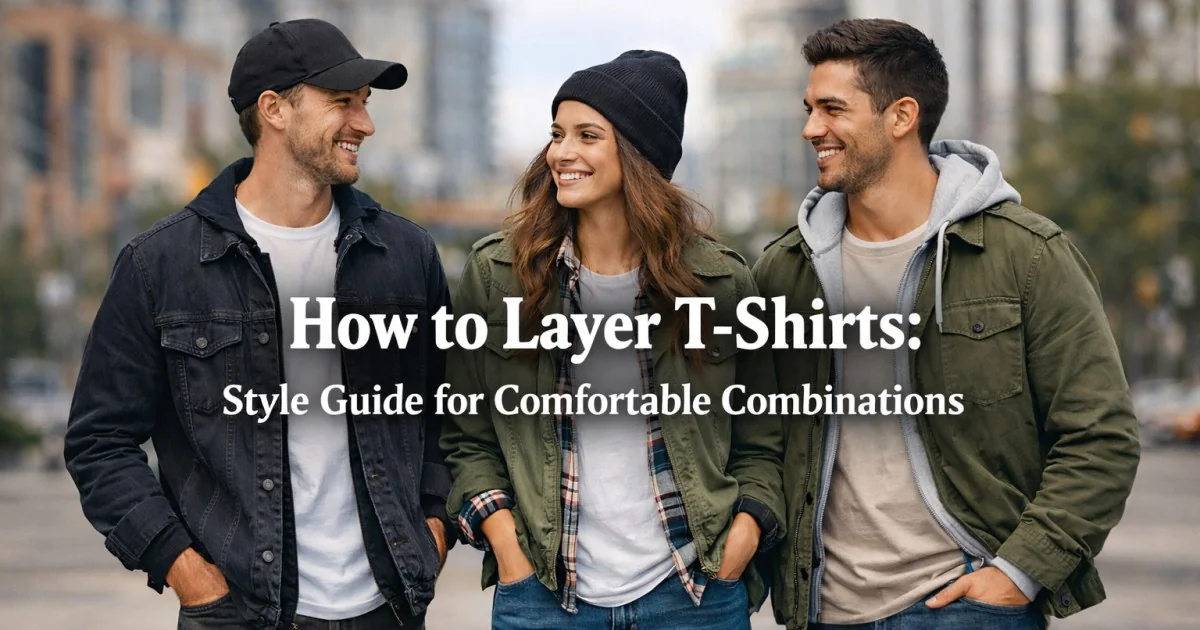
Layering is one of those skills that separates people who actually dress well from those who just throw on clothes. I've watched people create incredibly stylish looks by layering simple pieces, and I've watched other people layer the exact same pieces and end up looking bulky and confused. The difference isn't the pieces themselves it's understanding the principles of layering and executing them intentionally.
T-shirt layering specifically is something I've helped countless clients master over twenty years. Because here's the thing: t-shirts are incredibly versatile when you know how to layer them. A basic t-shirt under an open button-up suddenly becomes a completely different outfit. A t-shirt worn under a slightly sheer piece creates visual interest and depth. A t-shirt layered with another t-shirt in contrasting colors can look really contemporary and intentional. Or it can look like a disaster if you don't understand the principles.
Most people approach layering haphazardly, which is why it often looks off. They layer pieces that don't work together, they don't pay attention to proportions and fit, they choose colors that clash instead of complement, or they layer so many pieces that the resulting silhouette becomes bulky and unflattering. But layering doesn't have to be complicated. Once you understand the foundational principles color coordination, fit balance, proportional layering, and strategic piece selection you can layer t-shirts in ways that create intentional style and increase comfort without sacrificing aesthetics.
This guide covers everything: the foundational principles of successful layering, color strategies for layered outfits, fit and proportion considerations, specific layering techniques with t-shirts, seasonal layering approaches, occasions where layering works well, how to avoid common layering mistakes, building a wardrobe with layering in mind, and how to create your own layering combinations that work for your personal style.
The Foundations of Successful Layering
Before we talk about specific combinations, let's understand what makes layering actually work.
The Purpose of Layering
Layering serves multiple purposes beyond just fashion.
Temperature Control
This is the practical purpose of layering.
- Add warmth: Layer to adjust body temperature as weather changes.
- Remove layers: Shed pieces as you warm up during the day.
- Flexibility: Layering allows you to be comfortable across varying temperatures.
- The benefit: You're not too hot or too cold you're comfortable.
Visual Interest and Style
Layering creates intentional, interesting outfits.
- Creates depth: Layering adds dimension and visual complexity to outfits.
- Combines colors: Strategic color layering creates combinations that look intentional.
- Adds texture: Different fabrics create visual and tactile interest.
- The benefit: Outfits look more put-together and thoughtfully styled.
Proportion Management
Layering can adjust how your body proportions appear.
- Visual balance: Strategic layering creates visual balance in silhouettes.
- Define or minimize: Layering can emphasize or downplay different parts of the body.
- Create shape: Layering adds structure and can create more defined proportions.
The Principle of Fit Progression
This is the most important layering principle: fit must progress logically.
How It Works
- Base layer: Should fit close to the body (not necessarily tight, but not oversized).
- Middle layers: Can be slightly looser than base but not dramatically so.
- Outer layer: Can be looser or oversized, but there should be logical progression.
Why It Matters
- Visual clarity: Fit progression creates a clear visual hierarchy.
- Bulkiness: If every layer is loose, the overall silhouette becomes bulky and shapeless.
- Intention: Logical fit progression reads as intentional styling.
The Common Mistake
- Loose + loose + loose: Multiple loose pieces create an overwhelming silhouette that reads sloppy.
- The fix: Have at least one fitted element anchoring the look.
The Principle of Color Coordination
Colors must work together not clash or compete.
Monochromatic Layering
Same color family, different shades.
- Example: White t-shirt + light gray shirt + charcoal sweater.
- Why it works: Creates visual continuity while adding depth through shade variation.
- Effect: Looks intentional and refined.
- Easiest option: Hard to get wrong with monochromatic layering.
Complementary Layering
Colors that work well together.
- Example: Neutral t-shirt (black, white, gray) + colored layer.
- Why it works: Neutral base allows color to be the statement.
- Effect: Color is highlighted and becomes the focus.
- Versatility: Neutral base + any color works.
Contrasting Layering
Intentionally different colors that create visual interest.
- Example: Dark t-shirt + light colored open shirt.
- Why it works: Contrast creates visual interest and definition.
- Effect: Looks contemporary and intentional.
- Risk: Must be thoughtful not all contrasts work.
The Principle of Visible Elements
Strategic visibility of layers is key to successful layering.
What Should Be Visible
- Cuffs: Sleeves of inner layers should be visible at wrist.
- Neckline: If layering at neckline, inner layer should peek through intentionally.
- Hem: If layering with different lengths, inner layer hem should be visible purposefully.
What Shouldn't Be Visible
- Excess: Multiple layers peeking out in unintended ways looks sloppy.
- Random visibility: If parts show accidentally rather than intentionally, layering looks off.
The Impact
- Intentional visibility: Looks like deliberate styling choice.
- Accidental visibility: Looks like you got dressed haphazardly.
Specific T-Shirt Layering Techniques
The Classic: T-Shirt Under Open Button-Up
This is one of the most accessible and universally flattering layering techniques.
How It Works
- Base layer: Fitted or semi-fitted t-shirt (any color).
- Outer layer: Open button-up shirt (more structured than t-shirt).
- Visual effect: T-shirt framed by open shirt creates clear layering.
Color Combinations That Work
- Dark t-shirt + light shirt: Classic contrast, very clean.
- White t-shirt + patterned shirt: Neutral base lets pattern shine.
- Colored t-shirt + neutral shirt: Color becomes the statement.
- Same color family, different shades: Monochromatic, very sophisticated.
Fit Considerations
- T-shirt should fit closer: Not tight, but more fitted than the shirt.
- Shirt should be looser: Allows t-shirt to be clearly visible.
- Length balance: Both pieces should hit proportionally (both at hip, or similar).
Styling Tips
- Can wear shirt fully buttoned, partially buttoned, or fully open.
- Sleeves can be rolled for a casual effect.
- Works with any bottoms incredibly versatile.
The Contemporary: T-Shirt Over T-Shirt
Wearing one t-shirt over another is modern and creates visual interest.
How It Works
- Base layer: Fitted t-shirt with visible neckline or sleeves.
- Outer layer: Semi-fitted or slightly oversized t-shirt.
- Visual effect: Creates contemporary, fashion-forward look.
Color Strategy
- Contrasting colors: Creates clear visual separation (often best approach).
- Example combinations: White over black, light gray over navy, cream over charcoal.
- Monochromatic: Can work if shades are distinctly different (light gray over dark charcoal).
- Avoid similar shades: Looks like you put on the wrong thing if shades are too close.
Fit Considerations
- Base t-shirt: Fitted or close-fitting (shows the layering clearly).
- Outer t-shirt: Can be slightly oversized or semi-fitted.
- Length difference: Outer can be slightly longer, but shouldn't dramatically differ.
- Neckline visibility: Inner neckline should be clearly visible (V-neck showing crew neck underneath is classic).
What Makes It Work
- Intentional color contrast creates the visual interest.
- Clear visibility of inner neckline shows deliberate layering.
- Both t-shirts should fit properly (not bunching or gapping).
The Elevated: T-Shirt Under Structured Layer
A t-shirt under a more structured piece creates polish and intentionality.
Structured Layer Options
- Blazer: Most formal option, instantly elevates.
- Cardigan: Less formal than blazer, still adds structure.
- Structured sweater: More casual but still defined.
- Denim jacket: Very casual, still provides structure.
How It Works
- Base layer: Simple t-shirt (often neutral works best).
- Structured layer: Open or partially buttoned.
- Visual effect: Structured piece defines the silhouette while t-shirt provides comfort.
Why It Works
- Structure of outer piece anchors the outfit and elevates it.
- Simple t-shirt underneath keeps it from being overdone.
- Perfect balance of casual and intentional.
Occasions
- Blazer + t-shirt: Smart casual to elevated casual.
- Cardigan + t-shirt: Casual to smart casual.
- Denim jacket + t-shirt: Very casual, weekend vibes.
The Subtle: Long-Sleeve Under Short-Sleeve
Layering sleeves creates visual interest and practical warmth.
How It Works
- Base layer: Long-sleeved fitted shirt or thermal.
- Outer layer: Short-sleeved t-shirt.
- Visual effect: Creates sleeve contrast and visual depth.
Best Combinations
- White long-sleeve + navy t-shirt: Classic, very clean.
- Black long-sleeve + gray t-shirt: Sophisticated.
- Neutral long-sleeve + patterned t-shirt: Lets pattern shine while adding interest.
Fit and Proportion
- Long-sleeve should fit closely: Visible cuffs should be clean and intentional.
- T-shirt should be fitted or semi-fitted: Not oversized.
- Sleeve length balance: Long-sleeve cuffs should be visible about 1-2 inches at wrist.
Practical Benefits
- Adds warmth without bulk.
- Can roll up long-sleeves if you warm up.
- Creates visual interest and depth.
Color Strategies for Layered T-Shirt Outfits
The Monochromatic Approach
Staying within one color family with varying shades.
How to Execute
- Choose color family: Black/gray/charcoal, or white/cream/beige, or navy/light blue/royal blue.
- Vary shades: Light, medium, dark within that family.
- Create visual interest through shade variation, not color.
Why It Works
- Impossible to clash all colors work together.
- Creates sophisticated, intentional look.
- Very forgiving approach to layering.
Example
- White t-shirt + light gray cardigan + charcoal blazer (warm weather to cooler transitions).
- Navy t-shirt + light blue open shirt + navy sweater.
The Neutral Foundation Approach
Using neutrals as foundation, adding color strategically.
How to Execute
- Base layer: Neutral t-shirt (black, white, gray, navy, or beige).
- Mid layer: Either neutral or colored piece.
- Outer layer: Can introduce color or keep neutral.
Why It Works
- Neutral foundation makes everything work together.
- Allows color to be statement without overwhelming.
- Very versatile works for many different aesthetics.
Example
- Black t-shirt + burgundy open shirt + black or gray sweater.
- White t-shirt + light olive cardigan + cream or tan jacket.
The Color Pop Approach
Using color intentionally for visual impact.
How to Execute
- Base layer: Usually neutral t-shirt.
- Color layer: Colored piece (more saturated or interesting color).
- Balance: Keep other pieces neutral to let color shine.
Why It Works
- Color becomes intentional statement.
- Creates visual interest and personality.
- Draws attention strategically.
Example
- White t-shirt + emerald green shirt + neutral blazer or sweater.
- Neutral t-shirt + coral or rust cardigan + white or gray outer layer.
The Patterned Mix Approach
Combining patterns can work if done strategically.
How to Execute
- Keep one pattern bold: Other patterns should be more subtle.
- Color connection: Patterns should share at least one color for cohesion.
- Scale variation: Large pattern with small pattern works better than two similar-scale patterns.
Safe Combinations
- Solid + small print (usually works).
- Solid + stripe (very reliable).
- Large print + small print (if they share colors).
Risky Combinations
- Two bold, large-scale patterns (often clashes).
- Unrelated colors in patterns (creates visual discord).
- Too many patterns (gets overwhelming).
| Layering Technique | Best Color Strategy | Formality Level | Fit Consideration | Occasions |
|---|---|---|---|---|
| T-Shirt Under Open Shirt | Contrast or Monochromatic | Casual to Smart Casual | T-shirt fitted, shirt loose | Any |
| T-Shirt Over T-Shirt | Contrasting Colors | Casual to Contemporary | Inner fitted, outer semi-fitted | Casual, Weekend |
| T-Shirt Under Blazer | Neutral or Monochromatic | Smart Casual to Formal | T-shirt fitted, blazer structured | Professional, Elevated |
| Long-Sleeve Under Short-Sleeve | Contrasting or Monochromatic | Casual to Smart Casual | Both fitted, visible cuffs | Any with temperature variation |
| T-Shirt Under Cardigan | Neutral or Complementary | Casual to Smart Casual | T-shirt fitted, cardigan can be loose | Casual, Comfortable |
Seasonal Layering Approaches

Spring Layering
Spring requires flexibility as temperatures fluctuate.
The Challenge
- Morning cold, afternoon warmth.
- Need layers you can remove as day progresses.
- Want breathable pieces (winter layers are too heavy).
Best Approach
- Base: Lightweight t-shirt.
- Mid: Lightweight cardigan or light jacket.
- Removable: Can shed as you warm up.
Fabric Choices
- Lightweight cotton or cotton blends.
- Linen blends for breathability.
- Avoid heavy sweaters or thick cardigans.
Summer Layering
Summer layering is subtle and breathable-focused.
The Challenge
- Need cooling, not warmth.
- Layer must breathe and not add bulk.
- Want visual interest without overheating.
Best Approach
- Base: Lightweight, breathable t-shirt.
- Outer: Very light layer (linen shirt, thin cotton button-up).
- Minimal coverage: Open shirts work best.
Technique
- Wear light shirt completely open (over t-shirt, not buttoned).
- T-shirt under sheer shirt (sheer layer adds interest without warmth).
Fall Layering
Fall is the layering sweet spot multiple layers needed as temperatures drop.
The Opportunity
- Perfect time for layering experimentation.
- Can layer 2-3 pieces comfortably.
- Weather changes throughout day, so layers make sense.
Best Approach
- Base: Regular weight t-shirt.
- Mid: Light sweater, cardigan, or shirt.
- Outer: Structured jacket or blazer.
Fabric Choices
- Cotton and cotton blends.
- Light sweaters (merino, cotton blends).
- Structured jackets (denim, cotton twill).
Winter Layering
Winter layering is about warmth while maintaining style.
The Challenge
- Need significant warmth, not just style.
- Too many layers can create bulk.
- Want intentional look, not just piling on clothes.
Best Approach
- Base: Regular weight or thermal t-shirt.
- Mid: Sweater or thick cardigan.
- Outer: Structured jacket or coat.
Proportions Matter
- With heavy layers, fitted pieces become even more important.
- Choose tapered or fitted outer layers to avoid overwhelming silhouette.
- Avoid all loose pieces together (creates bulky, sloppy appearance).
Common Layering Mistakes and How to Avoid Them
Mistake 1: Too Many Layers in Wrong Order
What happens: Pieces bunch up, fit becomes awkward, silhouette looks sloppy.
Why it happens: People layer without thinking about progression.
How to avoid: Remember fit progression base closest, should be most fitted; each layer can be slightly looser.
Mistake 2: Clashing Colors
What happens: Colors compete instead of complement, outfit looks discordant.
Why it happens: Not thinking about color relationships.
How to avoid: Use monochromatic, neutral foundation, or intentional color pop approaches. Test combinations before wearing.
Mistake 3: Poor Fit Balance
What happens: Oversized everything creates shapeless silhouette.
Why it happens: People think "layering = loose everywhere."
How to avoid: Ensure at least one fitted element anchors the look. Base layer should fit closer.
Mistake 4: Visible Layers in Unintended Ways
What happens: Random pieces peeking out, looks accidental and sloppy.
Why it happens: Not paying attention to what's visible or not visible.
How to avoid: Be intentional about what shows. If inner neckline is visible, it should be deliberate. If sleeves show, they should frame intentionally.
Mistake 5: Too Many Patterns
What happens: Visual chaos, outfit becomes overwhelming and hard to focus on.
Why it happens: People don't think about pattern layering rules.
How to avoid: Limit patterns. Usually: solid + solid + solid, or solid + solid + subtle pattern. Avoid too many patterns at once.
Mistake 6: Ignoring Proportion of Individual Pieces
What happens: Even well-coordinated pieces look off because each piece's proportions don't work.
Why it happens: Focusing on the layer combination but not on individual pieces.
How to avoid: Each piece should fit well individually before layering. If a t-shirt is too long and a shirt is too loose, layering them won't fix that.
Building a Wardrobe with Layering in Mind
Foundation Pieces
Start with pieces that layer well.
- Fitted t-shirts: Multiple colors (black, white, gray, navy).
- Open button-up shirts: Various weights and colors.
- Cardigans: At least one neutral, lightweight option.
- Basic sweaters: Neutral colors, various weights.
Layering-Specific Considerations
When buying pieces, think about layering potential.
- Neckline variety: Crew neck, V-neck, scoop neck they layer differently.
- Fit variety: Mix fitted and semi-fitted pieces.
- Color coordination: Buy pieces that coordinate with existing pieces.
- Length variation: Different lengths create more layering options.
Avoid Excess Pieces
- Don't buy pieces that only work in isolation.
- Prioritize pieces that work standalone AND layered.
- Choose colors and styles that coordinate with what you have.
Occasions Where Layering Works Well
Casual Everyday
Layering is perfect for casual days.
- Easy combinations: T-shirt + light cardigan, or t-shirt under open shirt.
- Flexibility: Remove layers as needed.
- Style: Creates more intentional look than single t-shirt.
Smart Casual or Office Casual
Layering can elevate casual pieces into smart casual.
- Technique: T-shirt under blazer, or structured outer layer.
- Effect: Makes outfit look more polished and put-together.
- Versatility: Blazer can be removed for very casual settings.
Transit and Travel
Layering is practical for travel and variable temperatures.
- Temperature flexibility: Add or remove layers as environment changes.
- Space-efficient: One outfit can work across multiple settings.
- Comfort: Always comfortable regardless of temperature changes.
Casual Social Events
Layering creates intentional, interesting outfits for casual hangouts.
- Visual interest: More engaging than single piece.
- Thoughtfulness: Shows you put effort into your appearance.
When to Avoid Layering
- Very formal events (usually call for single outfit, not layered).
- Very hot environments (layering adds heat).
- Athletic activities (too restrictive).
Creating Your Own Layering Combinations
The Formula
Use this formula to create cohesive layered outfits.
- Step 1: Choose color story (monochromatic, neutral foundation, or color pop).
- Step 2: Choose base layer (fitted t-shirt that fits the color story).
- Step 3: Choose middle layer (fits the color story and provides structure).
- Step 4: Choose outer layer (completes the silhouette and color story).
- Step 5: Check fit progression (base closest, each layer can be slightly looser).
- Step 6: Check color coordination (colors work together, not clash).
- Step 7: Check visual interest (pieces create intentional look, not accidental).
Testing Your Combinations
- Try on the complete outfit before committing.
- Check fit, color, and proportions together.
- Make sure layers are visible intentionally, not accidentally.
- Verify the overall silhouette is balanced and flattering.
Documenting What Works
- Take photos of combinations that work well.
- Note which pieces layer together best.
- Keep a mental (or written) list of color combinations that work.
- Build on successful combinations rather than starting fresh each time.
The Real Benefit of Mastering Layering
Once you understand the principles of layering, you can take a relatively small wardrobe and create dozens of different outfits. A few basic t-shirts, some cardigans, shirts, and structured pieces combine in countless ways when you understand fit progression, color coordination, and intentional visibility. Layering transforms your wardrobe from limited options to nearly infinite combinations.
Beyond the practical multiplication of outfits, layering also allows you to express more creativity and personality through your style. It moves beyond simple outfit selection into deliberate visual composition. And it solves real practical problems temperature changes, variable weather, comfort needs while simultaneously creating more interesting, intentional looks.
Master these layering principles and you'll find yourself reaching for pieces more frequently, creating combinations you love, and feeling more confident in how you look. That's the real power of understanding layering.
