The Complete Guide to Layering T-Shirts
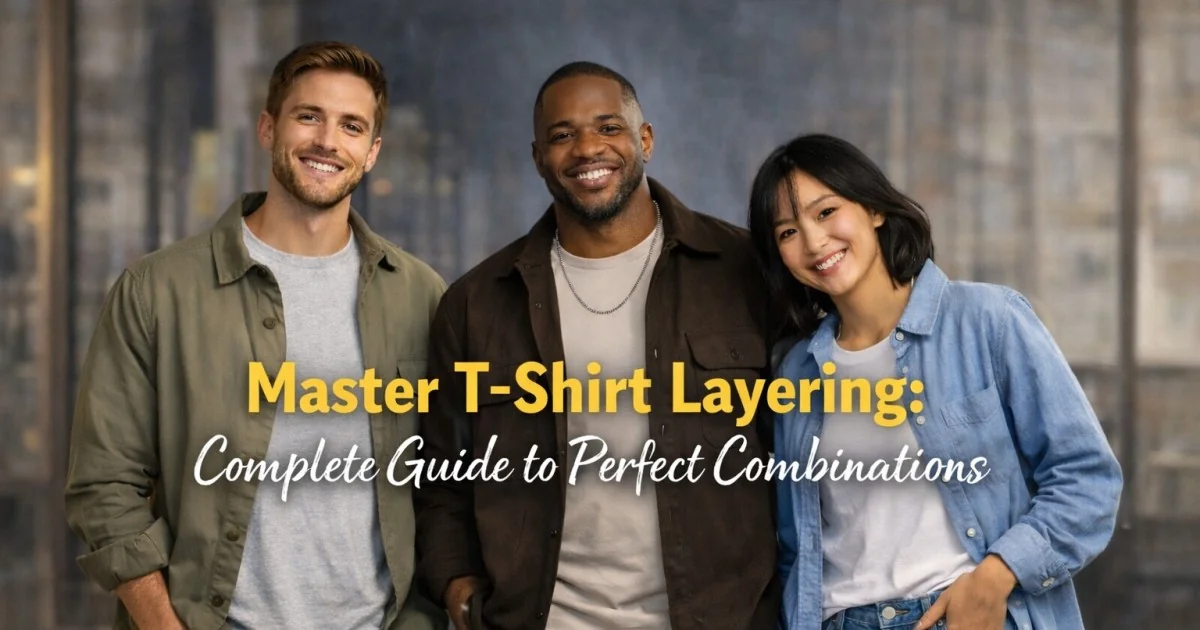
This isn't just about throwing on a long-sleeve under a t-shirt though that's part of it. This is about understanding proportion, color theory, texture, necklines, and how different fabrics interact. It's about knowing which shirts to layer together, which to layer under other pieces, and when to let pieces peek out versus when to keep them hidden. By the end of this guide, you'll have a completely new relationship with layering that makes getting dressed exponentially easier and infinitely more creative. Let's dive in.
Layering Philosophy: The Foundation
Before we talk specifics, let's establish the mindset. Layering is about creating visual interest, managing temperature, extending your wardrobe, and flattering your proportions through strategic clothing combinations. It's not random it's intentional.
Great layering follows these core principles: contrast (different textures, colors, or lengths), proportion (balancing volume), and intention (the visible layers tell a story). When you understand these principles, you can layer anything with anything else and make it work.
The Three Layering Scenarios: Which T-Shirt Goes Where
Scenario 1: T-Shirt as the Base Layer (Underneath)Your t-shirt is the foundation. It's under a shirt, sweater, blazer, or jacket. In this role, your t-shirt should either match your outer layer (creating a monochromatic column) or contrast intentionally (creating visual interest).
The t-shirt as base layer should generally be fitted not baggy. Baggy base layers create bulk under outer pieces. If your t-shirt is loose, it should be under something structured that contains it.
Scenario 2: T-Shirt as the Middle Layer (Visible But Secondary)This is my favorite layering scenario because it's where the magic happens. Your t-shirt is visible maybe under an open cardigan, unbuttoned shirt, or sheer top but another piece is still the "main character." Your t-shirt provides visual interest and texture.
In this role, your t-shirt can be bolder a graphic tee, a different color, interesting neckline. It works harder because it's partly visible. Proportions matter enormously here.
Scenario 3: T-Shirt as the Star (Top Layer)Your t-shirt is what everyone sees first. Everything else is supporting cast. In this role, your t-shirt needs to be the most interesting piece. It's your statement. Other layers should enhance, not compete.
Neckline Layering: The Most Important Consideration
This is where so many people mess up layering. Necklines either create visual harmony or visual chaos. Understanding neckline layering changed my entire approach.
Crew Neck Over Crew Neck = DisasterTwo crew necks on top of each other create visual heaviness and confusion. Your eye doesn't know where to focus. Avoid this unless the top crew neck is significantly higher (like a mock neck over a regular crew).
V-Neck Over Crew Neck = Visual ElongationThis is perfection. The V creates a long line over the crew underneath. It elongates your torso and creates an elegant visual column. This combination works beautifully.
Crew Neck Over V-Neck = Shape BalanceIf you layer a crew neck over a V-neck, the V peeks out underneath, creating a visual frame. The crew neck sits on top like a necklace. This works when you want the V-neck to be a design element.
Scoop Neck Over Anything = SoftnessScoop necks layer beautifully over crew necks or even other scoops because they're forgiving. The wider, softer opening creates feminine visual interest without feeling too heavy.
Mock Neck or High Crew Over Standard Crew = Modern ChicWhen the top layer's neckline is higher than the bottom layer's, you create visual interest with a built-in necklace effect. Gorgeous combination.
| Top Layer Neckline | Best Bottom Layer Neckline | Visual Effect | When to Use |
|---|---|---|---|
| V-Neck | Crew Neck | Elongating, elegant | Professional, date night |
| Crew Neck | V-Neck (peeking) | Framed, interesting | Casual, weekend |
| Scoop | Crew or another scoop | Soft, feminine | Everyday, comfortable |
| Mock/High Crew | Standard Crew | Modern, textured | Contemporary style |
Color Layering: Creating Depth and Interest
Monochromatic Layering (Same Color Family)Different shades of the same color create a sophisticated, elongated look. Cream over white, light gray over charcoal, navy over powder blue these combinations are effortlessly elegant. The different shades create subtle dimension without visual chaos.
Complementary Color LayeringColors opposite each other on the color wheel (blue and orange, purple and yellow, red and green) create visual excitement. Be careful not to make it garish use one bold and one neutral for balance.
Neutral Layering (Black, White, Gray, Beige)Layering neutrals on neutrals creates a clean, sophisticated base. Perfect for when you want the silhouette and texture to matter more than color.
The Pop StrategyNeutral outer piece + colored shirt peeking underneath = intentional pop of color. This is how you add personality while maintaining polish. A black cardigan over a coral tee, a cream blazer over a burgundy shirt the neutral frame contains the color.
Pattern Layering (Proceed Carefully)Two patterns can work if they're vastly different scales or color families. Small floral under large stripes? Usually no. But a small geometric under large geometric in different colors? Sometimes yes. When in doubt, pair one pattern with a solid.
Texture Layering: Creating Visual Complexity
Different fabric textures elevate even simple combinations:
Smooth Jersey Over Smooth Jersey = Boring. Flat. Uninteresting.
Smooth Jersey Over Textured Knit (Cable, Rib, Waffle): Instantly more interesting. The texture underneath creates visual depth even when mostly hidden.
Sheer Fabric Over Solid T-Shirt: The solid tee shows through the sheer, creating a layered effect. Elegant and intentional.
Fitted Tee Under Oversized Piece: Texture comes from the proportion contrast. The fitted base shows the difference in silhouette dramatically.
Sleeve Length Coordination: Often Overlooked, Always Important
Short Sleeves Over Long SleevesThe long sleeves peek out from under the short sleeves, creating a "mock long-sleeve" effect. Works beautifully and solves the temperature problem elegantly.
Short Sleeves Over Short SleevesOnly works if one is significantly shorter (cap sleeve over standard short sleeve) or if the neckline changes drastically. Otherwise, it just looks like a clothing mishap.
Long Sleeves Over Long SleevesThe inner sleeve should be narrower or fitted so it doesn't bunch under the outer sleeve. Create contrast with cuff colors or textures if possible.
Long Under Short = PerfectionLong sleeves under short sleeves create the most common, foolproof layering. You get sleeve color peeking out, temperature control, and visual interest. This combination works almost always.
Length Layering: Playing with Proportions
Cropped Over Standard: The standard tee hem shows below the cropped layer. Creates visual break and elongation.
Standard Over Oversized: The oversized piece peeks out, creating volume contrast.
Long Oversized Over Fitted: The fitted tee shows through the open oversized piece or at the sides. Creates balance.
Same Length (When It Works): Usually only works if necklines or colors create enough visual distinction. Otherwise, it reads as one bulky piece rather than two intentional layers.
20 Perfect Layering Combinations You Can Copy Today
| Top Piece | Bottom Piece (Tee) | Bottoms | Shoes | Occasion |
|---|---|---|---|---|
| White button-down (open) | Black crew neck | Dark jeans | Loafers | Office casual |
| Cream cardigan | Burgundy crew | Black trousers | Heels | Professional |
| Denim jacket | White graphic tee | Light jeans | Sneakers | Casual weekend |
| Leather jacket | Gray v-neck | Black leggings | Boots | Edgy casual |
| Blazer (neutral) | Patterned crew | Pencil skirt | Flats | Business |
| Sheer top | Black crew (as slip) | High-waist pants | Heels | Date night |
| Oversized sweater (open) | Fitted white tee | Jeans | Sneakers | Cozy casual |
| Linen shirt (open) | Neutral tank/tee | Shorts | Sandals | Summer |
Body Type Layering: Strategic Stacking
Petite: Avoid overly bulky layering that overwhelms your frame. Keep layers slim or fitted. Vertical lines (open cardigans) elongate.
Curvy: Layering can add flattering dimension. A structured outer piece over a fitted tee creates balance. Open layers show your shape while adding sophistication.
Tall: You can carry volume beautifully. Oversized pieces layered with fitted bases create interesting silhouettes.
Athletic/Straight: Layering creates curves and dimension. Fitted layers under slightly loose pieces add visual interest.
Seasonal Layering Strategy
Spring: Long-sleeve tees under short-sleeve pieces. Lightweight cardigans over tees. Create coverage without bulk.
Summer: Short tees under open linen shirts. Sheer layers over solid tees. Minimal bulk, maximum coverage.
Fall: Standard tees under sweaters and jackets. More substantial layering as temperature drops.
Winter: Thermal under everything. Maximum layering for warmth. Focus on fit to prevent bulk.
The Golden Rule of T-Shirt Layering
If you're layering two t-shirts together (tee under tee), the outer piece should be noticeably different different neckline, different length, different fit, or different color. If they're too similar, it just looks like an accident, not intentional style.
The moment you add a button-down, sweater, or structured piece as your outer layer, the rules relax slightly. The structure of the outer piece creates intention even with a simple crew neck underneath.
Common Layering Mistakes to Avoid
- Too much bulk: Layering thick fabric over thick fabric creates shapelessness
- Confused necklines: Two similar crew necks don't work without visual distinction
- Poor color choices: Random colors with no relationship create visual chaos
- Ignoring proportion: Oversized over oversized disappears into shapeless mass
- Neglecting fit: Loose base layers create weird bumps under fitted outer pieces
- Too matchy: Everything matching is boring; some contrast is essential
Your Layering T-Shirt Collection
Own these foundational pieces for maximum layering versatility:
- White fitted crew neck (the ultimate base)
- Black v-neck (for elongation)
- Gray crew neck (neutral workhorse)
- Patterned graphic tee (for interest)
- Long-sleeve fitted white (for layering under short pieces)
- Cream or beige (warm neutral)
- Navy (classic depth)
- One bold color (personality)
The Permission You Didn't Know You Needed
Layering isn't just about staying warm or being practical. It's creative expression. It's taking pieces you already own and creating entirely new looks. It's solving proportion challenges, managing temperature, and most importantly, having fun with fashion.
Experiment boldly. Try combinations that seem weird. Notice what works and what doesn't. Build your personal layering language. Soon you'll look at your t-shirt drawer not as a collection of separate items, but as a palette of endless combinations.
Your perfect layered looks are already in your closet. You just need to start stacking them intentionally.
