The Complete Guide to T-Shirt Weights and Thickness
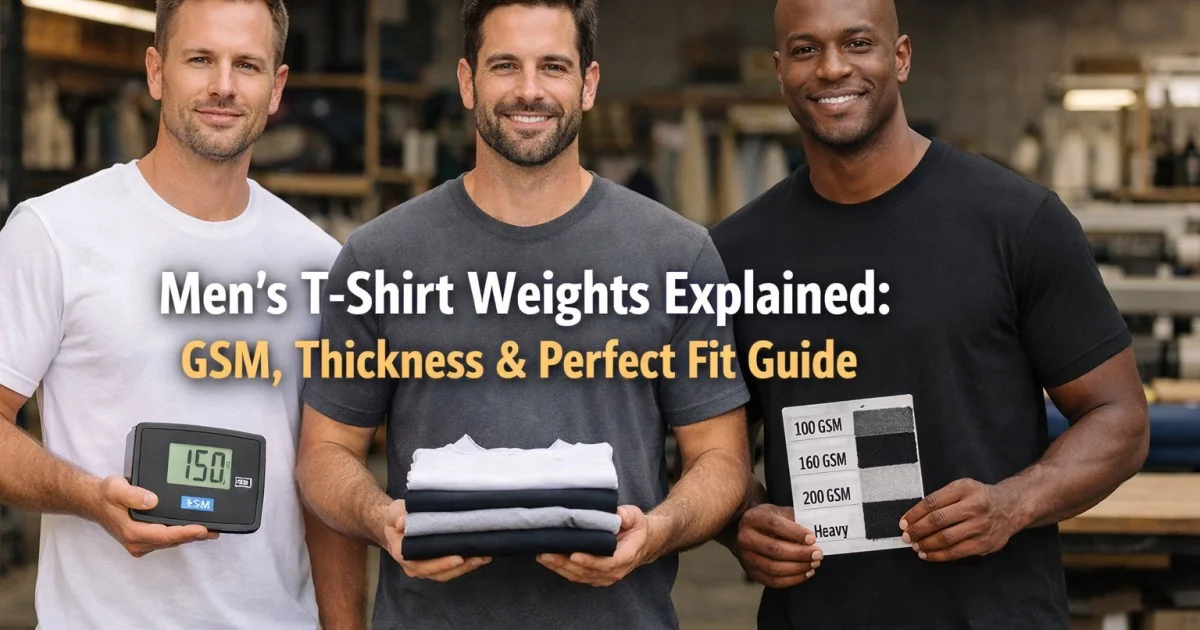
Most guys don't think twice about T-shirt thickness until they pull one out of the drawer and immediately know it's wrong either paper-thin and clingy, or so thick it feels like a hoodie pretending to be casual.
But fabric weight is one of the most important decisions in a T-shirt, affecting everything from how it drapes on your body to how it layers under sweatshirts, how it holds up in the wash, and even how it makes your outfits look more intentional.
After years of digging through wardrobes and hearing the same frustrations "This one clings everywhere," "That one shrunk to nothing," "Why does this feel like wearing a tent?" I've learned that understanding T-shirt weights is like unlocking a secret level of style ease.
This guide breaks down everything you need to know about T-shirt thickness: what the weights actually mean, how they feel on your body, when to choose each one, how they pair with different pants and layers, and practical tips to build a rotation that works for your life.
What "T-Shirt Weight" Actually Means
T-shirt weight is usually measured in GSM (grams per square meter), which tells you how much fabric is in a single square meter of material. The higher the GSM, the thicker and heavier the T-shirt.
Most everyday T-shirts fall between 120-220 GSM:
- Lightweight: 120-150 GSM – Thin, airy, often used for summer or layering.
- Mid-weight: 150-180 GSM – The sweet spot for most guys; substantial but comfortable.
- Heavyweight: 180-220+ GSM – Thick, structured, almost sweatshirt-like.
Brands don't always list GSM, but you can usually tell by feel: lightweight tees feel almost silky and drapey, mid-weight feel like a "real" T-shirt, and heavyweight feel substantial and structured.
| Weight (GSM) | Feel | Thickness | Best For |
|---|---|---|---|
| 120-140 | Light, silky, drapey | Very thin | Summer, layering under thin shirts |
| 140-160 | Soft, comfortable | Thin-medium | Everyday warm weather |
| 160-180 | Balanced, substantial | Medium | All-purpose everyday wear |
| 180-200 | Structured, solid | Medium-thick | Cooler weather, light layering |
| 200+ | Heavy, rigid | Very thick | Winter layering, vintage looks |
Lightweight T-Shirts (120-150 GSM)
These are the summer heroes thin, breathable, and perfect when you want something that disappears against your skin.
The Good
- Extremely comfortable in heat; air circulates easily.
- Drape beautifully on leaner frames.
- Great for layering under open shirts, light jackets, or sweatshirts.
The Challenges
- Often too sheer choose carefully to avoid see-through issues.
- Can cling to the body, highlighting every contour (good or bad).
- Wear out faster; prone to pilling and thinning after many washes.
When to Choose Lightweight
- Hot weather or high-activity days.
- As base layers under heavier pieces.
- If you prefer a very soft, almost second-skin feel.
Pro tip: For lightweight tees, darker colors (navy, black, olive) are more forgiving than white, which can go transparent easily.
Mid-Weight T-Shirts (150-180 GSM)
This is the gold standard for most men's everyday wear the perfect balance of comfort, structure, and versatility.
Why Mid-Weight Wins
- Enough substance to hold its shape without clinging or ballooning.
- Breathable enough for warm days, warm enough for cool evenings.
- Layers beautifully under sweatshirts, hoodies, and light outerwear.
Best For
- Your main T-shirt rotation.
- Pairing with jeans, chinos, or joggers.
- Both casual office and weekend wear.
If you're building a T-shirt lineup from scratch, make 70% of your tees mid-weight they're the workhorses that get worn the most.
Heavyweight T-Shirts (180-220+ GSM)
These are the structured, almost architectural tees that feel substantial and look vintage-inspired.
The Appeal
- Hold shape beautifully resist shrinking, twisting, and stretching.
- Create a clean, boxy silhouette that's very on-trend right now.
- Great for cooler weather or as an outer layer.
The Trade-Offs
- Less breathable; can feel hot indoors or in summer.
- Bulkier under layers best worn on their own or under looser pieces.
- Often more expensive due to more fabric used.
When Heavyweight Shines
- Paired with slim jeans or tapered pants for contrast.
- In fall/winter as a standalone piece.
- For guys who like a more structured, vintage-inspired look.
How Weight Affects Fit and Drape
Different weights behave completely differently on the body:
- Lightweight: Drapes and flows, follows body contours closely. Great on lean frames, can cling on broader builds.
- Mid-weight: Skims the body lightly, holds a clean line without hugging too tightly. Most flattering on average builds.
- Heavyweight: Sits away from the body slightly, creates structure and volume. Works well on athletic frames, can overwhelm smaller builds.
Match weight to your frame:
- Leaner/smaller frames: lightweight to mid-weight.
- Average/athletic builds: mid-weight to heavyweight.
- Larger frames: mid-weight to heavyweight for structure.
Weight + Color: How They Work Together
The weight of your T-shirt affects how color reads on your body:
| Color | Lightweight | Mid-Weight | Heavyweight |
|---|---|---|---|
| White | Often too sheer | Balanced, clean | Structured, opaque |
| Black/Navy | Forgiving, slimming | Versatile everyday | Bold, architectural |
| Gray | Soft, casual | Most flattering weight | Slightly formal |
| Bright Colors | Fun for summer | Balanced vibrancy | Statement piece |
Layering by Weight
T-shirt weight dramatically affects how it works under other clothes:
Under Sweatshirts & Hoodies
- Lightweight to mid-weight: Best layers cleanly without bulk.
- Heavyweight: Can create too much volume unless the sweatshirt is oversized.
Under Open Shirts & Overshirts
- Mid-weight: Perfect balance shows shape without fighting the outer layer.
- Lightweight: Good if you want a very casual, beachy vibe.
Under Jackets & Blazers
- Mid-weight to heavyweight: Creates structure and looks more polished.
- Lightweight: Can look too casual unless the jacket is very unstructured.
Seasonal Weight Guide
| Season | Ideal Weight | Why |
|---|---|---|
| Summer | 120-150 GSM | Breathable, quick-drying |
| Spring/Fall | 150-170 GSM | Versatile temperature range |
| Winter | 170-200+ GSM | Warmth, good under layers |
Fabric Type + Weight Combinations
Different materials behave differently at the same weight:
100% Cotton
- Lightweight: Soft, breathable, but shrinks easily.
- Mid-weight: Everyday perfection.
- Heavyweight: Structured, vintage feel.
Cotton-Poly Blends
- More durable across all weights.
- Less breathable but resists shrinking.
Performance Fabrics
- Often lightweight with stretch.
- Great for active use, less ideal for casual layering.
Building Your Perfect T-Shirt Weight Rotation
A smart lineup covers all your needs without overwhelming your drawer:
- 3-4 mid-weight (160-180 GSM): Your everyday go-tos.
- 2 lightweight (130-150 GSM): Summer and thin layering.
- 1-2 heavyweight (180+ GSM): Cooler weather and structure.
Start with colors you wear most: gray, navy, white, black.
Care Tips to Preserve Weight & Structure
- Wash cold, inside out to protect fibers.
- Air dry lightweight tees; low tumble dry heavier ones.
- Avoid fabric softener it coats fibers and changes drape.
- Store folded, not hung (prevents shoulder stretching).
Common Weight Mistakes & Fixes
- Problem: All lightweight tees cling or go sheer. Fix: Add mid-weight solids.
- Problem: Heavyweight too hot/bulky. Fix: Try mid-weight alternatives.
- Problem: Tees shrink unevenly. Fix: Cotton-poly blends or proper washing.
Understanding T-shirt weights takes the guesswork out of shopping and building outfits that actually feel good and look sharp.
Your perfect weight depends on climate, layering needs, body type, and style but once you nail it, you'll never grab the "wrong" tee again.
