The Guide to Quality Basics That Last for Years
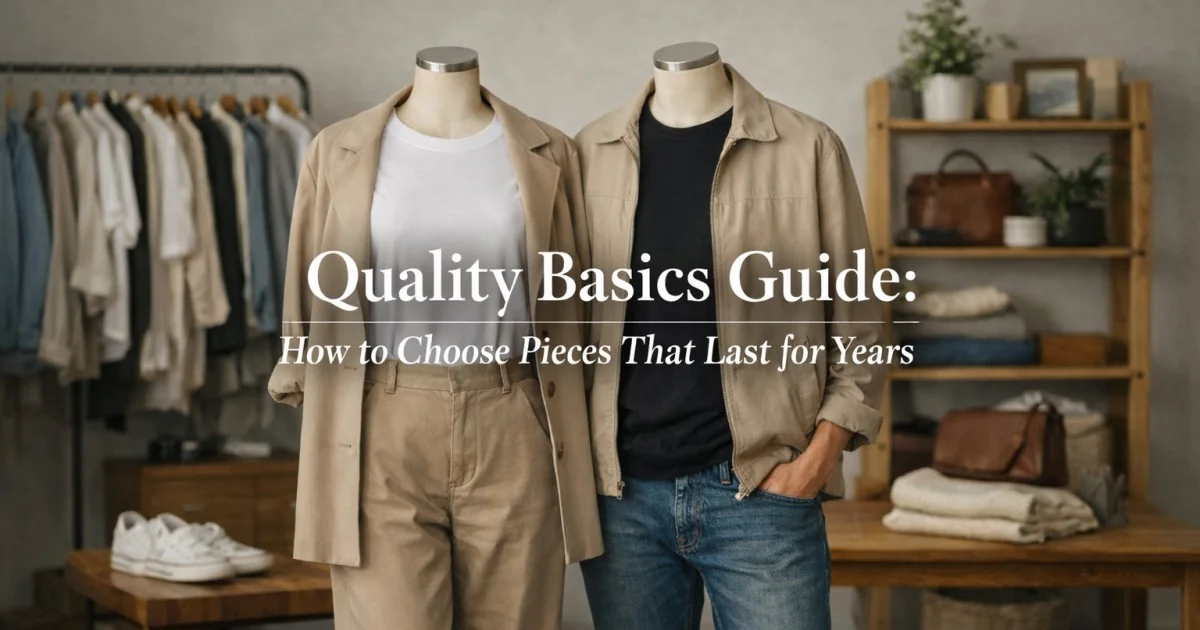
I have t-shirts in my closet that I've owned for over a decade. They still fit. They still look good. They're still my most-reached-for pieces. And every time I wear one, I think about how many people throw away perfectly good basics after a couple of years because they've faded, lost shape, or just don't feel as good anymore. The difference isn't magic. It's not that my pieces are special or that I got lucky. It's that I understand what quality actually means in basics, and I've learned to recognize it when I'm shopping.
After twenty years of styling people and building my own wardrobe, I've become fairly obsessive about understanding what makes a basic piece last. Because here's what I know: a quality basic you wear for five years is infinitely better value than a cheap basic you wear for six months. The cost per wear becomes incredibly reasonable. The environmental impact is reduced dramatically. And most importantly, you actually enjoy wearing the pieces in your closet because they work and feel good.
The frustrating part is that understanding quality basics isn't as straightforward as you'd think. Price doesn't always correlate with quality. Brand reputation can be misleading. Some expensive basics are garbage; some affordable basics are genuinely excellent. And there's a lot of marketing noise that makes it hard to tell the difference. But once you know what to look for and I mean truly look for, not just the marketing claims identifying quality basics becomes a skill you can develop.
This guide covers everything: what quality actually means in basics, understanding fabric quality and construction, recognizing quality before you buy, the right price points for different pieces, which brands consistently deliver quality, how care affects longevity, warranty and return policies as quality indicators, recognizing red flags that indicate poor quality, building a quality basics wardrobe on any budget, and how to maintain basics so they truly last years.
What Quality Actually Means in Basics
Before we talk about how to find quality, let's define what we're actually looking for.
The Elements of Quality Basics
Quality basics have specific characteristics that work together.
Longevity
- Definition: The piece lasts for years with regular wear.
- What it means: Worn multiple times per week, the piece maintains integrity for 3-5+ years.
- How it shows: Seams don't unravel; fabric doesn't pill or fade excessively.
- Why it matters: Extended lifespan means better value over time.
Durability
- Definition: The piece withstands repeated wearing and washing.
- What it means: Survives regular wear without falling apart or losing shape.
- How it shows: Stitching holds; fabric doesn't tear; shape is maintained.
- Why it matters: Piece remains functional and wearable long-term.
Appearance Retention
- Definition: The piece maintains its appearance through years of wear.
- What it means: Colors don't fade excessively; fabric doesn't pill or become dingy.
- How it shows: Year-old piece looks relatively similar to new piece.
- Why it matters: You actually want to wear the piece; it doesn't look tired.
Fit Consistency
- Definition: The piece maintains its fit through years of wear and washing.
- What it means: Doesn't stretch out or shrink unpredictably.
- How it shows: Same fit year 1 and year 5 with proper care.
- Why it matters: Piece remains wearable; doesn't become ill-fitting.
Comfort
- Definition: The piece feels good to wear, today and years from now.
- What it means: Comfortable initially and improves or maintains with age.
- How it shows: Soft fabric, comfortable fit, no irritation or discomfort.
- Why it matters: You actually wear the piece; it makes you feel good.
Quality vs. Price: The Relationship
This is where people get confused.
Higher Price Can Mean Quality
- True premium basics: Higher price often reflects quality materials and construction.
- Examples: Uniqlo, Everlane, quality brands often $25-50 per basic piece.
- What you're paying for: Better materials, better construction, better durability.
Higher Price Doesn't Always Mean Quality
- Designer markup: Some expensive basics are priced high for branding, not quality.
- Marketing costs: Some price reflects advertising and retail overhead.
- Trend premium: Trendy basics cost more even without quality justification.
- The lesson: Don't assume expensive = quality.
Lower Price Can Mean Quality
- Direct-to-consumer brands: Quince, Everlane offer quality at lower prices by cutting middlemen.
- Smart shopping: Catching quality basics on sale means higher quality for less money.
- Bulk purchasing: Some affordable brands have good quality through volume.
- The lesson: Don't assume cheap = low quality.
Lower Price Often Means Lower Quality
- Ultra-cheap basics: $5 t-shirts usually indicate poor quality.
- Fast fashion: Designed to be worn a season then discarded.
- Construction shortcuts: Cut corners on materials and assembly.
- The reality: You usually get what you pay for.
Quality Basics Sweet Spot
The price point where quality becomes most reliable.
- T-shirts: $15-40 per shirt (on sale or direct-to-consumer).
- Sweaters: $30-80 per sweater.
- Hoodies: $35-70 per hoodie.
- Jeans: $50-120 per pair.
- Jackets: $60-150 per jacket.
Below this range: Quality becomes questionable; often poor quality.
Above this range: Often paying for branding or trend premium.
Within this range: Good balance of quality and value for quality basics.
Fabric Quality
Fabric is the foundation of basic quality.
Fabric Weight and Density
How Weight Indicates Quality
- Measured in GSM: Grams per square meter of fabric.
- Lightweight fabrics: 130-150 GSM (often thin, see-through).
- Mid-weight fabrics: 150-200 GSM (versatile, durable sweet spot).
- Heavyweight fabrics: 200+ GSM (durable, may be heavy for basics).
- Quality indicator: Mid-weight fabrics usually indicate better quality.
Density and Durability
- Tight weave: More durable; resists pilling and wear.
- Loose weave: Less durable; pilling happens more easily.
- How to assess: Hold fabric up to light; should not be transparent.
- Quality indicator: Tighter weave usually indicates better quality.
Fiber Content and Quality
Cotton Quality
- Long-staple cotton: Pima, Supima, Egyptian more durable, softer, longer-lasting.
- Regular cotton: Standard cotton; acceptable quality if well-made.
- Thread count matters: Higher quality cotton has longer fibers, twisted tighter.
- Quality indicator: Check for Pima or Supima designation (premium cotton).
Cotton Blends
- Why blended: Adds durability, reduces wrinkling, improves fit consistency.
- Common blends: 90% cotton/10% poly, 85% cotton/15% poly.
- Better than pure cotton: Blends often more durable than 100% cotton.
- Quality indicator: Well-considered blend often indicates quality piece.
Synthetic Blends
- Quality polyester: Performance polyester in quality pieces can be excellent.
- Poor quality synthetics: Cheap polyester often indicates poor quality.
- Test: Quality synthetic feels intentional; cheap synthetic feels plasticky.
- Quality indicator: Brand reputation and price point help assess synthetic quality.
Recognizing Fabric Quality by Feel
- Soft touch: Quality fabrics feel pleasant; cheap fabrics feel harsh or thin.
- Substantial weight: Pick it up; does it have appropriate weight?
- Pilling: Already pilled fabric indicates poor quality.
- Texture consistency: Quality fabrics feel consistent throughout.
- Wrinkle resistance: Quality fabrics don't wrinkle excessively.
Construction Quality Indicators
How something is made matters as much as what it's made from.
Seam Quality
What to Look For
- Straight seams: Quality seams are perfectly straight, not wobbly.
- Even spacing: Stitching holes evenly spaced throughout.
- Consistent tension: Stitching tension consistent; not bunching or loose.
- Finished edges: Seam edges finished (not raw or unraveling).
- Secure attachment: Seams hold; won't unravel with gentle tugging.
Double-Stitching vs. Single-Stitching
- Double-stitched: Two rows of stitching; more durable, indicates quality.
- Single-stitched: One row of stitching; acceptable if quality thread used.
- Where it matters most: Stress seams (armpits, crotch for pants).
- Quality indicator: Double-stitching in stress areas indicates durability priority.
Hem and Edge Quality
- Proper hemming: Hems should be clean, even, and properly sewn.
- Raw edges: Red flag; indicates lack of finishing.
- Rolled hems: Quality technique; indicates higher-end piece.
- Consistency: Hem width should be consistent throughout.
- Secure stitching: Hems won't come undone with wear.
Collar and Neckline Quality
- Reinforced necklines: Should be stitched securely at stress points.
- Binding quality: Neckline binding should be even and secure.
- No gaps: Should lie flat; no puckering or gaps.
- Stretch integrity: Neckline should maintain shape after wearing.
- Quality indicator: Quality necklines maintain shape through years of wear.
Label Quality
- Care label: Properly sewn on; provides washing instructions.
- Branding: Secure stitching; logo or brand label won't come off.
- Attention to detail: How labels are attached indicates overall construction quality.
- Quality indicator: Quality labels indicate attention to detail throughout.
Recognizing Quality Before You Buy
How to assess quality without owning the piece first.
The In-Store Assessment
Visual Inspection
- Check seams: Are they straight and even?
- Check hems: Are they clean and finished properly?
- Check overall: Does the piece look well-made?
- Color consistency: Is dye even throughout?
- No defects: Any loose threads, holes, or damage?
Tactile Assessment
- Feel the fabric: Does it feel substantial and pleasant?
- Check weight: Does it feel appropriately weighted?
- Test stretch: Does it stretch appropriately without feeling cheap?
- Check pilling: Run hand across fabric; does it feel prone to pilling?
- Fabric integrity: Does fabric feel durable or flimsy?
Fit and Construction Details
- Try it on: How does it fit? Does it feel good?
- Check sleeves: Are they properly set? Comfortable?
- Check length: Is it proportional to the size?
- Check neckline: Does it sit properly? Comfortable?
- Overall impression: Does this piece feel quality?
Online Assessment
Brand Reputation
- Read reviews: What do customers say about durability?
- Look for patterns: Do multiple reviews mention quality issues?
- Check durability mentions: Do people report how long pieces last?
- Negative reviews: What are common complaints?
Detailed Photos
- Look for seam photos: Can you see seam quality?
- Fabric detail: Are close-up photos available?
- Construction details: Can you assess quality from photos?
- Red flags: Any quality issues visible in photos?
Product Information
- Fiber content: What's the exact composition?
- Manufacturing: Where is it made? By whom?
- Construction details: Any specific quality mentions?
- Care instructions: Detailed care instructions indicate quality consideration.
Brand Research
- Company transparency: Does brand share production information?
- Certifications: Any quality or manufacturing certifications?
- Longevity reputation: Known for pieces that last?
- Returns and warranty: Confidence in product quality?
| Quality Indicator | High Quality Sign | Low Quality Sign | What It Means | How To Check |
|---|---|---|---|---|
| Seams | Straight, even, double-stitched | Wobbly, loose, single-stitched | Durability | Visual inspection, tug test |
| Fabric Weight | Mid-weight (150-200 GSM) | Very light or very heavy | Durability/Wearability | Feel in hand, hold to light |
| Fabric Weave | Tight, even weave | Loose, uneven weave | Durability | Hold to light, feel texture |
| Fiber Content | Long-staple cotton or quality blends | Low-quality cotton or synthetic | Longevity | Check label, brand research |
| Hems | Even, finished, secure | Uneven, raw edges, loose | Quality construction | Visual inspection |
| Neckline | Reinforced, secure, no puckers | Loose, puckered, unsecured | Durability | Try on, inspect closely |
Brands Consistently Delivering Quality Basics

These brands have track records of quality durability.
Premium Quality Basics
- Uniqlo: Consistently excellent quality at reasonable prices; pieces last years.
- Everlane: Transparent pricing; good quality basics that last.
- Quince: Quality basics at direct-to-consumer prices; excellent durability.
- Organic Basics: Premium quality; pieces designed to last.
- Patagonia: Exceptional quality; designed for durability.
Mid-Range Quality Basics
- Gap (select lines): Basic collection usually reliable quality.
- Target (select brands): Goodfellow & Co often good quality for price.
- J.Crew Factory: Quality basics at reasonable prices.
- Banana Republic Factory: Good quality within price point.
Thrift and Secondhand (Hidden Gems)
- Previously owned quality basics: Often better quality than new budget alternatives.
- Why: Pieces that lasted enough to be in thrift = quality pieces.
- Examples: Vintage Lands End, LL Bean, Brooks Brothers basics extremely durable.
Brands to Be Cautious About
- Ultra-cheap fast fashion: Designed not to last; poor quality typical.
- Some trendy brands: Prioritize current trends over durability.
- No-name brands: Often poor quality; inconsistent standards.
- Note: Not all pieces from budget brands are poor quality; some are decent.
How Care Affects Longevity
Even quality basics only last if cared for properly.
Proper Washing
- Cold water: Prevents fading and fiber damage; use always.
- Gentle cycle: Reduces mechanical stress on fabrics.
- Mild detergent: Regular detergent is often too harsh.
- Turn inside out: Protects outer surface from friction.
- Don't overload: Clothes need space to move; too full causes damage.
Proper Drying
- Air dry always: Machine drying dramatically reduces lifespan.
- Flat dry if possible: Prevents stretching and stress.
- Avoid direct sun: UV damage causes fading and fiber damage.
- Don't wring: Wringing damages fibers; gently squeeze water out.
Proper Storage
- Cool, dry place: Prevents mildew, moisture damage, deterioration.
- Fold, don't hang: Hanging stretches fibers; folding maintains shape.
- Natural protection: Cedar or lavender; avoid harsh mothballs.
- Air circulation: Don't pack too tightly; fibers need air.
Repair and Maintenance
- Fix immediately: Small issues become big problems if not addressed.
- Loose seams: Repair before they unravel completely.
- Tears: Patch small holes before they become large.
- De-pilling: Remove pilling regularly to extend life.
Warranty and Return Policies as Quality Indicators
How companies stand behind their products indicates confidence in quality.
Return Policies
Generous Returns
- What it means: Company confident in quality; willing to accept returns.
- Examples: 30-60 day returns; free returns; no questions asked.
- Why it matters: If company confident in quality, they allow returns.
- Quality indicator: Generous return policy suggests quality confidence.
Limited or Difficult Returns
- What it means: Company less confident in product quality.
- Examples: Short return windows; restocking fees; difficult process.
- Why it matters: May indicate lower confidence in durability.
- Quality indicator: Difficult returns suggest potential quality concerns.
Warranty Coverage
- Durability guarantees: Some brands guarantee pieces for specific periods.
- Repair services: Some brands offer repair services (indicates longevity focus).
- Quality confidence: Warranty indicates company believes in piece durability.
- Examples: Patagonia's repairs; Allbirds' durability guarantees.
Red Flags Indicating Poor Quality
Watch out for these warning signs.
Fabric Red Flags
- Very thin fabric: Transparent, flimsy fabric indicates poor durability.
- Excessive wrinkling: Wrinkles immediately and excessively.
- Already pilling: Pre-existing pilling indicates poor quality.
- Uneven dye: Color inconsistent throughout piece.
- Rough feel: Fabric feels scratchy or uncomfortable.
Construction Red Flags
- Loose or crooked seams: Stitching is uneven or loose.
- Unfinished hems: Raw or unfinished edges.
- Loose labels: Labels not secured properly.
- Visible defects: Holes, stains, or damage in new piece.
- Poor fit proportions: Sleeves too long/short; length inappropriate.
Pricing Red Flags
- Suspiciously cheap: If price seems too good, quality probably reflects it.
- Constant clearance: If always on sale, probably low-quality overstocks.
- Price dropping rapidly: Sharp price drops indicate low-quality overstock.
Brand Red Flags
- No production transparency: Can't find info about where/how made.
- Poor reviews mentioning durability: Multiple complaints about pieces falling apart.
- No return policy: Indicates lack of quality confidence.
- Changing materials: Same product quality inconsistent over time.
Building a Quality Basics Wardrobe on Any Budget
Budget Strategy
Quality doesn't have to mean expensive.
- Buy strategically: Sales on quality basics cost less.
- Thrift high-quality items: Secondhand quality basics very affordable.
- Direct-to-consumer: Bypass retail markup for lower prices.
- Wait for clearance: End-of-season quality basics heavily discounted.
- Invest in essentials: Most-worn pieces deserve higher investment.
Building Gradually
- Buy few high-quality pieces: Rather than many cheap pieces.
- One per month: Buy one quality basic monthly instead of 10 cheap ones.
- Long-term plan: Build over 6-12 months rather than all at once.
- Result: High-quality wardrobe within normal budget constraints.
Mix Quality Levels
- Invest highly in essentials: T-shirts worn constantly deserve quality investment.
- Budget on occasional pieces: Items worn less frequently can be budget-friendly.
- Strategic mix: High-quality basics + occasional budget pieces = balanced approach.
Maintaining Quality Basics So They Last
Long-Term Care Strategy
- Follow care labels: Instructions written for maximum piece longevity.
- Wash less frequently: Fewer washes = longer lifespan.
- Spot clean: Address stains immediately before they set.
- Repair promptly: Fix issues before they become major problems.
- Seasonal storage: Store properly during off-seasons.
Signs of Quality Showing Over Time
- Better with wear: Quality pieces often improve with age (soften, develop character).
- Consistent fit: Doesn't stretch out or shrink unexpectedly.
- Color consistency: Minimal fading despite repeated wear.
- Structural integrity: Seams don't unravel; fabric doesn't pill excessively.
- Still wearable: Year 5 piece still looks presentable, still worn regularly.
When to Replace
- Structural failure: Seams unraveling; holes that can't be repaired.
- Significant fading: Color so faded it looks tired.
- Fit changes: Stretches or shrinks so much it's unwearable.
- Excessive pilling: So much pilling it looks bad despite fixing.
- Honest wear: Piece worn into the ground; has served its purpose.
The Real Investment of Quality Basics
Quality basics aren't just about buying expensive pieces. They're about understanding what makes something last, recognizing quality when you see it, and making intentional choices about the pieces you wear most frequently. A $30 quality t-shirt worn 150 times per year for five years costs $0.04 per wear. A $10 cheap t-shirt worn 20 times per year for one year costs $0.50 per wear. The math is clear.
When you invest in quality basics, you're not being frivolous or excessive. You're being practical. You're choosing pieces that will actually work for your life, that will feel good to wear, that you'll reach for repeatedly, that will justify their cost through extended use. And after five or ten years, when you're still wearing that quality basic you bought years ago, you'll remember why you made that choice.
The best wardrobe isn't the most expensive one. It's the one where every piece is quality enough to be worn repeatedly, often, for years. Where nothing sits unworn because it doesn't fit right or fell apart. Where basics perform their function perfectly and look good while doing it. That's quality basics done right.
