How to Choose Basics That Work for the Whole Family
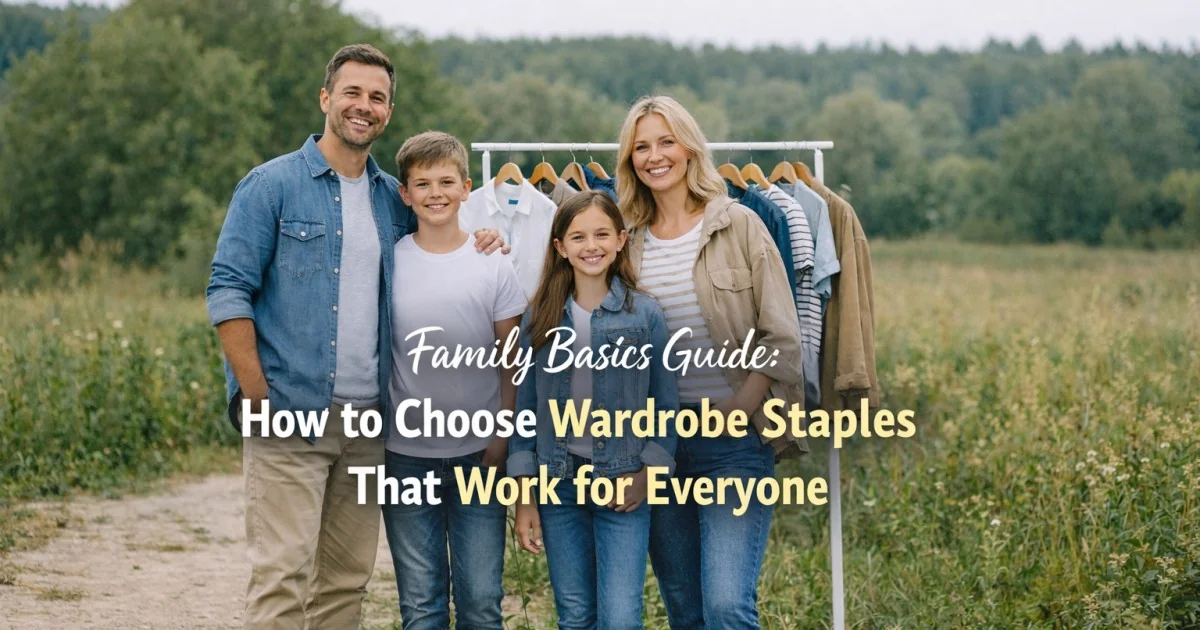
I've spent twenty years helping families build functional wardrobes, and I've noticed something consistent: the families who have the easiest time getting dressed, the least wardrobe stress, and the most outfit options have one thing in common. They've invested thoughtfully in basics that work for everyone. Not identical basics necessarily, but basics that coordinate, that fit properly, that work across seasons, and that can be mixed and matched across family members in different contexts.
This might sound simple, but it's actually a sophisticated concept that most people don't approach intentionally. They buy basics haphazardly grabbing whatever's on sale, whatever fits in the moment, without thinking about whether it actually works for their life or coordinates with anything else. Then they end up with closets full of t-shirts, sweaters, and jeans that don't really work together, that fit awkwardly, or that become unwearable after a few washes.
When you approach basics strategically thinking about color palettes, fit standards, quality, seasonality, and how pieces work across different family members everything changes. Getting dressed becomes easier. Outfits come together more naturally. Your wardrobe actually works rather than requiring daily problem-solving. And yes, different family members can even share or borrow pieces because you've chosen basics intentionally.
This guide covers everything: what makes something a "basic" versus a fashion piece, understanding your family's lifestyle and needs, creating a family-wide color palette, choosing quality over quantity, fit standards across family members, seasonal basics planning, how to coordinate basics across different family members and ages, shopping strategies for family basics, building basics gradually, and how to maintain and refresh basics over time.
Defining Basics and Why They Matter
Before we talk about choosing basics, let's be clear about what basics actually are.
What Counts as a Basic
Basics are essential, versatile pieces that form the foundation of functional outfits.
Characteristics of True Basics
- Neutral or easily coordinating colors: Work with multiple other pieces.
- Simple, timeless style: Don't go out of fashion quickly.
- Versatile silhouettes: Can be dressed up or down.
- Essential pieces: Most people wear regularly and need multiple of.
- Mix-and-match friendly: Coordinate with other pieces easily.
- Durable quality: Meant to be worn repeatedly.
Common Basic Categories
- Tops: T-shirts, basic sweaters, plain long-sleeves, button-ups.
- Bottoms: Jeans, neutral trousers, basic shorts, simple skirts.
- Outerwear: Denim jackets, cardigans, neutral hoodies, basic blazers.
- Underwear and socks: Essential basics (often overlooked in coordination).
Basics vs. Fashion Pieces
Understanding the difference is key to strategic wardrobe building.
Basics
- Purpose: Foundation and versatility.
- Color: Neutral (black, white, gray, navy, etc.).
- Style: Timeless and simple.
- Investment: Quality matters; meant for repeated wear.
- Lifespan: Years with proper care.
Fashion Pieces
- Purpose: Personal expression and style interest.
- Color: Can be any color or pattern.
- Style: Can be trendy or specific to personal taste.
- Investment: Can vary widely.
- Lifespan: Varies; trendy pieces may be worn for a season.
Why Both Matter
Functional wardrobes need both. Basics provide the foundation; fashion pieces express personality. But basics should be the focus of family coordination planning.
Why Basics Matter for Families
- Versatility across family: Quality basics work for multiple people.
- Outfit flexibility: More combinations possible with coordinating basics.
- Budget efficiency: Basics worn repeatedly maximize wardrobe value.
- Stress reduction: Easier to get dressed when basics work together.
- Sharing and hand-me-downs: Basics are easier to pass between family members.
- Longevity: Good basics last years, reducing replacement needs.
Your Family's Lifestyle and Needs
Before choosing basics, understand what your family actually needs.
Activity Level and Lifestyle
Different families have different practical needs.
Active, Outdoor-Focused Families
- Basic need: Durable, comfortable, flexible pieces.
- Colors: Practical colors that hide stains.
- Fabrics: Performance blends, durable materials.
- Fit: Allows freedom of movement.
- Example basics: Athletic-style hoodies, durable jeans, comfortable t-shirts, performance leggings.
Professional or Business-Casual Families
- Basic need: Polished, professional-appropriate pieces.
- Colors: Sophisticated neutrals and classic colors.
- Fabrics: Quality materials that look intentional.
- Fit: Well-fitted, structured, put-together appearance.
- Example basics: Quality sweaters, tailored trousers, blazers, crisp button-ups, neat jeans.
Creative or Artistic Families
- Basic need: Comfortable, expressive pieces.
- Colors: Can include more interesting tones.
- Fabrics: Interesting textures and materials acceptable.
- Fit: More flexibility in silhouettes and proportions.
- Example basics: Comfortable layering pieces, interesting sweaters, varied silhouettes, quality basics in more colors.
Ultra-Casual Families
- Basic need: Comfort and ease above all.
- Colors: Practical, easy-to-clean neutrals.
- Fabrics: Soft, comfortable, durable.
- Fit: Comfort-focused, may trend toward relaxed.
- Example basics: Comfortable hoodies, soft t-shirts, relaxed jeans or joggers, cozy sweaters.
Climate and Seasonality
Your location affects which basics you need.
Year-Round Warm Climates
- Focus on: Lightweight, breathable basics.
- Reduce: Heavy sweaters or winter layers.
- Include: Light layers for air conditioning, sun protection.
Four-Season Climates
- Focus on: Layering pieces that work across seasons.
- Include: Light and heavy options for variety.
- Plan for: Seasonal transitions and storage.
Cold Climates
- Focus on: Warm, layering-appropriate basics.
- Include: Heavy sweaters, thermal bases, winter-appropriate bottoms.
- Plan for: Extended cold season and layering needs.
Age Ranges in Your Family
Different ages need different considerations.
- Babies: Need soft, safe, frequently-washable basics.
- Young children: Need durable, easy-to-care-for, stain-forgiving basics.
- Teenagers: May have style preferences; balance coordination with autonomy.
- Adults: Need quality basics that work with their personal style.
Creating a Family Color Palette
This is the foundation of successful family basics coordination.
Understanding Color Palettes
A color palette is a set of colors that coordinate with each other.
Benefits of Family Color Palette
- Every piece coordinates with every other piece.
- No wasted purchases on pieces that don't work together.
- Outfits come together easily.
- Family members can sometimes wear each other's pieces.
- Reduces decision fatigue when getting dressed.
- Shopping becomes simpler (stick to the palette).
Creating Your Family Palette
Step 1: Choose Your Neutral Base
This is the foundation color that everything else builds on.
- Black: Very versatile, works for most styles and climates.
- Navy: Slightly warmer than black, very classic.
- Gray: Friendly, accessible, very versatile.
- White or cream: Light and fresh, works in warm climates.
- Brown or taupe: Warmer neutrals, great for certain aesthetics.
Most families do well with 1-2 neutrals as foundation. Don't try to do all neutrals pick your main one and maybe one secondary.
Step 2: Choose Your Secondary Neutrals
These are grays, khakis, and other neutrals that work with your foundation.
- If foundation is black: Add gray, white, navy, charcoal.
- If foundation is navy: Add white, gray, black.
- If foundation is gray: Add white, black, navy.
- Choose 2-3 secondary neutrals. Don't go overboard.
Step 3: Choose Your Accent Colors (Optional)
One or two colors that work with your neutrals for interest.
- Should be versatile: Works with your foundation and secondary neutrals.
- Examples: Camel, olive, burgundy, forest green, denim blue.
- Limit to 1-2: More than that defeats the purpose of coordination.
- Can be skipped: Families that prefer pure neutrals can skip this.
Example Family Palettes
Classic Neutral Palette
Black, white, gray, navy. Clean, versatile, works for everyone.
Warm Palette
Navy, cream, camel, white. Warmer feeling, very accessible.
Cool Palette
Black, gray, white, navy. Very versatile, cool-toned.
Nature-Inspired Palette
Olive, navy, cream, gray, camel. Earthy, interesting while coordinating well.
Using Your Palette
- All basics should be in your palette: No random colors that don't fit.
- Shopping becomes simple: If it's in the palette, it works.
- Family members can coordinate: Everyone sticks to palette, pieces coordinate.
- Flexibility: Palette gives enough variety without being limiting.
Choosing Quality Basics
With basics, quality truly matters.
Why Quality Matters for Basics
- Longevity: Quality basics last years; cheap basics last months.
- Appearance: Quality maintains appearance through repeated wear and washing.
- Fit: Quality fabrics hold their shape better.
- Value: Despite higher initial cost, quality provides better value over time.
- Family sharing: Quality pieces can be passed between family members.
How to Assess Quality
Fabric Quality
- Weight: Should feel substantial, not thin or flimsy.
- Feel: Should feel good to touch, not scratchy or cheap.
- Density: Tight weave = better quality (shows less wear).
- Content: Read fabric content; know what you're getting.
Construction Quality
- Seams: Should be straight, even, and well-finished.
- Hems: Should be clean and properly sewn.
- Edges: Armholes and necklines should be finished properly.
- Zipper/buttons: Should be quality and well-attached.
Fit Quality
- Proportions: Should fit well proportionally (not bunching or gapping).
- Length: Should hit appropriately for style.
- Arm holes: Should allow full movement without restricting.
- Overall feel: Should feel intentionally designed, not randomly proportioned.
Price Points for Quality Basics
- Budget basics ($15-25): Works for items worn less frequently; may need replacement sooner.
- Mid-range basics ($25-60): Best value for frequently-worn items; lasts 2-4+ years.
- Premium basics ($60+): Highest quality; lasts 5+ years; best for essential pieces.
- Strategy: Invest more in items worn most frequently; less on occasional pieces.
Best Brands for Quality Family Basics
- Uniqlo: Good quality at reasonable prices, various sizes.
- Gap/Gap Factory: Classic basics, reliable quality when not super cheap lines.
- Everlane: Quality and transparency, competitive pricing.
- Quince: Good quality, direct-to-consumer pricing.
- Target (Good & Gather, Cat & Jack): Surprisingly good basics for the price.
- Lululemon (investment pieces): Premium pricing but exceptional longevity.
- REI Co-op brands: Quality outdoor/active basics.
Where NOT to Shop for Basics
- Ultra-cheap fast fashion (very low quality, short lifespan).
- Brands known for poor quality (tempting prices but short lifespan).
- Random sales with unclear brands (often poor quality even at discount).
| Basic Category | Essential Item | Quality Priority | How Many Needed | Replacement Frequency | Price Investment |
|---|---|---|---|---|---|
| Tops | Basic t-shirt | High | 5-7 per color | 2-3 years | $25-40 each |
| Tops | Basic sweater | High | 3-4 per color | 3-5 years | $40-80 each |
| Bottoms | Jeans | Very High | 2-3 pairs | 2-4 years | $60-100+ each |
| Bottoms | Casual trousers | High | 2-3 pairs | 3-5 years | $40-80 each |
| Outerwear | Cardigan | High | 2-3 | 3-5 years | $40-80 each |
| Outerwear | Basic hoodie | Medium-High | 2-3 | 2-4 years | $30-60 each |
Fit Standards for Family Basics

Establishing fit standards helps when shopping for multiple family members.
What Good Fit Looks Like
T-Shirts
- Length: Should hit at hip or slightly below, not too long or short.
- Width: Should follow body shape, not too loose or tight.
- Sleeves: Should reach mid-shoulder without bunching.
- Neckline: Should sit naturally at base of neck.
Sweaters
- Length: Should hit at hip or cover rear appropriately.
- Shoulders: Shoulder seam should sit at natural shoulder, not slipping.
- Sleeves: Should reach wrist bone with slight bend in arm.
- Body fit: Should skim body without clinging or overwhelming.
Jeans
- Rise: Should sit at natural waist (not too low or high).
- Length: Should hit at ankle or just break at shoe, not dragging.
- Width: Should be comfortable through thigh and hip without bunching.
- Inseam: Critical for proper length (must be measured).
Pants/Trousers
- Rise: Should sit at natural waist comfortably.
- Length: Should break slightly at shoe or hit at ankle.
- Width: Should skim hips without clinging.
- Fit through leg: Comfortable, not bunching or stretching.
Fit Across Different Family Members
Different family members need different fits even within one category.
Teenagers
- Often prefer looser, oversized fits.
- May want different silhouettes than parents.
- Should have autonomy in fit choices when possible.
- But basics should still be quality.
Children
- Grow quickly; buy with growth in mind.
- Proper fit important for comfort and safety.
- Looser fit can accommodate growth.
- But not so oversized they trip or have fit issues.
Adults
- Fit should be intentional and flattering.
- Different body types need different fits.
- Basics should work with body type, not against it.
Taking Measurements
For proper fit across family members, measurements matter.
- Chest/bust: Measure around fullest part.
- Waist: Measure at natural waist.
- Hip: Measure around fullest part of hip.
- Sleeve length: Arm extended, measure from center back neck to wrist.
- Inseam (for pants): Measure inside of leg from crotch to ankle.
- Keep a record: Makes shopping easier for everyone.
Seasonal Basics Planning
Basics needs change seasonally.
Spring/Summer Basics
Focus
- Lightweight tops: T-shirts, thin sweaters, short-sleeves.
- Light layers: Linen shirts, light cardigans for air conditioning.
- Shorts and lighter bottoms: Shorts, lighter pants, skirts.
Color Considerations
- Light colors work well in warm weather.
- Still maintain your color palette (light neutrals and accent colors).
Fall/Winter Basics
Focus
- Heavy sweaters: Wool, thick knits, cozy options.
- Layering pieces: Long-sleeves for layering under sweaters.
- Winter bottoms: Heavier fabrics, fleece-lined options.
Color Considerations
- Rich colors work well in winter.
- Maintain your color palette (darker neutrals and accent colors).
Transition Pieces
Some basics work across seasons:
- Mid-weight sweaters: Spring through fall.
- Cardigans: Layer in spring/fall, wear with tees in summer.
- Jeans: Year-round staple.
- Neutral t-shirts: Work any time.
How to Coordinate Basics Across Different Family Members
Sizing Across Ages
Clever coordination across family members requires understanding sizing.
Adult Sizing
- Varies by brand: Same size different across brands.
- Women's vs. men's: Different proportions and fits.
- Unisex pieces: Can work across genders when fitted properly.
Teen Sizing
- Often between adult and youth: May wear adult small/medium.
- Preferences for fit: May prefer looser or tighter than adults.
- Growth consideration: Still growing; sizing may change year to year.
Child Sizing
- Youth/kids sizes: Proportioned for children.
- Growth room important: Buy slightly loose for growth.
- Hand-me-downs: From older siblings can work.
When Pieces Can Be Shared
- Same size families: Spouses or adult children in same sizes can share basics.
- Oversized pieces: Larger family members' oversized pieces can work for smaller members.
- Children's pieces: Can move to younger siblings.
- Unisex pieces: T-shirts, sweatshirts, cardigans often work across genders.
Building Basics for Large Families
Families with many members need specific strategies:
- Establish color palette: Everyone sticks to it.
- Quality over quantity: Better basics last through hand-me-downs.
- Neutral silhouettes: Work across different body types.
- Individual needs: Build core basics for each person, shared pieces where possible.
Shopping Strategies for Family Basics
Shopping Philosophy
Approach basics shopping differently than fashion shopping.
- Shop intentionally: With specific needs and palette in mind.
- Avoid impulse purchases: Buy only what fits palette and needs.
- Check stock carefully: Buy enough of good pieces.
- Avoid sales traps: Just because it's on sale doesn't mean you need it.
Where to Shop
- Uniqlo: Consistent sizing, good quality, all sizes.
- Gap/Old Navy: Good basics selection, frequent sales, various sizes.
- Target: Affordable, quick shipping, good variety.
- Department stores: Wide selection, can compare brands.
- Online retailers: Wider selection, but returns matter.
Shopping Timing
- Plan ahead: Know what you need before shopping.
- Shop sales strategically: When you actually need items, not just for sales.
- Seasonal shopping: Buy winter basics in fall, summer basics in spring.
- Stock up on essentials: Buy multiple of basics you love and wear constantly.
Shopping Mistakes to Avoid
- Buying off-palette colors: Creates pieces that don't coordinate.
- Buying poor quality: Ends up being false economy (doesn't last).
- Buying trendy basics: Defeats purpose of timeless basics.
- Not trying on: Fit is critical; online returns matter.
- Buying multiples before testing: Make sure you love it before buying multiple.
Building Basics Gradually
You don't need to buy everything at once.
Year One: Foundation
- 1-2 pairs of jeans for each family member.
- 3-5 basic t-shirts per person in neutral colors.
- 2-3 basic sweaters per person.
- Essential underwear and socks.
Year Two: Building
- Add variety in styles within your palette.
- Add seasonal basics (heavy sweaters for winter, lighter layers for summer).
- Add additional jeans or pants as needed.
- Replace worn-out basics from year one.
Ongoing: Maintenance and Refresh
- Replace basics as they wear out.
- Add new pieces gradually as needs change.
- Maintain your color palette and quality standards.
- Adjust as family grows or needs change.
Maintaining and Refreshing Basics
Care for Longevity
- Wash properly: Cold water, gentle cycle, air dry (see t-shirt care guide).
- Store properly: Fold rather than hang, cool dry location.
- Repair when needed: Fixing loose seams early prevents larger damage.
When to Replace
- Fading or discoloration: Normal wear, acceptable if still functional.
- Stretching: If basic doesn't fit well anymore, consider replacing.
- Pilling or wear: Excessive wear means end of life.
- Holes or rips: Beyond repair = time to replace.
Refreshing Your Basics
- Reassess annually: What's working, what isn't.
- Adjust for lifestyle changes: New job, different climate, growing children.
- Update colors within palette: Freshen without abandoning coordination.
- Replace worn-out essentials: Keep core pieces fresh and functional.
The Real Power of Intentional Family Basics
Building a coordinated family basics wardrobe is one of those unglamorous but absolutely powerful moves that transforms how your family gets dressed. It's not flashy or exciting. It doesn't generate envy or comments. But it creates something genuine: a functional wardrobe where everything works together, where getting dressed is easy, where your family can look intentional and put-together without effort, and where clothing actually serves your life rather than complicating it.
When you approach basics strategically with a family color palette, quality standards, intentional fit choices, and thoughtful shopping the results are immediate and lasting. Your wardrobe works harder. Your family looks more coordinated. Getting dressed becomes easier. And yes, sometimes family members can even borrow each other's pieces because you've chosen basics that work across different people.
This isn't about forcing everyone into the same outfit or creating some kind of uniform. It's about using the foundation of basics to create a wardrobe system that actually works for your specific family. That's the real value of choosing basics intentionally.
