The Ultimate Guide to T-Shirt Fitting for Men
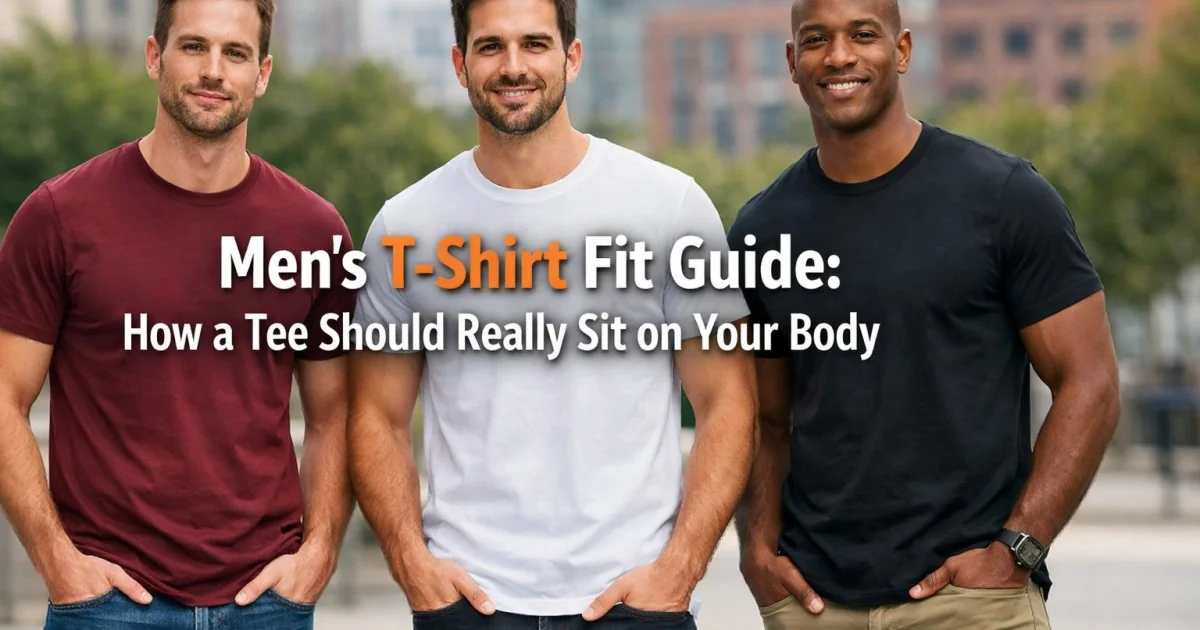
Let’s be real: most guys think they have a “T-shirt problem” when in reality they have a fit problem.
They blame the brand, the fabric, or the gym schedule but nine times out of ten, the tee is simply the wrong shape, the wrong length, or the wrong proportion for their body.
Once the fit is right, everything else suddenly starts working: jeans look sharper, sweatshirts sit better, layering feels easier, and you stop tugging at your clothes all day.
In this guide, you’ll find a warm, no‑nonsense breakdown of how a men’s T-shirt should fit from shoulders to hem, plus body‑type‑based advice, style tips, and practical recommendations you can actually use next time you shop.
Why T-Shirt Fit Matters More Than You Think
A T-shirt is usually the most-worn item in a man’s wardrobe, which means if the fit is off, the overall style almost always looks off too.
Even an inexpensive tee can look elevated with good fit, while a premium designer tee can look sloppy if it hangs in all the wrong places.
- A well-fitted tee makes your shoulders look broader and your waist look neater.
- It creates clean lines under sweatshirts, jackets, and hoodies instead of bunching or bulking.
- It makes outfits feel more “intentional” even when you only spent 30 seconds getting dressed.
The 6 Key Fit Zones of a Men’s T-Shirt
Think of a T-shirt as a map with six critical points: shoulders, chest, sleeves, torso width, length, and neckline.
If you get these six areas right, you’ve basically cracked the code.
| Fit Zone | What To Check | Good Sign |
|---|---|---|
| Shoulders | Shoulder seam position | Seam sits right at shoulder edge |
| Chest | Tension or pull lines | Smooth across chest with slight ease |
| Sleeves | Length & grip on arm | Hits mid‑bicep, lightly skims arm |
| Torso Width | How much extra fabric you can pinch | About 2–4 cm on each side, not more |
| Length | Where hem lands on your body | Between top and mid‑fly, covers waistband |
| Neckline | Gap or tightness around neck | Comfortable, lays flat, no gaping or choking |
Shoulders: The First Thing You Should Look At
If the shoulders are wrong, the whole T-shirt will read as “off,” even if everything else is technically fine.
Always look at the shoulder seam the line where the sleeve attaches to the body.
- Ideal: The seam sits exactly where your shoulder bone ends and your arm starts.
- Too small: The seam is pulled up toward your neck; the tee feels tight and restricts movement.
- Too big: The seam droops down your arm; it makes you look slouchy and wider than you are.
When in doubt between two sizes, prioritize the shoulder fit first, then decide if you prefer a slightly slimmer or looser body.
Chest Fit: Skimming, Not Squeezing
The chest area is where many men go wrong, especially if they work out or if they’re self‑conscious about their midsection.
The goal is to follow the line of the chest without clinging like activewear or ballooning like a boxy tee.
- You should be able to move your arms freely without feeling pulling across the front.
- If you see obvious horizontal lines or the fabric waves around the armpit, it’s too tight.
- If the fabric collapses and pools when you stand straight, it’s too loose.
A great everyday tee lightly traces your chest and upper back without screaming for attention it quietly supports your shape instead of fighting it.
Sleeves: Where Most Men Accidentally Add Bulk
Sleeves have more visual impact than you’d think, because they frame your arms and break up your torso.
Bad sleeves can make your arms look smaller, your shoulders narrower, or your upper body top-heavy.
- Length: For most men, sleeves should end between one-third and halfway down the upper arm.
- Too short: Cap-like sleeves can make shoulders look pointy and arms look out of proportion.
- Too long: When sleeves slide close to the elbow, they drag the eye down and make you look shorter.
Pay attention to sleeve opening as well:
- If it’s extremely wide and flappy, the tee looks sloppy.
- If it strangles your biceps, it looks like a gym selfie shirt, not an everyday tee.
- Ideally, the sleeve lightly hugs or just skims your arm without squeezing.
Torso Width: Avoiding the “Sausage” or “Box” Look
This is where the mirror test matters more than the size tag.
Stand straight, relax your stomach, and look at how the T-shirt falls.
- If it clings to every curve of your torso, it’s too tight or too thin for everyday wear.
- If it falls straight from the chest without any suggestion of your shape, it’s too big or too boxy.
- You should be able to pinch just a small amount of fabric (about 2–4 cm) at each side seam.
Remember: you can absolutely be comfortable without hiding in an oversized tee ease and fit are not the same thing.
Length: Where the Hem Should Hit
Length is one of the biggest giveaways of a poorly fitting T-shirt.
Too short looks accidental and awkward; too long makes your legs look stumpy and throws off your proportions.
- The front hem should land somewhere between the top and middle of your fly.
- The T-shirt should fully cover your waistband, even when you raise your arms slightly.
- If the hem covers most of your crotch and upper thigh, it’s likely too long for everyday wear.
Shorter guys especially benefit from avoiding longline tees, which visually shorten the legs and make the body look unbalanced.
Neckline Fit: Crew, V-Neck, and Beyond
The neckline does more than you think it frames your face and can subtly change how your proportions read.
Crew Neck Fit
A crew neck should sit close to the base of your neck without choking or gaping.
- If the collar feels tight or leaves a mark, it’s too snug.
- If the collar ripples, sags, or sits far away from your neck, it looks worn out or poorly made.
- A clean, snug‑but‑comfortable collar always looks smarter and more intentional.
V-Neck Fit
A V-neck should feel like a relaxed alternative, not a deep plunge.
- The point of the V should land somewhere between the collarbone and mid‑chest not lower.
- A modest V can visually elongate the neck and slim the upper body slightly.
- If you feel like you need to accessorize it to make it look “less exposed,” it’s probably too deep.
Different Fits: Slim, Regular, Relaxed
Most brands divide T-shirts into three broad fits: slim, regular, and relaxed/oversized.
Understanding how each behaves on your body makes shopping much faster and less frustrating.
| Fit Type | How It Sits | Best For | Watch Out For |
|---|---|---|---|
| Slim Fit | Close to body, minimal excess fabric | Lean or athletic builds, layering under shirts & sweatshirts | Can cling at stomach or chest if too tight |
| Regular Fit | Straight but not boxy | Most body types, everyday wear | Some brands call “regular” what’s actually quite boxy |
| Relaxed/Oversized | Intentional volume and drape | Streetwear looks, taller frames, casual styling | Can swallow shorter or smaller frames if length is too long |
How T-Shirts Should Fit by Body Type
Broad/More Muscular Men
- Look for regular or athletic cuts rather than extreme slim fit.
- Make sure shoulder seams are correct wide shoulders often size up “for comfort” and end up with dropped seams.
- Choose slightly thicker fabric to avoid cling across the chest and back.
Lean or Slim Men
- Slim fit usually works best, but avoid anything skin-tight.
- Sleeves should lightly follow the arm so they don’t look empty or flappy.
- Mid‑weight fabric helps add structure and avoids the “flimsy” look.
Larger/Stouter Builds
- Regular fit with good shoulder alignment is your best friend.
- Avoid very skinny fits that highlight every curve, but also avoid very oversized cuts that hide your frame completely.
- Slightly heavier fabrics can drape more cleanly over the midsection.
Taller Men
- Pay special attention to length many standard tees end up too short after washing.
- Consider “tall” sizing if your torso is long or if tees always show your waistband.
- Relaxed and regular fits tend to sit well on tall frames, as long as length is correct.
Shorter Men
- A slightly shorter length (just covering the waistband) prevents the tee from swallowing your legs visually.
- Avoid longline or overly relaxed cuts; they drag your proportions downward.
- Choose tees with clean lines less extra fabric around the waist means a taller overall impression.
How a T-Shirt Should Fit with Different Styles
Everyday Casual
For jeans, chinos, and joggers, a regular or gentle slim fit is ideal.
- Shoulder seams on point, mid‑bicep sleeves, length around mid‑fly.
- Enough ease to move and sit comfortably without constant adjusting.
Layering Under Sweatshirts and Hoodies
When a T-shirt is a base layer, you want a clean, non‑bulky fit.
- Slim or regular fit is best avoid heavy or oversized tees that bunch up.
- Crew neckline works smoothly under most sweatshirts, quarter‑zips, and hoodies.
Under Shirts and Overshirts
If you’re wearing a tee under an open button‑down or overshirt, shape matters even more.
- Choose a closer fit so fabric doesn’t push against the outer layer.
- Length should be similar or slightly shorter than the outer shirt’s hem.
Fit Problems and How to Fix Them
Problem: T-Shirt Fits in the Chest but Is Too Long
- Try a brand that offers “short” or “boxy” cuts, or have the hem tailored yes, you can hem a T-shirt.
- A small front tuck into jeans or chinos can help visually rebalance length.
Problem: Right Length but Tight Across the Stomach
- Look at relaxed or regular fit in the same size instead of automatically sizing up.
- Consider a slightly heavier or higher‑quality fabric that drapes better.
Problem: Shoulders Are Good but Sleeves Look Huge
- Switch to a tee labeled “slim” or “fitted” in the arms, even if you keep the same size.
- Some tailors can subtly narrow sleeves if you really love the tee.
Problem: You Feel Uncomfortable in Anything Close-Fitting
- Look for relaxed cuts that are intentionally designed not just oversized by sizing up.
- Make sure length is controlled so your tee doesn’t start looking like a dress.
Quick Fitting Checklist for the Changing Room
Next time you’re trying on T-shirts, use this rapid checklist:
- Raise your arms does the tee expose your stomach or ride up severely?
- Turn sideways does it cling heavily at your midsection or drape cleanly?
- Look at the shoulders are the seams right at the edge, or drifting up or down?
- Check the sleeves do they hit mid‑bicep and follow your arm without squeezing?
- Look at the neckline does the collar lie flat and feel comfortable?
If a tee passes all five checks, that cut is worth buying in multiple colors.
How Many Well-Fitting T-Shirts Do You Actually Need?
You don’t need a drawer bursting with random shirts you need a small rotation that really works.
- 2–3 neutral everyday tees (gray, navy, black).
- 1–2 lighter tees (white or off‑white) for layering and summer.
- 1–2 “nicer” tees with slightly better fabric and fit for dinners, dates, or smart‑casual outfits.
All of them should pass the shoulder, sleeve, torso, and length test.
Styling Tips That Complement a Good Fit
- Do a slight front tuck with jeans or chinos if the tee feels just a touch long.
- Roll sleeves once (neatly) if you want a more structured arm shape and a bit of attitude.
- Pair fitted tees with more relaxed pants, and more relaxed tees with slimmer pants to keep balance.
- Layer with light overshirts or open button‑downs to frame your torso and add structure.
The Bottom Line: Fit First, Everything Else Second
The most expensive T-shirt in the world won’t look good if the fit is wrong, and a fairly affordable tee can look amazing when the fit is nailed.
Shoulders aligned, sleeves at mid‑bicep, smooth chest, clean torso, and the right length that’s your formula.
Once you train your eye to notice these details, you’ll stop buying “almost right” T-shirts that never leave your drawer, and start building a small rotation of everyday tees you actually love wearing.
