How to Find T-Shirts That Don't Ride Up
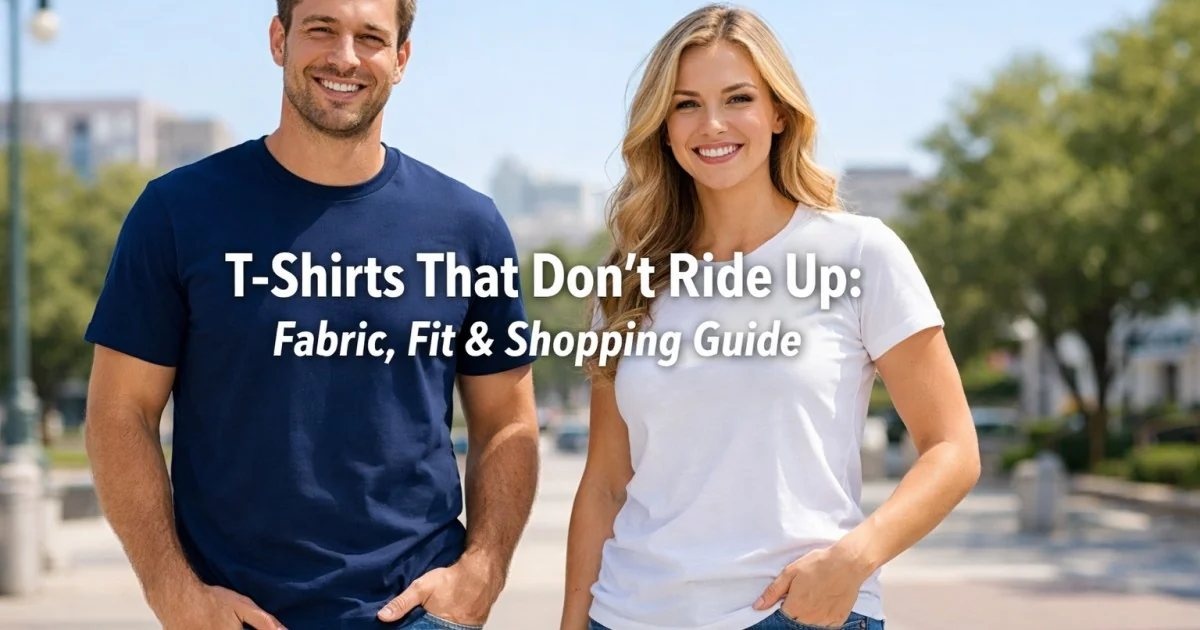
Okay, let's talk about the most frustrating fashion problem nobody discusses enough: the t-shirt that rides up. You know the one. You put it on in the morning, it feels perfect. By lunch, it's crept up your torso. By evening, you're spending more time tugging it down than actually living your life. You sit, it rides up. You reach for something, it rides up. You bend over, suddenly you're showing more skin than you intended.I can't tell you how many times I've heard women say, "I just can't find T-shirts that stay in place," as if there's something wrong with them, when really it's the T-shirt that's the problem. After twenty years styling women and listening to their real, everyday frustrations, I've learned that riding-up T-shirts aren't just annoying they're an outfit destroyer. They make you self-conscious. They kill confidence. They turn a potentially great look into constant adjustment.
The good news? This is actually solvable. It's not bad luck. It's not your body. It's about what causes riding-up in the first place, knowing which fabrics and fits prevent it, learning which brands consistently nail this (and which ones don't), and building strategies for both shopping and styling that guarantee your T-shirts stay put. This is your complete guide to finding and keeping T-shirts that actually stay where they're supposed to be.
Why T-Shirts Ride Up (The Science Behind It)
T-shirts ride up for specific reasons. These reasons is how you stop them from happening in the first place.
Reason 1: The Fit Is Too Loose
This is the most common culprit. When a T-shirt is too loose through the body, there's nothing anchoring it down. It literally has room to migrate upward as you move, sit, and bend. Loose fabric at the sides and torso means the T-shirt is floating instead of sitting securely on your frame.
Reason 2: The Fabric Is Too Thin or Flimsy
Lightweight, stretchy jerseys can't support their own weight properly. They're designed to cling and drape, which means they'll ride up easily. The thinner the fabric, the more likely it is to shift as you move.
Reason 3: The Length Is Too Short
If the hem barely skims your natural waist, there's nothing to grab and hold. As you move and sit, the waistband rides down and the hem rides up. You need length to work with something to anchor the shirt to your body.
Reason 4: The Fabric Is Too Stretchy
Certain blends with high elastane content (spandex) have so much give that they don't stay in place. They're designed for movement and athleticism, which can mean constant shifting in everyday situations.
Reason 5: The Neckline Is Too Loose
You might not think the neckline affects the hem, but it does. A loose neckline means the entire shirt sits differently on your frame. Everything shifts, including the hem.
Reason 6: You're Wearing It Over High-Waisted Pants
This is a style choice issue, not a T-shirt problem but it's worth understanding. Pairing a standard-length T-shirt with very high-waisted pants creates a proportion where the T-shirt is short to the waistband, so it rides up easily. (The fix here is choosing a longer T-shirt or different pants style.)
The Anti-Ride-Up Fabric Guide
Fabric choice is your most powerful tool in preventing riding-up T-shirts. Some fabrics are literally designed to stay in place. Others are designed to move and shift.
Best Fabrics (They Stay Put)
Mid-Weight to Heavyweight Cotton
Substantial, structured, doesn't shift easily.
- Weight: 160-200+ GSM (grams per square meter).
- Why it works: Heavy enough to have weight and presence, not so heavy it's stiff.
- Feel: Solid, real fabric, not flimsy.
- Price: Moderate to mid-range; worth it for the quality.
Cotton-Polyester Blends (70/30 or 80/20)
The sweet spot between natural fiber and structure.
- Why it works: Poly adds stability; cotton keeps breathability. Fabric holds its shape.
- Benefit: Doesn't wrinkle easily, durable, doesn't shift as much.
- Feel: Slightly smoother than pure cotton, very wearable.
French Terry (Brushed Inside)
Has weight and structure despite looking casual.
- Why it works: The brushed interior adds substance. Not thin or clingy.
- Benefit: Feels premium, doesn't ride up, surprisingly versatile.
- Feel: Soft inside, smooth outside, structured.
Pima Cotton or Supima Cotton
High-quality cotton with naturally more structure.
- Why it works: Long-staple cotton has better weight and recovery.
- Feel: Soft but structured, holds shape beautifully.
- Price: Higher investment, but lasts longer.
| Fabric | Stay-Put Rating | Weight Feel | Price Point | Best For |
|---|---|---|---|---|
| Heavy Cotton | ★★★★★ | Substantial | $ | Everyday wear, stability priority |
| Cotton-Poly Blend | ★★★★★ | Balanced | $ | Practical, durable everyday |
| French Terry | ★★★★ | Structured | $$ | Casual but polished |
| Pima/Supima | ★★★★ | Premium soft | $$+ | Quality-focused investment |
Fabrics to Avoid (They Ride Up)
Thin Jersey (Lightweight Knit)
Light, drapey, clingy everything that encourages riding up.
- Weight: Under 140 GSM.
- Problem: Can't support itself; shifts constantly.
High-Spandex Blends (Athletic)
Designed for stretch and movement, not staying in place.
- Problem: Bounces back and shifts as you move.
- Best for: Actual workouts, not everyday wear.
Slub Cotton (Textured)
Looks trendy but is often thin and loose-knit.
- Problem: Texture can compromise fabric density.
- Consider: Not always, but often problematic.
The Fit Equation (How Cut Prevents Riding Up)
Even good fabric will ride up if the fit is wrong. Here's what to look for:
Fitted or Standard Fit (Not Oversized)
The T-shirt should follow your body without clinging or billowing.
- Should be able to pinch 1-2 inches of fabric at the side seams.
- Not so tight it clings; not so loose it floats.
- This fit creates gentle contact with your body, anchoring the shirt in place.
Adequate Length
This is crucial. The hem should hit past your natural waist.
- Minimum: Hip bone level (where your hip bone juts out).
- Better: 2-3 inches below hip bone.
- Why: Extra length means the shirt won't ride up as far even when you move.
Think of it this way: if a T-shirt starts at your natural waist and rides up 3 inches, it's now showing your midriff. But if it starts 3 inches below your hip and rides up the same amount, it's still covering your waist comfortably.
Proper Armhole Depth
If the armhole is too loose, the entire shirt sits differently and rides up.
- The armhole should hit right at the top of your shoulder.
- Not drooping down (making the shirt sit too low).
- Not so tight it restricts movement.
Tapered, Not Boxy
The shirt should gently taper or taper at the sides rather than being straight all the way down.
- Boxy cuts have excess fabric that has nowhere to go except up.
- Tapered cuts sit securely on your frame.
Length Strategy: The Overlooked Solution
I want to emphasize this because it's the most underutilized fix: buying longer T-shirts completely solves the riding-up problem for most people.
Standard Length (Hip Bone)
If you struggle with riding up, don't buy standard length. This is your issue.
Extended Length (2-4 Inches Past Hip)
This is what you want if riding-up is a problem. You can still tuck, crop, or tie at the waist if you want, but the extra length means you have room for the shirt to shift without exposing your midriff.
Tall or Long Length (Specifically Labeled)
Many brands now offer "tall" or "long" versions. These are designed with extra torso length specifically to prevent the problems you're experiencing.
Pro tip: Buying one size longer T-shirt than you normally would accomplishes the same thing if the brand doesn't offer extended lengths.
Brands That Solve the Riding-Up Problem

Some brands have genuinely cracked this code. They design T-shirts with consideration for real bodies and real movement.
Everlane
- Why they work: Mid-weight fabrics, proper length, fitted but not tight.
- Length: Sits at mid-hip naturally.
- Price: $ (affordable, transparent pricing).
Uniqlo Airism/Rayon Blends
- Why they work: Technical fabrics hold their place, fabric weight is substantial.
- Length: Hits right at hip, proper proportions.
- Price: $ (budget-friendly).
J.Crew Basics
- Why they work: Fitted cut, proper length, quality cotton blends.
- Length: Sits at natural waist comfortably.
- Price: $$ (moderate to mid-range).
Gap Essential/Perfect Tees
- Why they work: Reliable construction, stays true to size and fit.
- Length: Hip-length, doesn't ride up excessively.
- Price: $ (affordable).
Banana Republic Factory
- Why they work: Slightly higher quality than Gap, better fabric weight.
- Length: Proportional and stable.
- Price: $$ (mid-range, frequent sales).
Quince
- Why they work: Direct-to-consumer means fabric quality is prioritized. Thoughtful fit.
- Length: Longer cuts available; stays put.
- Price: $$ (affordable luxury).
Invest Brands Worth the Price
- Everlane Silk: Premium feel, doesn't shift.
- Hanna Andersson: Organic cotton, exceptional fit.
- Cuyana: Minimal, perfect basics.
Fit Considerations by Body Type
Petite or Shorter Torso
- Problem: Standard length can be too long, creating excess fabric that rides up.
- Solution: Look for "petite" or "short" lengths, or buy fitted standard lengths that sit right at your natural waist.
Tall or Longer Torso
- Problem: Standard length is too short; riding up is inevitable.
- Solution: Buy tall or extended lengths; don't try to make standard work.
Curvy or Full-Figured
- Problem: Need enough width and length to avoid riding up from movement and sitting.
- Solution: Fitted (not tight) mid-weight fabrics, extended length, brands that offer real size ranges.
Athletic or Muscular Build
- Problem: Standard widths are tight; sizing up creates excess that rides up.
- Solution: Athletic cuts from sportswear brands, or brands that offer athletic sizing in basic tees.
Styling Strategies to Prevent Riding Up
Even with the right T-shirt, styling matters:
Tuck It In (Intentionally)
A front tuck or full tuck anchors the shirt and prevents it from moving.
- Front tuck: Casual, shows intention.
- Full tuck: Dressier, very secure.
- Half tuck: Trendy, modern.
Wear with High-Waisted Bottoms
High-waisted pants, skirts, or shorts anchor T-shirts securely.
- The waistband sits above your natural waist, so the T-shirt has nowhere to ride up to.
- Creates a clean line and prevents the whole riding-up issue.
Pair with Belted Bottoms
A belt adds another anchor point, keeping your T-shirt in place.
Knot or Tie at the Waist
A casual knot at the side or back secures the shirt.
Layer Strategically
An open shirt, jacket, or cardigan over a T-shirt can prevent it from moving.
Shopping Strategy: What to Check Before You Buy
Use this checklist in-store or before buying online:
- Fabric weight: Does it feel substantial in your hand? Not thin or flimsy?
- Length: Does the hem sit past your hip bone when standing?
- Fit: Can you pinch 1-2 inches at the sides? Or is it too loose?
- Fabric composition: Check the label. Is it a blend or pure cotton? Mid-weight or lightweight?
- Seams: Do they sit smoothly? Or are they wavy/twisted?
- Movement test: Sit down, raise your arms, move normally. Does the shirt stay in place or shift upward?
If a T-shirt fails any of these tests, don't buy it hoping it'll work out. It won't.
Online Shopping Tips
When you can't try on:
- Read reviews specifically for "riding up" or "length" mentions.
- Check the length measurements if provided (not all brands list this, but some do).
- Look for fabric content avoid anything under 140 GSM if possible.
- Buy from retailers with good return policies so you can try at home.
- Order multiple sizes and return what doesn't work.
The Non-Negotiables
If you want a T-shirt that doesn't ride up, these are non-negotiable:
- Fabric weight: Mid-weight minimum (160+ GSM).
- Fit: Fitted or standard, not oversized or boxy.
- Length: At minimum your hip bone; better if 2+ inches past.
- Proper fit: Right across shoulders, not too loose through body.
Meet these criteria, and you'll have T-shirts that stay put. Skip any one of them, and you're back to tugging at your shirt all day.
The Real Solution
Finding T-shirts that don't ride up isn't about accepting mediocrity or thinking you're doing something wrong with your body. It's about understanding that certain fabrics, fits, and lengths simply work better for staying in place. Once you identify the brands and styles that work for your body, you stop wasting time and money on T-shirts that don't. You stop being self-conscious. You just get dressed and get on with your day with your T-shirt staying exactly where it's supposed to be.
