The Complete Guide to Understanding Fabric Care Labels
I have a confession: I used to throw away care labels after the first time I wore something. They seemed unnecessary, like marketing clutter, just something the manufacturers added without real relevance to my life. Then I ruined a beloved cashmere sweater. It went into the wash like every other sweater, came out shrunken and misshapen, and I realized I'd never actually checked what the label said. I'd just assumed it was like every other sweater, machine washable, same temperature as everything else.
That sweater taught me something valuable: care labels aren't just suggestions. They're instructions written by people who understand exactly how the fabric was constructed, what it's made of, and what will damage it. And in twenty years of working with clothing, I've learned that understanding those labels is one of the most important skills for protecting your wardrobe investment. Because honestly, the difference between a piece that lasts five years and a piece that deteriorates in one year often comes down to how you care for it.
The problem is that most people don't really understand care labels. There are symbols that look like cryptic hieroglyphics. There are temperature numbers that don't mean anything without context. There's confusing language about specific care requirements. And most people just ignore it all and wash everything the same way, wondering why some pieces fall apart while others hold up beautifully.
Here's what I've learned: once you understand care labels, you make smarter decisions about how to wash your clothes. You stop ruining pieces that could have lasted years. You protect the quality pieces you've invested in. You actually extend garment lifespan, which makes your wardrobe investments worth it. And honestly, understanding care labels is the difference between having a closet full of pieces that feel high-quality and maintained, versus a closet full of pieces that look sad and worn after just a few wears.
This guide covers everything: understanding care label symbols, decoding temperature and washing instructions, understanding fiber-specific care requirements, what different symbols actually mean, special care requirements and why they matter, how to care for hoodies and tees specifically, common care mistakes that ruin pieces, extending garment lifespan through proper care, emergency care for specific issues, and becoming skilled at reading and following care instructions correctly.
Care Label Symbols
Let's decode those mysterious symbols on care labels.
The Symbol System
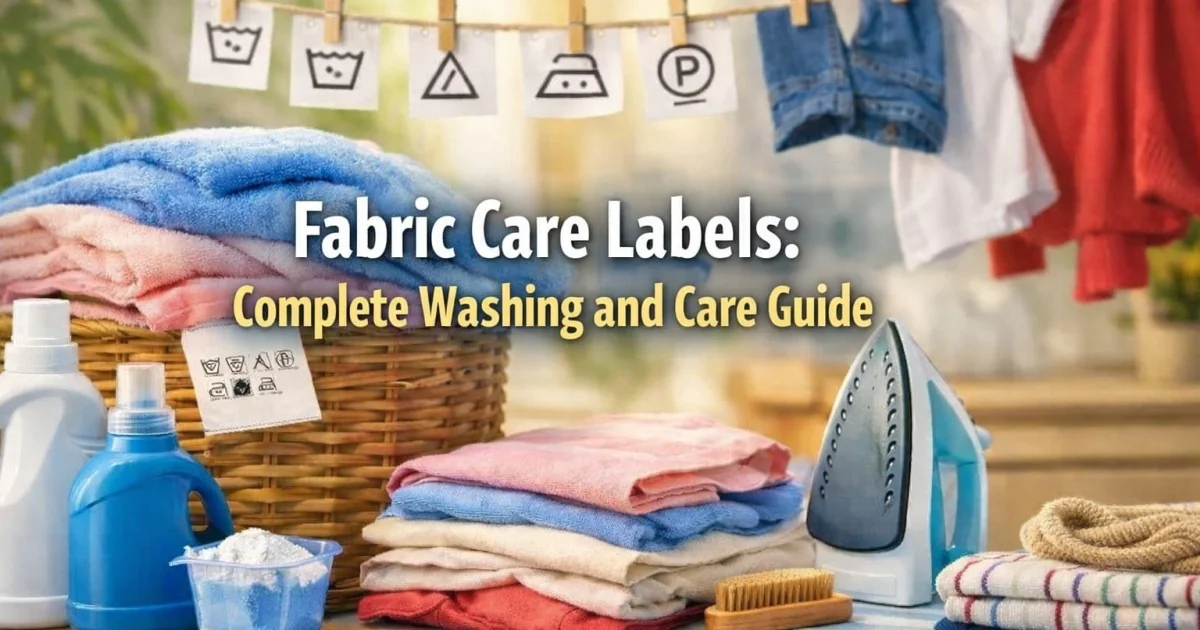
Care labels use standardized symbols that represent specific care instructions.
Why Symbols?
- International standard: Symbols work across languages and countries.
- Quick reference: Instantly communicate care requirements.
- Legal requirement: Manufacturers required to provide clear care instructions.
- Liability protection: Clear labels protect manufacturers from damage claims.
The Five Main Symbol Categories
Washing Symbol (Washtub)
- What it shows: How to wash the garment; temperature and method.
- Appearance: Simple washtub shape with numbers and lines.
- Number in tub: Temperature in Celsius (typically 30°C, 40°C, 50°C, etc.).
- Lines under tub: Indicate gentleness level (more lines = gentler).
- X through tub: Do not wash in water; dry clean only.
Bleach Symbol (Triangle)
- What it shows: Whether bleach can be used; what type.
- Appearance: Triangle shape.
- Empty triangle: Any bleach acceptable.
- Triangle with lines: Only non-chlorine bleach acceptable.
- X through triangle: No bleach; will damage fabric.
Dry Cleaning Symbol (Circle)
- What it shows: Whether professional dry cleaning is appropriate.
- Appearance: Circle shape.
- Letter inside: Indicates solvent type for dry cleaners.
- X through circle: Do not dry clean.
Tumble Dry Symbol (Square with Circle Inside)
- What it shows: Machine drying suitability and temperature.
- Appearance: Square with circle inside.
- Dots inside: Temperature (one dot = low, two dots = medium, three dots = high).
- Lines under symbol: Gentleness level.
- X through symbol: Do not tumble dry; air dry only.
Ironing Symbol (Iron)
- What it shows: Whether ironing is safe; what temperature.
- Appearance: Iron shape.
- Dots inside: Temperature (one dot = low, two dots = medium, three dots = high).
- X through iron: Do not iron; will damage fabric.
| Symbol | Meaning | What It Indicates | Common Temperature | Special Notes |
|---|---|---|---|---|
| Washtub (Empty) | Can Machine Wash | Regular washing acceptable | See number in tub | Check for line underneath |
| Washtub with Lines | Gentle Wash Required | Delicate fabrics; low agitation | Typically 30-40°C | Use gentle cycle |
| Washtub with X | No Water Washing | Dry clean only or hand wash | N/A | Professional care advised |
| Triangle (Empty) | Bleach Acceptable | Any bleach type safe | N/A | Rare for colored items |
| Triangle with Lines | Non-Chlorine Bleach Only | Oxygen bleach safe; chlorine not | N/A | Safer for colors |
| Circle (Empty) | Dry Clean Acceptable | Professional dry cleaning safe | N/A | Letter inside indicates solvent |
Decoding Temperature and Washing Instructions
Temperature and method directly impact fabric care.
Understanding Temperature
Temperature Scale
- 30°C (86°F): Cold water; very gentle wash; delicate fabrics.
- 40°C (104°F): Warm water; gentle-regular wash; most colored items.
- 50°C (122°F): Warm water; regular wash; sturdy items.
- 60°C (140°F): Hot water; regular wash; whites and heavily soiled items.
- 90°C (194°F): Very hot water; whites and items needing sanitizing; rare.
Why Temperature Matters
- Hot water shrinks: Higher temperatures can shrink fabrics; especially cotton and wool.
- Hot water fades colors: Higher temperatures cause dye bleeding and color fading.
- Cold water preserves: Lower temperatures protect colors and fabric structure.
- Fiber dependent: Different fibers have different temperature tolerances.
Understanding Wash Cycles
Lines Under Washtub Symbol
- No lines: Regular/standard wash cycle; normal agitation; durable fabrics.
- One line underneath: Permanent press/regular wash; reduced agitation; most fabrics.
- Two lines underneath: Gentle/delicate wash; minimal agitation; delicate fabrics.
- Three lines underneath: Very delicate/hand wash; barely any agitation; very delicate items.
What Different Cycles Mean for Your Washer
- Regular cycle: Normal agitation; full water level; normal spin.
- Permanent press: Reduced agitation; automatic temperature reduction; slower spin.
- Delicate cycle: Minimal agitation; cold water; slow spin or no spin.
- Hand wash cycle: Barely any agitation; cold water; minimal spin.
Temperature Ranges on Care Labels
- Exact number: Max temperature; use that or lower.
- "Warm": Typically 30-40°C range; use cooler rather than hotter.
- "Cold": Typically 20-30°C range; coldest water possible.
- No temperature specified: Use warm water (40°C) default; safer assumption.
Fiber-Specific Care Requirements
Different fibers need different care approaches.
Cotton Care
Cotton Characteristics
- Durable fiber: Can withstand regular washing and hot water.
- Shrinkage risk: Cotton can shrink, especially in hot water.
- Color fading: Repeated washing fades colors; more with hot water.
- General durability: Very durable; lasts long with proper care.
Cotton Care Best Practices
- Wash in warm or cool water: Avoid hot unless specifically directed.
- Use gentle cycle: Reduces wear and tear; protects color.
- Turn inside out: Protects outer color and surface.
- Wash with similar colors: Prevents color bleeding onto light colors.
- Air dry when possible: Reduces shrinkage; gentler than machine dry.
Polyester and Synthetic Blends
Synthetic Characteristics
- Generally durable: Can withstand regular washing.
- Low shrinkage: More stable than natural fibers.
- Color stable: Resists fading better than cotton.
- Heat sensitive: Can melt or distort in high heat.
Synthetic Care Best Practices
- Wash in warm water: 30-40°C typically appropriate.
- Avoid high heat: Machine dry on low or air dry.
- Don't iron on high: Can melt or permanently damage.
- Generally low-maintenance: Easier care than natural fibers.
Wool Care
Wool Characteristics
- Delicate structure: Sensitive to heat and agitation.
- Felting risk: Hot water and agitation causes matting and shrinking.
- Moisture sensitive: Excessive moisture can cause stretching.
- Color bleeding: Can bleed if not properly dyed; wash with care.
Wool Care Best Practices
- Cold water only: Warm water risks shrinking and felting.
- Gentle or hand wash cycle: Minimal agitation essential.
- Use wool-specific detergent: Regular detergent damages fibers.
- Never machine dry: Always air dry; lay flat or hang carefully.
- Store with cedar or lavender: Prevents moth damage.
Blended Fabrics
Cotton-Polyester Blends
- Care approach: Follow the more delicate fiber's requirements.
- Typical care: Warm water; gentle cycle; air dry.
- Advantage: Often easier care than 100% cotton.
Wool-Synthetic Blends
- Care approach: Usually follow wool requirements (more delicate).
- Typical care: Cold water; hand wash or delicate cycle; air dry.
- Check label: Always defer to what label specifies.
What Different Care Requirements Actually Mean
Understanding the practical implications of label instructions.
"Machine Wash Cold"
What it means: Use cold water; any standard cycle acceptable if fiber appropriate.
- Why: Protects colors; protects delicate fibers; saves energy.
- How to do it: Set machine to coldest setting; use regular or gentle cycle.
- Temperature range: Typically 20-30°C; colder is safer.
"Hand Wash Only"
What it means: Machine washing not appropriate; must wash by hand.
- Why: Fiber too delicate for machine agitation.
- How to do it: Fill sink/basin with cool water; add gentle detergent; submerge item; gently work detergent through; rinse thoroughly; squeeze out water gently; air dry.
- Don't: Wring, twist, or agitate roughly.
"Delicate Cycle"
What it means: Machine wash acceptable but requires delicate/gentle cycle.
- Why: Fiber needs minimal agitation but can tolerate machine washing.
- How to do it: Place item in mesh bag; use machine's delicate/gentle cycle; cold or warm water.
- Additional care: Often should be air dried rather than machine dried.
"Lay Flat to Dry"
What it means: Should not be hung when wet; must dry flat.
- Why: Wet fabric stretches; laying flat prevents deformation.
- How to do it: Spread item flat on clean surface; air dry completely.
- Prevents: Stretching, permanent shape changes, damage.
"Do Not Bleach"
What it means: No bleach products can be used; will damage color or fiber.
- Why: Bleach can weaken fibers or remove colors.
- Alternative: Use oxygen-based stain removers instead; gentler and effective.
- Important: Even small amounts of bleach can cause damage.
"Dry Clean Only"
What it means: Professional dry cleaning only; water washing not appropriate.
- Why: Fiber construction requires specific solvents; water would damage.
- Cost consideration: Factor dry cleaning costs into purchase decision.
- When considering: Is the care cost justified by the piece?
Special Care Requirements and Why They Matter

Some instructions indicate special handling needs.
Shrinkage Warnings
- What it means: Piece will shrink if not cared for properly.
- Why it matters: Sizing built with shrinkage in mind; washing hot/wrong way causes improper fit.
- How to prevent: Follow temperature and cycle instructions exactly.
- Significance: Critical for fit; ignoring can ruin piece.
Color Fading Warnings
- What it means: Color will fade if not protected during washing.
- Why it matters: Some fabrics dye more loosely; colors bleed if not careful.
- How to prevent: Wash in cool water; wash with similar colors; wash inside out.
- Significance: Protects appearance and longevity of piece.
Pilling Warnings
- What it means: Fabric prone to pilling; rough treatment causes matting.
- Why it matters: Pilling makes piece look worn even if structurally sound.
- How to prevent: Use gentle cycle; turn inside out; don't wash with rougher fabrics.
- Significance: Maintains appearance despite typical wear.
Fiber-Specific Instructions
- Wool-specific detergent: Regular detergent damages delicate fibers; specialized formula protects.
- Color-catcher sheets: Help prevent color bleeding; recommended for dark colors.
- Mesh washing bags: Protect delicate items from agitation during machine washing.
- Starch optional: For items that benefit from structured appearance.
Caring for Hoodies and Tees Specifically
Most hoodies and tees are cotton or cotton-blend; here's specific guidance.
Typical Hoodie and Tee Care
Standard Instructions Usually Found
- Machine wash warm or cold: 30-40°C typical.
- Gentle cycle typically recommended: Protects construction and color.
- Tumble dry low or air dry: Low heat preferred; air dry best.
- Turn inside out: Protects print and outer color.
- Wash with similar colors: Prevents color bleeding.
Best Practices for Hoodies and Tees
- Turn inside out before washing: Protects prints, colors, and surface.
- Wash in cool water: 30°C or cold water; protects color.
- Use gentle cycle: Protects fabric and construction quality.
- Wash with dark colors: Light and darks separate.
- Air dry when possible: Preserves shape; prevents shrinkage.
- Machine dry on low: If must machine dry; never high heat.
Print and Graphic Care
- Turn inside out: Critical for printed pieces; protects print from cracking.
- Cool water always: Hot water damages prints.
- Gentle cycle: Minimizes print wear and damage.
- Air dry: Heat from dryer damages prints.
- Avoid fabric softener: Can damage print adhesion.
Hoodie-Specific Care
- Drawstring care: Drawstring can catch and snag; ensure it's secure in pocket before washing.
- Kangaroo pocket: Can trap lint and dirt; ensure clean before washing.
- Hood attachment: Should be well-constructed; wash carefully to protect seams.
- Double-check pockets: Empty completely before washing.
Common Care Mistakes That Ruin Pieces
These errors cause unnecessary damage to otherwise quality pieces.
Ignoring Temperature Instructions
Mistake: Washing delicate items in hot water.
- Result: Shrinking; fading; fiber damage.
- Example: Wool sweater in hot water results in permanent shrinking and felting.
- Prevention: Always follow temperature on label; when in doubt, use cooler water.
Using Regular Detergent on Delicate Items
Mistake: Using standard detergent on wool or delicate fabrics.
- Result: Fiber damage; breakdown of fabric structure.
- Example: Wool items with regular detergent become stiff and damaged.
- Prevention: Use appropriate detergent for fiber type.
Machine Drying When Label Says Air Dry
Mistake: Using machine dryer on pieces requiring air drying.
- Result: Shrinking; shape changes; fiber damage.
- Example: Cashmere sweater in dryer becomes unusable.
- Prevention: Follow label; air dry when instructed.
Mixing Colors Without Sorting
Mistake: Washing lights and darks together.
- Result: Color bleeding; discoloration of light pieces.
- Example: Red tee bleeding onto white shirts; permanent staining.
- Prevention: Sort by color; wash similar colors together.
Using Bleach on Colored Items
Mistake: Using any bleach when label says no bleach.
- Result: Permanent discoloration; fading; potential holes.
- Example: Bleach on dark hoodie creates permanent light spots.
- Prevention: Use oxygen-based cleaners instead; avoid any bleach.
Not Using Mesh Bag for Delicate Items
Mistake: Washing delicate items loose in machine.
- Result: Snags; pulls; damage from agitation and other items.
- Example: Delicate sweater snagged by zipper from jeans.
- Prevention: Place delicate items in mesh washing bag.
Extending Garment Lifespan Through Proper Care
Following care labels directly correlates with how long pieces last.
The Care-Longevity Connection
- Quality basics with proper care: 5-10+ years typical lifespan.
- Quality basics with improper care: 1-2 years before significant deterioration.
- Investment protection: Following care instructions ensures pieces last as long as possible.
- Cost per wear: Proper care reduces replacement frequency; better value.
Specific Longevity-Extending Practices
Frequency Matters
- Wash less frequently: Fewer washes = longer lifespan.
- Spot clean when possible: Don't wash entire item for small stain.
- Air out between wears: Many items don't need washing after one wear.
- Wear multiple times before washing: Basics can often be worn 2-3 times between washes.
Storage Matters
- Dry completely before storing: Moisture causes mildew and damage.
- Store flat when possible: Prevents stretching and shape changes.
- Cool, dark location: Prevents fading and deterioration.
- Proper protection: Cedar blocks prevent moth damage; acid-free tissue prevents yellowing.
Repair Matters
- Fix immediately: Small holes become big holes if not repaired.
- Loose seams: Restitch before they fully unravel.
- Loose buttons or snaps: Reattach securely to prevent loss.
- Professional repair: Worth investment for quality pieces.
Emergency Care for Specific Issues
Addressing problems that arise despite proper care.
Accidental Shrinking
- If piece is still wet: Hand-stretch gently back to approximate shape while still damp.
- For minor shrinking: Often stretches back with wear and normal movement.
- For significant shrinking: May be permanent; learn and prevent with future pieces.
- Prevention: Always follow temperature instructions strictly.
Color Bleeding
- Immediate action: Rewash immediately with cool water; don't dry.
- If already dry: May be permanent; try color remover products (test first).
- Prevention: Wash new dark items separately first wash; use color-catcher sheets.
Accidental Bleach Damage
- Small spots: Sometimes can be dyed over with appropriate dye.
- Large damage: Usually permanent; piece may need repurposing.
- Prevention: Clearly label bleach containers; never use on colored items.
Pilling on Fabric
- Removal: Use fabric shaver or lint roller; gently remove balls of fiber.
- Prevention: Wash inside out; use gentle cycle; don't wash with rough items.
- Note: Some pilling normal with wear; not always avoidable.
Becoming Skilled at Reading Care Labels
Develop habits that protect your investment.
Reading Labels Before Buying
- Check care requirements: Is this care realistic for your lifestyle?
- Dry clean only items: Factor in cleaning costs to purchase decision.
- Hand wash only items: Do you have time for hand washing?
- Make informed choice: Buy pieces you'll actually care for properly.
Creating a Care System
- Photo care labels: Take photos of labels for reference while washing.
- Keep a washing guide: List of how to wash each piece type.
- Label storage properly: Hang labels in your closet as reference.
- Make it easy: The easier you make proper care, the more likely you'll do it.
Educating Household Members
- Communicate care needs: Explain to anyone doing laundry what items need special care.
- Wash bags for delicates: Use as visual cue that items need special handling.
- Separate laundry: Keep delicates separate so they're hard to miss.
- Written reminders: Post care instructions on washer/dryer.
The Real Value of Proper Care
Understanding care labels isn't about being obsessive or perfectionist. It's about respect for the pieces you've invested in. It's about choosing to care for your wardrobe in ways that allow it to serve you for years rather than months. It's about making small choices that compound into significantly extended garment lifespan.
When you follow care labels, you're following instructions from people who understand that specific fabric intimately. You're protecting your investment. You're ensuring that quality pieces last as long as they're designed to last. And you're avoiding the frustration of pieces that deteriorate quickly despite being quality items.
The pieces that last years and look good year after year aren't magic. They're the result of being chosen thoughtfully, cared for properly, and treated with respect. That starts with understanding care labels. It continues with actually following them. And the result is a wardrobe that serves you well, that holds its value, that you genuinely enjoy wearing for years.
