The Ultimate Guide to Hoodie Sizing for Men
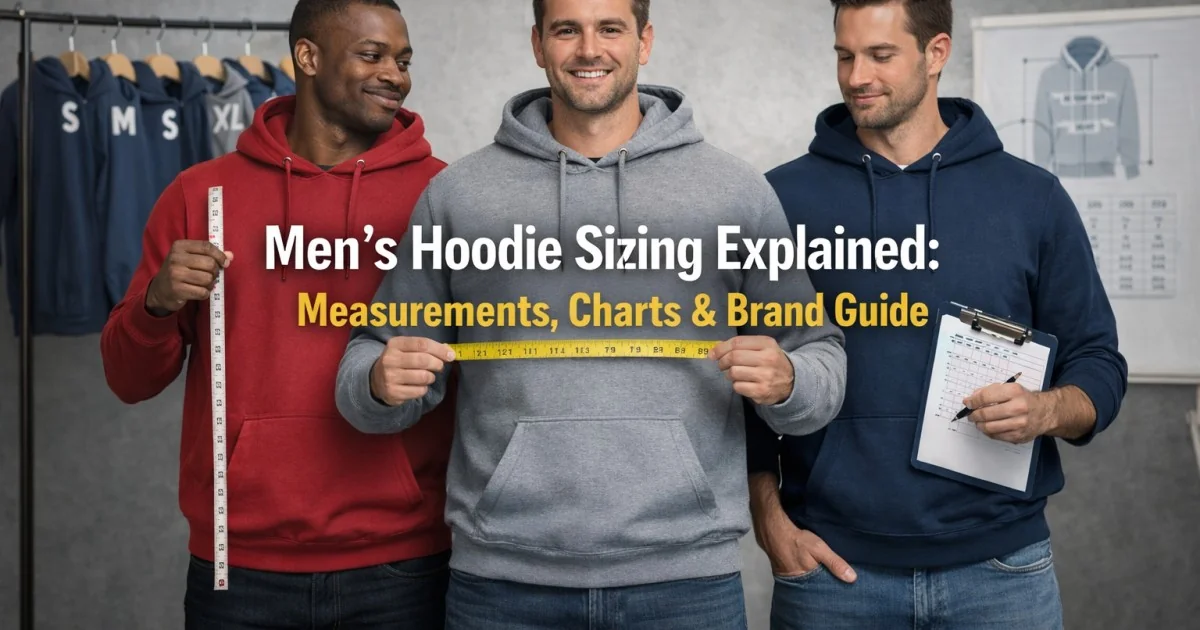
Listen, I've been in the fashion world for almost two decades, and I've learned something that constantly surprises me: men's hoodie sizing might be the most confusing thing in all of apparel shopping. I've watched intelligent, confident guys paralyzed by sizing charts, second-guessing everything, ordering three sizes of the same hoodie just to figure out which fits. And honestly? The confusion is justified because hoodie sizing is genuinely all over the place.
Here's what I've discovered from styling hundreds of men and testing hoodies across every brand imaginable: there's no universal standard. A medium from one brand might be like a large from another. Sleeve lengths vary wildly. Proportions are all over the map. But here's the good news once you understand the system, once you know what to measure and how to interpret sizing charts, everything becomes crystal clear. You'll never buy a poorly fitting hoodie again.
This is your complete blueprint for understanding men's hoodie sizing. We're talking actual measurements, how to read those confusing size charts, how different brands approach sizing, how your height and build affect your ideal size, and exactly how to order online with confidence. By the end of this guide, you'll be that guy who just knows his size and orders without hesitation. Let's get there.
Why Hoodie Sizing Is So Confusing (And How We Fix It)
The problem starts with the lack of standardization. Unlike formal wear where sizing is somewhat regulated, casual wear especially hoodies has no real standard. Every brand has their own sizing philosophy. Some run large. Some run small. Some are weirdly proportioned.
Add to this the fact that hoodies serve different purposes (gym wear, casual wear, layering pieces, statement pieces) and different brands approach them differently. A performance hoodie from a sports brand fits completely different from a luxury hoodie from a fashion brand, even in the same size.
The solution isn't complicated though. You need two things: understanding your own measurements and understanding how to read a brand's specific sizing. Once you have both, the confusion disappears completely.
Your Foundational Measurements: Get These Right First
Before we talk about sizes, we need to know your actual measurements. These five measurements tell you everything you need to know about hoodie fit.
1. Shoulder Width (Across Back)This is the most important measurement. Stand straight, arms at your sides. Measure from the back of one shoulder point to the back of the other shoulder point. This is your shoulder width.
Why it matters: The hoodie's shoulder seams must sit right at your shoulder points. If they're too wide, the hoodie looks droopy. If they're too narrow, it feels restrictive. Shoulder width drives everything else.
Average ranges: 16-18 inches for most men, up to 20+ for very broad-shouldered guys.
2. Sleeve Length (From Back Neck to Wrist)This one's important for obvious reasons you need sleeves long enough to reach your wrists. Measure from the base of your neck in the back, down your shoulder, down your arm (with arm relaxed) to your wrist bone.
Why it matters: Too-short sleeves look ridiculous and show your wrists constantly. Too-long sleeves bunch up and cover your hands. The right length ends exactly at your wrist bone.
Average ranges: 32-36 inches for most men. Taller guys need 36-40 inches. Shorter guys need 30-34 inches.
3. Chest MeasurementMeasure around the fullest part of your chest with a soft tape measure. This tells you how much fabric you actually need width-wise.
Why it matters: A hoodie should have 2-4 inches of extra room beyond your chest measurement for comfortable wear. This determines whether you need your chest size or one size up.
Average ranges: 36-44 inches for most men. Larger frames might be 46+ inches.
4. Torso Length (From Neck to Hip)Measure from the base of your neck center front down to your hip bone. This tells you where the hoodie should naturally end.
Why it matters: A hoodie that ends at the right spot looks proportional. Too short looks cropped and wrong. Too long looks oversized or like you're drowning in it.
Average ranges: 26-30 inches for most men. Taller guys need 30-32 inches or more.
5. Overall HeightJust your height. Seems obvious, but it matters because some brands offer "tall" versions.
Average ranges: 5'6" to 6'3" covers most men, though hoodies exist for taller and shorter guys.
| Measurement | How to Take It | Average Range | What It Tells You |
|---|---|---|---|
| Shoulder Width | Back shoulder point to shoulder point | 16-20" | Size foundation |
| Sleeve Length | Back neck center down to wrist | 32-40" | Arm coverage needs |
| Chest | Around fullest part | 36-46" | Width/room needed |
| Torso Length | Neck to hip center | 26-32" | Ideal hoodie length |
| Height | From head to feet | 5'6"-6'3" | Overall proportions |
Understanding Men's Hoodie Sizes: Small Through 3XL
Extra Small (XS)Designed for: Guys 5'4" or shorter with narrow frames. Shoulder width roughly 14-16 inches. Sleeve length 30-32 inches.
Best for: Teenagers, very petite adult men, or men who are naturally lean.
Watch out: Sometimes XS runs extremely small. Always check specific measurements.
Small (S)Designed for: Guys 5'5"-5'8" with slim to average builds. Shoulder width roughly 16-18 inches. Sleeve length 32-34 inches.
Best for: Most smaller-framed men. This is the most common "small" you'll find.
Fits well when: Shoulders hit your shoulder points, sleeves reach wrist, chest has 2-3 inches of room.
Medium (M)Designed for: Guys 5'8"-5'11" with average builds. Shoulder width roughly 17-19 inches. Sleeve length 33-35 inches. Chest roughly 38-40 inches.
Best for: The most common size for average men. This is your baseline comparison.
Fits well when: It's perfectly balanced. Shoulders right, sleeves right, length right, room for layering.
Large (L)Designed for: Guys 5'10"-6'1" with average to muscular builds. Shoulder width roughly 18-20 inches. Sleeve length 34-36 inches. Chest roughly 40-42 inches.
Best for: Guys with broader shoulders or longer arms. Most athletic builds wear this.
Fits well when: You're muscular or tall enough to fill it properly. If you're slim, it'll be too roomy.
Extra Large (XL)Designed for: Guys 6'-6'3" with muscular builds or larger frames. Shoulder width roughly 19-21 inches. Sleeve length 35-37 inches. Chest roughly 42-44 inches.
Best for: Tall guys, broad-shouldered guys, or guys who prefer extra room.
Fits well when: You actually need the extra room, not just want it. An XL on a slim guy looks oversized.
2XL and 3XLDesigned for: Very large frames or guys who want substantial room. Proportions vary widely between brands.
Best for: Larger-framed men. Sometimes chosen for deliberate oversized look.
Watch out: Sizing gets less consistent at these sizes. Always check measurements.
The Height-Size Relationship: Don't Ignore This
Your height matters enormously for hoodie sizing because it affects proportions:
Under 5'6": Look at XS or S. Regular S might be too long. Some brands offer "petite" versions.
5'6"-5'9": S or M usually works. This is the sweet spot for standard sizing.
5'9"-6': M or L. Most men in this range wear M or L comfortably.
6'-6'2": L or XL. You probably need length in L or standard L.
Over 6'2": L, XL, or tall versions. Many brands offer "tall" or "big and tall" for you.
The problem: a guy who's 5'8" and a guy who's 6' might both wear L, but they need different proportions. The 5'8" guy needs shorter sleeves and shorter length. The 6' guy needs longer sleeves and longer length.
This is why checking actual measurements matters more than just looking at size labels.
Build Type Affects Your Ideal Size
Slim/Lean Build: Wear your normal size, maybe go down one if things run large. You don't want excess room—it'll look sloppy. A M might be better than an L even if the L technically fits shoulder-wise.
Athletic/Muscular Build: You might wear one size larger than average guys your height because you need shoulder and chest room. Your actual chest is larger than average, so you need larger proportions.
Rounder/Heavier Build: Standard size usually works. You need room for comfort, but oversized can look unintentional. A hoodie that fits your shoulders and has reasonable room is better than one that's way too big.
Tall and Lean: You might need L in length but M in width. This is tricky. Look for brands with proportional sizing or tall-specific versions.
How Different Brands Size: The Real Talk
Brands That Run Large (Size Down):- Champion Reverse Weave (classic oversized sizing)
- Carhartt (intentionally loose)
- Some vintage brands
- Patagonia (consistent and reliable)
- Uniqlo (accurate measurements)
- J.Crew (standard American sizing)
- Gap (predictable)
- Some European brands
- Luxury/fashion brands
- Performance/athletic brands sometimes
- Fast fashion brands
- Off-brand options
- Vintage hoodies
The lesson: never assume. Always check brand-specific sizing charts and read reviews mentioning fit.
Reading Sizing Charts Like a Pro
Most brands provide sizing charts showing exact measurements. Here's how to use them:
Step 1: Find Your MeasurementsCompare your actual measurements to the chart. Where do you fall? Are you a medium chest but large sleeve length?
Step 2: Look at Actual Numbers, Not Just Size LabelsIf your chest is 40 inches, look for the size that provides 43-44 inches (that's 3-4 inches of room). Don't just pick "medium."
Step 3: Prioritize Shoulder Width and Sleeve LengthThese are harder to alter. If shoulders are wrong, the whole thing is wrong. Prioritize getting these right, even if chest or length is slightly off.
Step 4: Check Customer ReviewsReal people mention fit. "Runs large" or "sleeves short" from actual customers is gold information.
Step 5: Look for Return PoliciesIf you're unsure, buy from places with easy returns. Try it, return it if it doesn't work.
Specific Brand Sizing Guide
| Brand | Sizing Tendency | Best For | Recommendation |
|---|---|---|---|
| Patagonia | True to size | Reliable sizing | Order your size |
| Champion | Runs large | Oversized look | Size down one |
| Uniqlo | True to size | Budget-friendly | Order your size |
| Everlane | True to size | Ethical basics | Order your size |
| Lululemon | Slightly tight | Fitted look | Order your size |
| Gap | True to size | Classic fit | Order your size |
| Nike | Varies | Check reviews | Check chart |
| Adidas | Runs small | Athletic fit | Size up |
Special Considerations: Tall Guys and Shorter Guys
If You're Over 6'2":- Look for "tall" or "big and tall" versions when available
- Expect to pay more fewer brands make extended sizes
- Check sleeve length obsessively regular sizing often falls short on you
- Some brands don't make anything long enough know which ones
- Look for "petite" or "short" versions when available
- XS is your friend, but not all brands make quality XS
- Sometimes S in certain brands works better than XS elsewhere
- Pay attention to sleeve and torso length regular sizing often feels overwhelming
- Patagonia (truly inclusive sizing)
- Target/Old Navy (tall and short options)
- Nordstrom brands (carry extended sizes)
- Big and tall specialty retailers
The Fit Formula: How to Calculate Your Ideal Size
Here's the mathematical approach:
- Find your shoulder width measurement
- Look at size charts and find where your shoulder width falls
- That's your baseline size
- Check if sleeve length in that size matches your measurement
- If sleeves are too short, you might need to size up or look for tall versions
- Check chest room (your chest measurement + 3-4 inches should equal listed chest)
- If everything works, that's your size
- If one measurement conflicts, prioritize shoulders and sleeves over chest
Online Shopping Without Trying On: The Strategy
Before You Order:- Check the brand's specific sizing chart
- Compare their measurements to your actual measurements
- Read at least 5 customer reviews mentioning fit
- Check the return policy is it easy and free?
- Note any comments about how it runs (large, small, etc.)
- Try it on immediately while you can still return it
- Check shoulder seams do they hit your shoulder points?
- Check sleeve length do they end at your wrist?
- Check fit around chest can you move freely?
- Check overall length does it hit your hip?
- If anything's off, return it and try the next size
Common Sizing Mistakes to Avoid
- Buying too large for comfort: Oversized doesn't mean sloppy. There's a balance.
- Ignoring your actual measurements: Just guessing usually fails.
- Not checking brand-specific sizing: Every brand is different.
- Forgetting about returns: Buy from places with good return policies.
- Not checking sleeve length: Too-short sleeves ruin everything.
- Assuming one size across all brands: The same person wears M in one brand, L in another.
- Ordering in a hurry: Take time to check measurements properly.
Your Personal Size Card: Create This Now
Fill this in and save it in your phone:
- My shoulder width: ____ inches
- My sleeve length: ____ inches
- My chest: ____ inches (ideal hoodie chest: ____ inches)
- My torso length: ____ inches
- My height: ____ feet ____ inches
- My typical size: ____
- Brands that fit me well: ____
- Brands to avoid or size differently: ____
Update this as you buy hoodies and learn which sizes work.
Pro Tips from Twenty Years of Experience
- Buy from brands with consistent sizing first. Once you know your size in Patagonia or Uniqlo, it's reliable.
- Don't be embarrassed to size down if you're naturally lean. Oversized doesn't equal better.
- Sleeve length matters more than you think. Wrong sleeves make the whole thing look wrong.
- Quality hoodies hold their shape. Cheap ones stretch out. Invest in better quality.
- Your size might change based on what you're layering under it. Account for that.
- Try things on if you can. Online shopping is convenient, but fitting rooms provide clarity.
- Read reviews. Real customers tell you exactly how hoodies fit and how they change after washing.
The Bottom Line
Hoodie sizing doesn't have to be confusing. Take your five key measurements. Know those numbers cold. Check brand-specific sizing charts. Read reviews mentioning fit. Use easy return policies when you're unsure. That's it.
Within a few purchases, you'll know exactly which brands work for your frame, exactly which sizes to order, and exactly what to expect. Then buying hoodies becomes genuinely easy no more second-guessing, no more three-size orders.
You've got this. Your perfect-fitting hoodie is waiting.
