The Ultimate Guide to Organizing Your Hoodie and Tee Collection
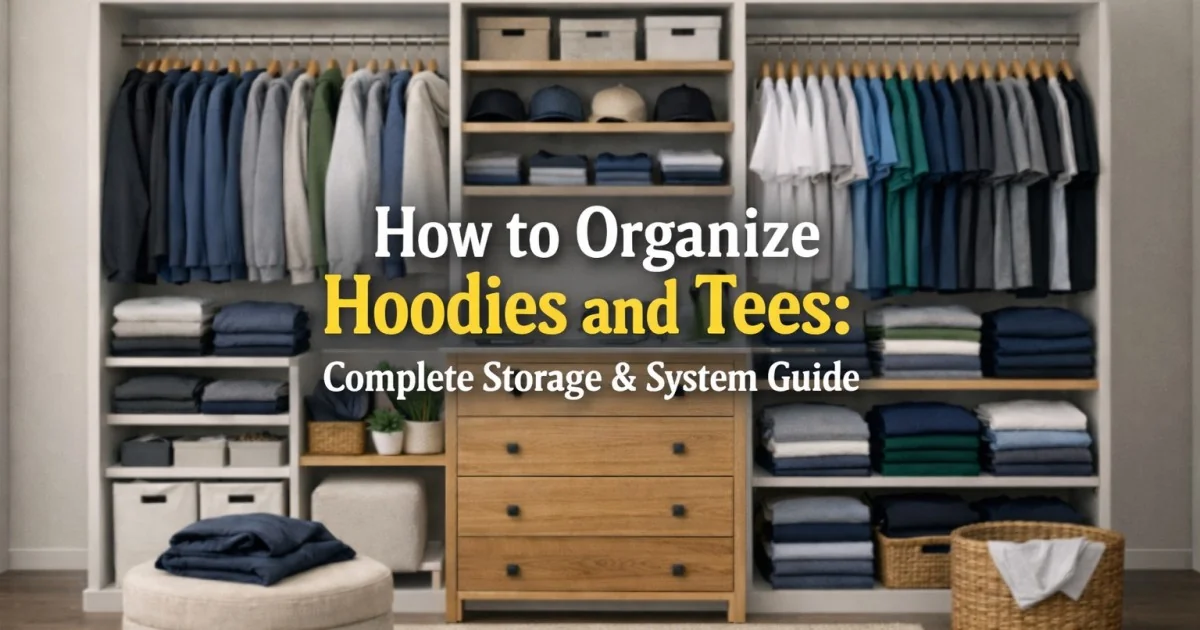
I have a confession: I spent way too many years with a closet that looked like it had exploded. Hoodies piled on top of tees. Colors everywhere. Never knowing what I actually had because everything was jumbled together. Getting dressed meant moving three piles around to find the one piece I wanted. It was inefficient, frustrating, and honestly kind of depressing to look at. Then I finally took a weekend and completely reorganized, and something shifted. Suddenly, getting dressed was easy. I could see what I had. I stopped buying duplicates because I knew exactly what colors and styles I owned. I actually wore more pieces because I could access them easily.
After twenty years of styling people and watching their closet struggles, I can tell you that organization is the number one thing that separates people who feel confident about their wardrobes from people who feel overwhelmed by their closets. And it doesn't require expensive systems or complicated solutions. It requires intentional strategy and understanding what works for your specific space, your specific collection, and your specific lifestyle.
Here's what I've learned: hoodies and tees are tricky to organize because you have a lot of them, they come in tons of colors and styles, they take up significant space, and they're worn frequently so they need to be easily accessible. A system that works for formal wear doesn't work for casual basics. You need something that's intuitive to maintain, that makes sense for how you actually get dressed, and that actually encourages you to wear everything you own rather than just wearing the same five pieces while ignoring the rest.
This guide covers everything: why organization matters for your wardrobe, assessing your collection and space, different organizational systems for hoodies and tees, folding and storage techniques, color organization strategies, seasonal rotation options, quick access systems for frequently worn pieces, maintaining organization long-term, troubleshooting common organization problems, and creating a system that actually works for your life.
Why Organization Actually Matters for Your Wardrobe
Organization isn't just about neat closets.
The Real Benefits of Organization
You Wear More Pieces
- The problem: When pieces are hard to access, you forget you have them.
- Result: Wear the same five pieces; ignore the rest.
- With organization: Everything visible; you wear more variety.
- Impact: Feel like your wardrobe is larger; maximize investment.
You Stop Buying Duplicates
- The problem: Can't find the black hoodie; assume you don't have one; buy another.
- Result: Closet full of duplicates; waste money.
- With organization: Know exactly what you have; no duplicates.
- Impact: Significant savings; no wasted purchases.
Getting Dressed Takes Less Time
- The problem: Searching through piles for the right piece.
- Result: Frustration; takes twenty minutes to get dressed.
- With organization: Know exactly where everything is.
- Impact: Get dressed in minutes; less morning stress.
You Feel Better About Your Closet
- The problem: Chaotic closet feels overwhelming and depressing.
- Result: Dread opening closet; feel bad about wardrobe.
- With organization: Clean, organized, intentional closet.
- Impact: Feel good about your space; more confident about clothing.
You Maintain Quality Better
- The problem: Pieces in piles get wrinkled, crushed, damaged.
- Result: Quality pieces deteriorate quickly.
- With organization: Pieces stored properly; maintained well.
- Impact: Pieces last longer; investment protected.
You Understand Your Actual Wardrobe
- The problem: Don't know what you have; closet feels full yet lacking.
- Result: Keep buying without understanding gaps.
- With organization: Know color distribution, styles, categories.
- Impact: Make smarter shopping decisions; build better wardrobe.
Assessing Your Collection and Space
Before organizing, understand what you're working with.
Taking Inventory
Step 1: Gather Everything
- Pull out all hoodies and tees: From closet, drawers, under bed, everywhere.
- See the full picture: How many do you actually have?
- Honest assessment: Most people underestimate their collection size.
Step 2: Categorize by Type
- Hoodies: Pullover vs. zip-up; weight variations.
- Tees: Basic, graphic, long-sleeve, short-sleeve.
- Special pieces: Athletic, vintage, sentimental.
- Result: Understand what types you have most of.
Step 3: Categorize by Color
- Group by color family: Neutrals, blues, blacks, grays, colors.
- Count by color: Do you have ten black tees but only one gray?
- Identify balance issues: Too many of one color?
- Result: Understand color distribution in collection.
Step 4: Assess Condition
- Excellent condition: Like new; worn but well-maintained.
- Good condition: Worn; minor wear; still looks good.
- Worn condition: Visible wear; fading; still wearable.
- Consider retiring: Pieces that should be replaced or discarded.
Step 5: Identify Non-Wearers
- Pieces you never wear: Wrong fit, wrong color, wrong style.
- Pieces you keep but shouldn't: Sentimental but never worn.
- Pieces taking up space: Not serving purpose in wardrobe.
- Decision time: Keep, donate, or sell?
Assessing Your Storage Space
Closet Space
- Hanging space: Do you have room to hang items? How much?
- Shelf space: High shelves? Low shelves? Depth?
- Drawer space: Deep drawers? Shallow? How many?
- Floating shelves: Can you add shelving?
Additional Storage
- Dresser: Drawers for folded items?
- Under-bed storage: Bins or containers?
- Shelving unit: Separate furniture for storage?
- Closet organizers: Hanging organizers, shelf dividers, bins?
Realistic Assessment
- Is collection too large for space? Consider culling.
- Do you need additional storage? Budget for it.
- What organizational tools would help? Identify gaps.
- What's realistic to maintain? Choose systems you'll actually use.
Different Organizational Systems for Hoodies and Tees
There's no one-size-fits-all system. Choose what works for you.
The Color Organization System
Organize by color gradient; easiest to visually maintain.How It Works
- Arrange by color: Blacks, grays, whites, blues, neutrals, then colors.
- Within colors: Can organize by light to dark or by type.
- Visual appeal: Rainbow arrangement looks organized and intentional.
- Easy maintenance: Can quickly place items back in color section.
Best For
- Visual people who notice when things are out of place.
- Collections organized by shelving or hanging.
- People who want aesthetically pleasing organization.
Challenges
- Requires honest placement discipline.
- New items must go in correct color section.
- Works better for smaller collections.
The Frequency Organization System
Most worn pieces most accessible; less worn pieces less accessible.How It Works
- Most-worn pieces: Eye level, easiest to reach, in front.
- Regular pieces: Slightly less accessible but still easy to reach.
- Occasional pieces: Higher shelves or back of closet.
- Seasonal pieces: Separate storage during off-season.
Best For
- Practical people who prioritize function over aesthetics.
- People who want to maximize wearing of favorites.
- Those with mixed storage (shelves, drawers, closet).
Challenges
- Requires honest self-assessment of wear frequency.
- May look less organized visually.
- Needs periodic reassessment as wear patterns change.
The Category Organization System
Organize by type: hoodies together, basic tees together, graphic tees together.How It Works
- Hoodies section: All hoodies in one area.
- Basic tees section: All basic tees in one area.
- Graphic tees section: All graphic tees in one area.
- Within categories: Organize by color for easy finding.
Best For
- People who think by clothing type when getting dressed.
- Collections with distinct categories.
- Those who want to find specific type easily.
Challenges
- Requires enough space to separate categories.
- May make some categories harder to access.
- Works better with larger collections.
The Hybrid Organization System
Combines elements of multiple systems.How It Works
- Primary organization by category: Hoodies, tees, etc.
- Secondary organization by color: Within each category.
- Frequency overlay: Most-worn pieces most accessible.
- Flexibility: Can adjust as needs change.
Best For
- Most people; combines best elements of different systems.
- Those with larger, diverse collections.
- People who want both function and aesthetics.
Challenges
- More complex to set up initially.
- Requires maintenance of multiple organizational layers.
- May feel complicated if not well-planned.
| System | Primary Organization | Best For | Visual Appeal | Maintenance Ease | Space Requirements |
|---|---|---|---|---|---|
| Color | Color Gradient | Visual People | High | Medium | Medium |
| Frequency | Wear Patterns | Practical People | Low-Medium | Medium | Flexible |
| Category | Piece Type | Type-Thinkers | Medium | High | High |
| Hybrid | Multiple Layers | Most People | High | Medium | Flexible |
Folding and Storage Techniques
How you fold and store directly impacts organization maintenance.
The KonMari Method (Marie Kondo)
The Folding Technique
- Fold compactly: Creates small rectangles.
- Stand upright in drawer: All pieces visible at once.
- No stacking: Can see every piece without moving others.
- Benefit: Extremely easy to maintain; nothing gets lost.
Specific for Tees and Hoodies
- Lay flat: Spread item flat on surface.
- Fold length: Fold item in thirds lengthwise.
- Fold width: Fold in half or thirds across width.
- Result: Compact rectangle that stands upright.
Best For
- Drawer storage; pieces visible upright.
- People who want to see everything at once.
- Those willing to learn the folding technique.
The Hanger Method
Using Hangers for Tees and Hoodies
- Hangers for all pieces: Everything hung on hangers.
- Space efficient: If you have closet space.
- Visible and accessible: Can see everything at once.
- Easy to grab: No unfolding needed.
Best For
- People with abundant closet or hanging space.
- Those who want maximum visibility.
- Anyone who dislikes folding.
Challenges
- Requires significant hanging space.
- Can stretch out pieces on hangers.
- Takes up more space than folding.
The Hybrid Storage Method
Combination Approach
- Most-worn hoodies and tees: Hung on hangers for quick access.
- Regular rotation pieces: Folded in drawers.
- Seasonal pieces: Folded in storage bins.
- Special pieces: Hung separately or carefully folded.
Best For
- Most people with mixed storage types.
- Those balancing visibility with space efficiency.
- Anyone with variable collection size.
Color Organization Strategies

Color-based organization takes intention to maintain well.
Creating a Color Palette
Establish Your Colors
- List all colors in collection: Black, gray, white, navy, red, etc.
- Group into families: Neutrals, cool tones, warm tones.
- Determine order: How to arrange for visual flow.
- Create visual reference: Photo or chart of color order.
Example Color Organization
- Blacks and very dark grays.
- Medium to light grays.
- Whites and creams.
- Navy and dark blues.
- Light blues and teals.
- Greens and earth tones.
- Reds, pinks, and warm tones.
Maintaining Color Organization
- Visual reminders: Post color guide in closet/drawer.
- Consistent placement: Always put piece in correct color section.
- Weekly maintenance: 5 minutes fixing pieces in wrong spots.
- Monthly review: Ensure order still makes sense.
When Color Organization Breaks Down
- Too many colors: Reduces order effectiveness.
- New pieces constantly arriving: Hard to keep up with placement.
- Household members not participating: Others don't follow system.
- Solution: Switch to different system or simplify color categories.
Seasonal Rotation Options
Managing seasonal pieces alongside year-round basics.
Seasonal Rotation Systems
Full Seasonal Swap
- Pack entire off-season: All winter pieces stored when summer begins.
- When to do: Season clearly ending; weather stable.
- Storage: Clean storage bins; labeled clearly.
- Benefit: Closet space maximized for current season.
- Drawback: Requires significant storage space; adjustment period.
Gradual Rotation
- Introduce new season slowly: Add transitional pieces first.
- Pack off-season gradually: As you stop wearing pieces.
- Overlap window: 2-4 weeks with both seasons accessible.
- Benefit: Smoother transition; always have what you need.
- Drawback: Closet crowded during transition; more complex.
Permanent Mixed Storage
- Keep all pieces accessible year-round: No seasonal packing.
- Organization: Organize all hoodies and tees together.
- Benefit: Never need to pack/unpack; maximum flexibility.
- Drawback: Closet crowded; harder to see options.
- Best for: Smaller collections or mild climates.
Storage Solutions for Off-Season Pieces
- Clear plastic bins: Can see contents without opening.
- Labeled boxes: Know what's inside at a glance.
- Vacuum-seal bags: Save space; protect from dust and pests.
- Hanging storage: Closet organizers for higher shelves.
- Under-bed storage: Utilizes otherwise empty space.
Quick Access Systems for Frequently Worn Pieces
Your most-worn pieces deserve premium positioning.
Determining Most-Worn Pieces
- Track for one week: What do you actually reach for?
- Honest self-assessment: What pieces do you wear multiple times per week?
- Ask yourself: If you could only keep ten pieces, which would you keep?
- Those are your most-worn pieces.
Premium Positioning
Eye-Level Placement
- Ideal height: Between shoulder and waist when standing.
- Why: Easiest to see and reach without effort.
- Application: Most-worn pieces at eye level, others above or below.
Front Placement
- Accessibility: Front is easiest to access without moving things.
- Application: Most-worn pieces in front section of closet or drawer.
- Benefit: Grab without disturbing rest of collection.
Easy-Reach Containers
- Special drawer or shelf: Dedicated to most-worn pieces.
- Separate basket: Most-worn pieces in accessible basket.
- Hang separately: Most-worn hoodies and tees hung prominently.
Rotating Most-Worn Pieces
- Reevaluate quarterly: Do your most-worn pieces change?
- Seasonal adjustments: Different pieces most-worn in different seasons.
- Adjust positioning: Move pieces as wear patterns change.
- Keep system fresh: Prevents pieces from wearing out from overuse.
Maintaining Organization Long-Term
Organization is only useful if you maintain it.
Daily Maintenance (2-3 minutes)
- When removing piece: Return clean pieces to correct location immediately.
- Dirty pieces: Directly to laundry; not back to organized closet.
- Hangers straight: Align pieces neatly; no wrinkles.
- Straighten as you go: Small adjustments prevent major disorder.
Weekly Maintenance (10-15 minutes)
- Sunday evening or Friday: Regular maintenance time.
- Realign pieces: Ensure everything in correct location.
- Fix color order: Pieces in wrong color section back to right place.
- Straighten hangers: Even spacing and alignment.
- Fold drawer pieces: Ensure proper folding and stacking.
Monthly Assessment (20-30 minutes)
- Full review: Look at entire organized collection.
- Identify issues: Pieces that don't fit organization; frequent errors.
- Address problems: Adjust organization or piece placement.
- Deep clean: Straighten, organize, ensure everything in good condition.
- Update worn pieces: Identify pieces needing repair or retirement.
Seasonal Deep Clean (1-2 hours)
- Before seasonal rotation: Full closet organization.
- Remove and sort: Pull out all pieces; categorize.
- Clean storage areas: Vacuum, dust, ensure clean before repacking.
- Assess collection: Do you need anything? Should anything go?
- Reorganize completely: Fresh start for new season.
Troubleshooting Common Organization Problems
Every organized closet faces challenges.
Problem: Organization Breaking Down Quickly
Why it happens: System too complicated; doesn't fit your lifestyle.
Solutions:- Simplify the system; fewer organizational rules.
- Make it easier to put things back in correct spot.
- Less frequent maintenance; more flexible about perfection.
- Choose system that matches how you naturally organize.
Problem: Collection Too Large for Space
Why it happens: Own more pieces than space accommodates.
Solutions:- Cull collection; reduce number of pieces.
- Add storage solutions; invest in organizers or furniture.
- Rotate pieces seasonally; not all accessible simultaneously.
- Assess if you need pieces you're not wearing.
Problem: Household Members Not Maintaining Organization
Why it happens: Others don't understand or care about system.
Solutions:- Simplify system; easier for others to follow.
- Make organization intuitive; obvious where things go.
- Accept slight imperfection; enforce maintenance on your pieces only.
- Educate household members; explain how system works.
Problem: Pieces Getting Lost or Forgotten
Why it happens: Organization system not making all pieces visible.
Solutions:- Switch to KonMari method; pieces visible standing upright.
- Photograph collection; reference photos when choosing outfits.
- Keep inventory list; written reminder of what you have.
- Rotate less-worn pieces to more visible locations monthly.
Problem: Organization Taking Up Too Much Mental Energy
Why it happens: System too complicated or rigid.
Solutions:- Drastically simplify; fold everything, one basic organization method.
- Embrace imperfection; not every piece perfectly placed.
- Reduce collection size; fewer pieces = easier organization.
- Less frequent maintenance; quarterly rather than weekly.
Creating a System That Actually Works for Your Life
Step-by-Step System Creation
Step 1: Inventory Your Collection
- Pull out all hoodies and tees.
- Count pieces; categorize by type and color.
- Assess condition; decide what stays and what goes.
Step 2: Assess Your Space
- Evaluate available storage (closet, drawers, furniture).
- Measure space; determine capacity.
- Identify storage solutions needed.
Step 3: Choose Your System
- Consider your personality and thinking style.
- Choose organizational method that matches your lifestyle.
- Be realistic about what you'll actually maintain.
Step 4: Implement the System
- Organize all pieces according to chosen system.
- Label or identify sections clearly.
- Take photos of final organization (reference for maintenance).
Step 5: Establish Maintenance Routine
- Daily: Return pieces to correct location immediately.
- Weekly: 10-15 minute maintenance session.
- Monthly: Full review and assessment.
- Seasonal: Deep clean and reorganization.
Step 6: Adjust as Needed
- Give system one month to work.
- Identify what's working and what isn't.
- Make adjustments based on real usage patterns.
- Continue refining until system feels natural.
Keys to Successful Long-Term Organization
- Keep it simple: Most complex systems fail long-term.
- Make it intuitive: Should feel natural where things go.
- Match your style: System should fit how you actually think.
- Regular maintenance: Small frequent adjustments prevent chaos.
- Flexible approach: Adjust system as needs and collection change.
The Real Impact of Organization
Getting your hoodies and tees organized isn't about perfectionism or being compulsively neat. It's about creating a system that serves you that makes your life easier, that saves you time, that helps you wear what you own, that protects your investment in quality basics. A well-organized collection of hoodies and tees means you get dressed faster, you look better put-together because you can see all your options, you stop buying duplicates because you know what you have, and you feel good every time you open your closet.
The best organization system isn't the one that looks the most perfect. It's the one you'll actually maintain long-term. It's the one that matches your lifestyle and your thinking style. It's the one that makes you feel good when you open your closet or drawer. If that's a color gradient that looks like a rainbow, great. If that's everything folded in the KonMari method standing upright in a drawer, perfect. If that's hoodies on hangers and tees in a drawer, that works too. There's no wrong answer; there's only what works for you.
Once you're organized, you'll realize that getting dressed stops being stressful and starts being enjoyable. You'll reach for pieces you forgot you had. You'll create outfits you wouldn't have thought of before. You'll actually enjoy your closet again. And that, honestly, is worth every minute you spent getting organized.
