How to Choose T-Shirts That Work for School and Play
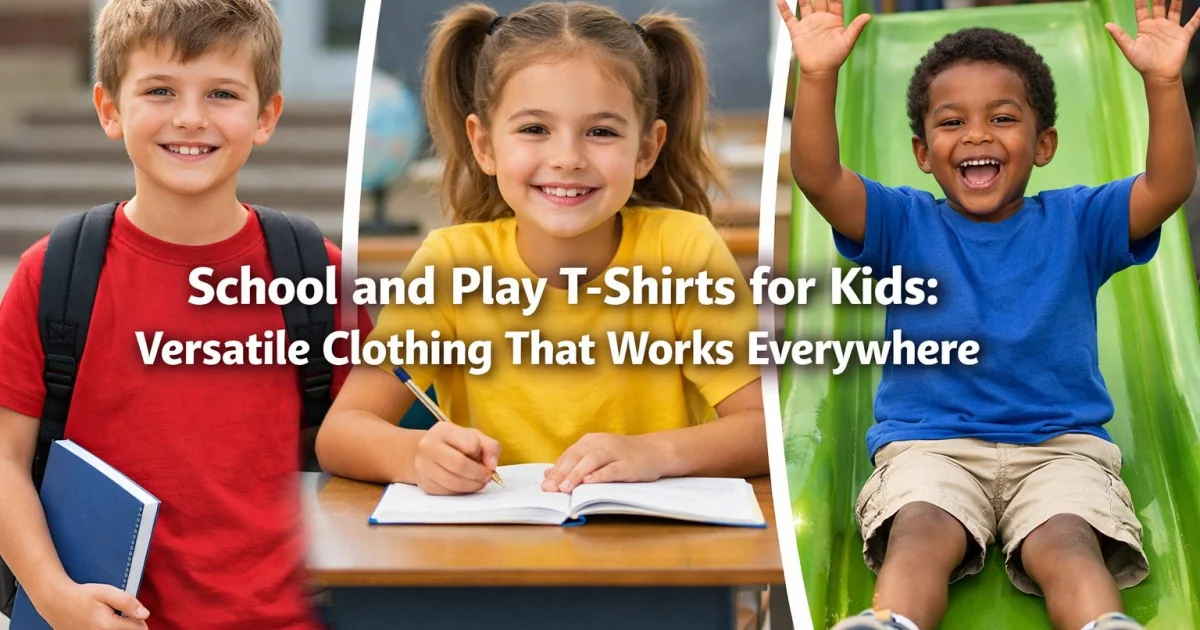
One of the smartest wardrobe decisions parents make is choosing t-shirts that seamlessly transition from school to play. A t-shirt that works in the classroom, on the playground, for afterschool sports, and for weekend adventures is genuinely worth its weight in gold. I've watched parents spend money on separate "school clothes" and "play clothes," and I've also watched smart parents build a wardrobe where the same pieces work everywhere.
The truth is that t-shirts that work for both school and play aren't about compromise. They're about understanding what elements make a t-shirt appropriate for school settings while still being functional and comfortable for active play. When you understand these factors, you can choose pieces that legitimately serve both purposes without feeling wrong in either context.
So let me walk you through exactly how to choose t-shirts that work for school and play, from understanding school requirements to evaluating functionality for activity, to building a wardrobe strategy that makes both work together.
School Requirements: The Foundation
Before you can choose t-shirts that work for school, you need to understand what your specific school actually requires or prefers. School requirements vary dramatically, from schools with strict uniforms to schools with minimal dress codes.
Strict Uniform Schools: Some schools require specific polo shirts or t-shirts as part of uniform. These are usually available from specific vendors. In this case, you're choosing the brand of the required uniform pieces, but the requirements are non-negotiable. The good news is that uniform pieces are designed to be durable and functional. You're not choosing what to wear; you're just buying the required pieces in appropriate quantities.
Dress Code Schools: Many schools have dress codes rather than uniforms. These typically require things like "collar shirts" or "no graphic t-shirts" or "t-shirts must meet specific color requirements." Understanding your school's specific rules is crucial. Some schools are strict; some are flexible. Call the school or check the handbook knowing the exact requirements matters.
Minimal-Requirement Schools: Some schools have very few requirements beyond basic appropriateness. These schools might just ask that clothing be clean, in good repair, and cover the necessary areas. In this case, you have maximum flexibility in choosing t-shirts that work for both school and play.
My recommendation: call your school or check the handbook specifically. You'd be surprised how many parents assume requirements that don't actually exist, or how many miss requirements because they didn't ask.
Neutral Colors: The School and Play Solution
The easiest path to t-shirts that work for both school and play is choosing neutral colors. Neutral colors typically meet school requirements, look appropriately polished for classroom settings, and are utterly functional for play.
Navy Blue: The Universal Choice: Navy is genuinely the most versatile color for a school-and-play wardrobe. It's formal enough for school settings, appropriate for almost any school requirement, completely acceptable for play, and versatile enough to pair with any bottom color. A navy t-shirt in your child's size is a wardrobe foundation that works everywhere.
White: Crisp and Appropriate: White t-shirts are appropriate for most school settings, give a clean, polished appearance, and work for play. The downside is that white shows stains readily. For a child who's careful with clothes or for special occasions, white works. For everyday school-and-play wear, white might be higher maintenance than you want.
Gray (Especially Heather Gray): Gray is appropriately neutral for schools while still being casual enough for play. Heather gray is particularly good because it hides stains better than solid gray. Gray gives a casual, comfortable appearance while still being appropriate for school settings.
Black: The Versatile Standby: Black is appropriate for schools, hides stains brilliantly, and is completely acceptable for play. Some schools might have restrictions on black, so check your school's requirements, but generally black is unquestionably appropriate.
Earth Tones: The Modern Choice: Olive, khaki, tan, and warm brown are increasingly common in children's clothing in 2026, and they work beautifully for both school and play. These colors are sophisticated and appropriate for school while being casual and comfortable for play. Earth tones also hide stains reasonably well.
The Fit That Works for Both Settings
Beyond color, the fit of a t-shirt matters for making it work in both school and play environments.
Standard to Slightly Relaxed Fit: A t-shirt with a standard to slightly relaxed fit works in both settings. Not so tight that it looks like athletic wear, not so loose that it looks sloppy or casual. This middle ground looks appropriately polished for school while being functional for movement during play.
Avoid Oversized: Oversized is trendy with older kids and teens, but oversized t-shirts look less appropriate in school settings. For a t-shirt that needs to work at school, a standard fit is more appropriate than oversized.
Avoid Too Fitted: A t-shirt that's too fitted restricts movement and looks overly dressy for school. The goal is balanced fit not tight, not loose, just right.
Length Matters: A t-shirt should hit at the hip or slightly past, covering the belly during movement. This length works for both school (appropriate coverage) and play (freedom of movement).
Fabric That Works for Both
Cotton or Cotton Blends: These are genuinely ideal for school-and-play t-shirts. Cotton is breathable (good for active play), comfortable (good for all-day school wear), and appropriate looking for school settings. Cotton blends with polyester offer even more practicality slightly better durability, better wrinkle resistance, and good breathability.
Weight Matters: A t-shirt that's too thin looks flimsy and less professional for school. A t-shirt that's too thick is uncomfortable for all-day wear. Standard weight cotton (180-200 GSM) is ideal. It looks appropriate for school and is comfortable for active play.
Moisture-Wicking for Active Kids: If your child is active in sports or outdoor play, a cotton-polyester blend with some moisture-wicking capability is practical. These fabrics keep kids comfortable during activity while still being appropriate for school. Performance polyester blends designed for sports actually work beautifully for this dual purpose.
Design Considerations: Graphics and Patterns

Solid Colors for Maximum Versatility: A solid-colored t-shirt works in any school setting and with any bottom color. This is the most versatile approach. If you want maximum flexibility, solid colors are the answer.
Small Logos or Subtle Designs: If your school allows graphics, small logos or subtle designs work in both settings. A school logo on the chest is often appropriate. A small brand logo is typically acceptable. These subtle designs don't make the t-shirt look too casual.
Avoid Statement Graphics for Everyday School Wear: Large statement graphics, character t-shirts, or bold slogans are better for weekend play than everyday school wear. They look casual and might not fit school appropriateness standards. Save these for play clothes and weekend wear.
School-Appropriate Patterns: If your school allows patterns, stripes or small prints can work for both school and play. These are less formal than solid colors but more appropriate than statement graphics.
Building a School-and-Play Wardrobe Strategy
Rather than buying separate clothes for school and for play, a smarter strategy is building a wardrobe that does double duty.
Core Neutral T-Shirts: Start with 5-7 basic t-shirts in neutral colors (navy, white, gray, black, or earth tones). These are your foundation pieces that work in school and for play. Choose solid colors or subtle designs.
Add Activity-Appropriate Pieces: If your child does sports or very active play, add 2-3 performance-fabric t-shirts designed for activity. These have moisture-wicking properties and often come in colors that complement your core pieces. Brands like Nike Kids, Under Armour Kids, or Adidas Kids make quality performance t-shirts that are also appropriate looking for school.
Separate Play Pieces: For weekend play, fun outings, and casual time, add t-shirts with graphics, character designs, or bold patterns. These don't need to work for school, so you can be more playful with them. These are "fun" pieces, not wardrobe foundations.
The Mix-and-Match Advantage: When your core school t-shirts are neutral and well-fitting, they work with any bottom color and any style. A navy t-shirt works with jeans, khakis, joggers, leggings, shorts. This versatility means fewer total pieces while looking more put-together for school.
Practical Considerations for Active Play
Durability for Rough Play: T-shirts that need to survive both school and active play need good construction. Double-stitched seams, quality fabric, and reinforced stress points matter when a t-shirt is being worn hard and washed frequently.
Stain Management: T-shirts that will be worn for both school and play need to handle stains well. Darker colors (navy, gray, olive) hide stains better than light colors, which is practical when the same t-shirt goes from school to playground.
Breathability for Activity: If your child is active, breathability matters. Natural fibers (cotton) or moisture-wicking blends allow sweat to move away from the body, keeping your child comfortable during active play. This breathability is also good for all-day school wear.
Stretch for Movement: T-shirts with a bit of stretch (whether from the fabric composition or jersey knit construction) allow better movement during play while still looking appropriate for school.
School-Specific vs. Play-Specific Considerations
| Consideration | School Priority | Play Priority | School-and-Play Solution |
|---|---|---|---|
| Color | Neutral, appropriate | Any color OK | Neutral colors (navy, gray, earth tones) |
| Fit | Polished, standard fit | Comfortable, movement-friendly | Standard to slightly relaxed fit |
| Design | Minimal or subtle | Fun, expressive graphics OK | Solid or small logos |
| Fabric | Appropriate looking, breathable | Durable, moisture-wicking | Quality cotton-poly blend |
| Durability | Holds up to wear | Survives rough play | Double-stitched, quality construction |
| Stain Hiding | Less important | Important for practicality | Medium-dark colors |
| Stretch | Not necessary | Helpful for movement | Jersey knit or slight stretch |
Specific Brand Recommendations for School-and-Play
Gap Kids: Gap Kids basics are genuinely perfect for school-and-play. They offer quality, standard-fit t-shirts in neutral colors that are appropriate for school and comfortable for play. The durability is solid, and the price is reasonable.
Uniqlo Kids: Uniqlo specializes in simple, quality basics that work everywhere. Their standard t-shirts in solid colors are appropriate for school, durable enough for play, and affordably priced. The fit is standard and the quality is reliable.
Nike Kids or Adidas Kids: If you need performance qualities (moisture-wicking, durability for rough play), Nike or Adidas kids' t-shirts offer these while still looking appropriately polished. They're designed for performance but look appropriate for school settings.
Cat & Jack (Target): Cat & Jack offers solid basics in neutral colors with the durability reputation that makes them great for school-and-play use. Quality is reliable and pricing is budget-friendly.
The Long-Term Approach: Building a System
Rather than thinking about individual t-shirts, think about building a system that works for your child's life. If your child goes to school, then plays sports, then has weekend activities, a versatile wardrobe of neutral, quality, appropriately-fitting t-shirts handles all of that without constant wardrobe changes or multiple sets of similar pieces.
This approach is more efficient, more economical, and actually creates a more put-together appearance because the pieces actually coordinate. Your child's clothes look intentional rather than random.
